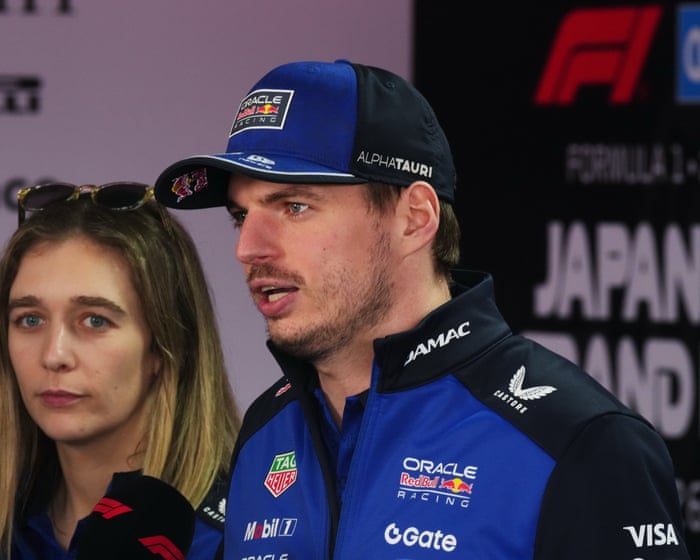
I have a remarkably privileged career, paid to cover Formula One, a sport I’ve loved since 1976. So I’m reluctant to complain, but I was deeply disappointed when Max Verstappen chose to eject me from his press conference on Thursday at the Japanese Grand Prix over a question I asked at the end of last season.
Our first face-to-face meeting of 2026 came at Suzuka, where it turned out the Dutchman has an elephantine memory. When he saw me, he stared, smiled, and declared he would not speak until I left. In a brief 30-second exchange, he told me to “get out” twice. I have never been asked to leave a press conference before. It’s an extremely rare occurrence for a journalist in F1, with barely anyone able to recall more than one or two examples.
In over a decade of covering the sport, I’ve interviewed Verstappen perhaps a dozen times, all of them friendly and good-humoured. His outstanding talent has garnered praise and admiration in those articles, while criticism has been minimal and only when warranted.
One incident last year, however, has seemingly touched a nerve. At the Spanish Grand Prix, Verstappen drove into the side of George Russell’s car, for which he received a 10-second penalty. It dropped him from fifth to 10th and cost him nine points. By the end of the season, after an extraordinary resurgence (which I heartily praised) and some good fortune as McLaren dropped points in the final races, Verstappen missed out on retaining his title by just two points.
After the season finale in Abu Dhabi, I asked him how he felt about that incident and whether he had any regrets—a question that had to be asked. Verstappen took umbrage. “You forget all the other stuff that happened in my season. The only thing you mention is Barcelona. I knew that would come. You’re giving me a stupid grin now.”
I’m not sure I had a stupid grin. I was certainly taken aback by the vehemence of his reply, and it might have prompted a nervous smile. But I did not think it was funny, nor was I enjoying myself at his expense.
And so, on to the press conference in Japan. After being told he would not speak unless I left, I asked if it was because of the question in Abu Dhabi. He said it was. Once more, I was taken aback. I might have had a nervous grin again, who knows? I asked him to confirm if it was because of the question in Abu Dhabi about Spain. He did. “You’re really that upset about it?” I asked, to which he replied: “Get out. Yeah. Get out.”
Marching orders received, I duly departed. Verstappen had been smiling throughout the exchange. Perhaps he was simply enjoying the power dynamic? The day carried on; there are far more serious problems in the world than an F1 driver being cross with you.
Within two hours, someone had tracked down my email. “You’re the problem. You’re the toxic dipshit who’s responsible for the whole British bias in F1. You’re the worst,” it read. As abuse goes, at least the apostrophes were in the correct places and it was not written in green crayon. I have not looked at X and have no plans to do so.
Colleagues in the press pack were universally shocked and offered concern for my wellbeing. “Classless,” said one with arch disdain over the behaviour. My wellbeing is fine. If anything, the most uncomfortable part is writing about it in the first person. A journalist never wants to be the story, even if it feels unavoidable now.
The incident and fallout are a shame nonetheless, not least for the accusations of bias. Over the years, I’ve been accused of anti-Lewis Hamilton, anti-Sebastian Vettel, anti-you-name-the-driver bias. Reporting as honestly and fairly as possible is always the single overarching aim.
I still admire Verstappen, and I hope we can enjoy aBuilding a better future sometimes means asking tough, uncomfortable questions. That responsibility comes with the privilege.
Frequently Asked Questions
Of course Here is a list of FAQs about the incident where Max Verstappen asked journalist Giles Richards to leave a press conference written in a natural tone with direct answers
General Beginner Questions
1 What actually happened between Max Verstappen and Giles Richards
At the 2023 Saudi Arabian Grand Prix during a postqualifying press conference threetime champion Max Verstappen asked veteran F1 journalist Giles Richards of The Guardian to leave the room Verstappen stated he did not want to speak with Richards because of a previous article he felt was disrespectful
2 Why did Verstappen single out Giles Richards
Verstappen was upset about a specific column Richards had written earlier in the season While the exact article wasnt named in the moment it was widely understood to be one that criticized Verstappens dominance and suggested it was bad for the sport which Verstappen perceived as a personal attack on his achievements
3 Was Giles Richards doing something wrong at the press conference
No Richards was there as an accredited journalist doing his job waiting to ask a question He had not spoken or acted disruptively before Verstappen made his request
4 Is this a normal thing in F1
No this was highly unusual While drivers can be terse or frustrated with the media publicly asking a specific journalist to leave an official FIA press conference is an extreme and rare escalation
Advanced Contextual Questions
5 What was the broader context behind Verstappens reaction
This incident was part of a longerterm tension between Verstappen and certain sections of the media Verstappen has often expressed frustration with what he sees as negative sensationalist or disrespectful coverage especially during his period of dominance
6 What was the role of the FIA moderator in this situation
The FIA press delegate acted as a moderator but was put in a difficult position Initially they tried to continue the conference but Verstappen was insistent The moderator ultimately asked Richards to leave to allow the conference to proceed a decision that was controversial
7 What were the professional consequences for Giles Richards
In the immediate term he was removed from the press conference missing the chance to ask questions Professionally it highlighted the challenges journalists face when