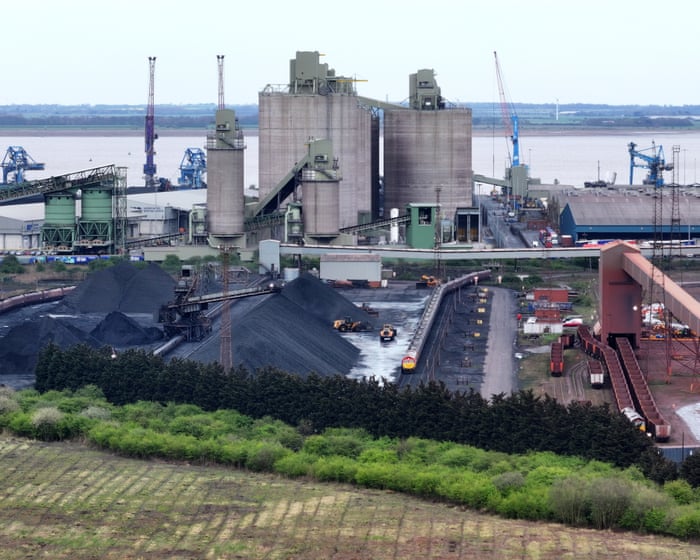
A major overhaul of green trade rules takes effect today, requiring companies selling steel, cement, and other high-carbon products into the EU to prove they meet low-carbon regulations or face fines. However, experts warn that unclear implementation and the UK government’s failure to reach a deal with Brussels could cause initial confusion.
Stéphane Séjourné, the European Commission’s executive vice-president for prosperity and industrial strategy, said companies should welcome the Carbon Border Adjustment Mechanism (CBAM), which aims to level the playing field between EU and overseas competitors. “European industrial producers should be encouraged—not deterred—in their decarbonisation efforts,” he stated. “This CBAM reform brings crucial and long-awaited measures to ensure fair competition. By strengthening CBAM, we support our industry’s decarbonisation and secure European players’ competitiveness globally.”
Many expected the EU to soften these “green tariff” rules, as it has with other recent environmental regulations, but the bloc has moved forward despite protests from China, the U.S., Australia, and others. For example, Chinese steel could lose its price advantage over European steel. Yet this may create a surplus of steel and other high-carbon products, raising concerns they could be dumped at low prices into the UK and other markets. The UK is expected to introduce its own CBAM next year.
Under the EU rules, exporters to the bloc can buy certificates to cover the carbon emissions from producing their goods. CBAM is designed to prevent competitors from countries with weaker environmental standards from undercutting EU businesses and to stop “carbon leakage,” where producers relocate to regions with laxer regulations for cost advantages. Initially, the rules cover iron, steel, aluminium, cement, hydrogen, electricity, and fertilisers.
Diana Casey, executive director of the UK’s Mineral Products Association, which includes cement producers, said CBAMs in Europe and the UK would help protect domestic producers. “The challenge is that the rest of the world isn’t keeping up on decarbonisation, making products like cement much cheaper to produce outside Europe,” she explained. She noted that cement imports to the UK have tripled from about 10% of the market a decade ago to around a third today. “We need CBAM to level that carbon cost playing field. It’s fundamental to securing the future of UK cement production.”
While EU industries have supported CBAM, which applies similar carbon regulations to imports as they face domestically, some warn of higher prices. This is because they will no longer receive free allowances for their carbon dioxide emissions under the EU’s emissions trading system but will have to purchase them instead.
Adrien Assous, executive director of the Sandbag thinktank, said the price impact is likely to be muted initially. “CBAM will have a superbly beneficial impact for EU decarbonisation, but its effect on prices and the economy in the first few years will be quite mild. We’re discussing a problem that isn’t very big because the emissions covered are not very large,” he noted.
British companies hope to avoid penalties under CBAM, as the UK already regulates carbon emissions. The UK and EU have been working on linking their carbon markets.Markets have not yet aligned, and a proposed deal to exempt the UK from the outset remains out of reach, potentially drawing British companies into the scheme. Before Christmas, EU Climate Commissioner Wopke Hoekstra told journalists that UK companies had little to worry about from the Carbon Border Adjustment Mechanism (CBAM) despite the lack of a deal. He suggested that once the two carbon trading systems are linked, aligning with CBAM could be straightforward.
“The price [the UK] will be paying is actually minimal,” he said. “My assessment is that if full linkage of the carbon markets has taken place, then it is likely there is nothing in the bookkeeping and nothing in terms of paperwork that still needs to be done.”
Adam Berman, Director of Policy and Advocacy at Energy UK, argued that electricity from the UK—which exports renewable energy to EU countries when wind conditions are strong and the UK grid has surplus power—should be exempt from CBAM. “[It would be] a baffling outcome to effectively disincentivize the import of clean electricity into the EU,” he said.
The EU has also moved to expand CBAM’s scope from 2028 to include products that use steel and aluminum, such as machinery and electric appliances. This aims to prevent manufacturers from circumventing carbon rules by moving production outside Europe.
A UK government spokesperson said: “We are delivering on our commitment to secure a carbon linking agreement with the EU as soon as possible, which will exempt British businesses from over £7 billion in export charges. We continue to work closely with the European Commission to support our world-class manufacturers and ensure green investment in the UK results in decarbonization both here and overseas.”
Frequently Asked Questions
FAQs The EUs Carbon Border Adjustment Mechanism
BeginnerLevel Questions
1 What is the EUs new carbon border tax
Its a new EU policy officially called the Carbon Border Adjustment Mechanism It puts a price on the carbon emissions embedded in certain imported goods to ensure EU and foreign companies face similar carbon costs
2 Why did the EU create this tax
The main goals are to
Prevent carbon leakage Stop EU companies from moving production to countries with weaker climate rules or EU products from being undercut by cheaper more polluting imports
Encourage global climate action Incentivize other countries to adopt their own carbon pricing systems
Protect EU industries Ensure EU companies investing in cleaner technologies remain competitive
3 What products are affected right now
Initially it covers imports of goods with high emissions and risk of leakage
Iron and steel
Cement
Aluminium
Fertilizers
Electricity
Hydrogen
4 How does it work for an importer
Importers must buy and surrender CBAM certificates corresponding to the amount of carbon emissions embedded in their goods The certificate price is based on the weekly average price of EU carbon permits
5 When did it start and whats the transition period
The CBAM reporting phase started on October 1 2023 Until the end of 2025 importers only need to report emissions data Financial obligations will begin on January 1 2026
Advanced Practical Questions
6 How are the emissions for my imported goods calculated
You must report embedded emissionsthe direct emissions from production plus indirect emissions from the electricity used During the transition you can use methods defined by the EU or equivalent thirdcountry systems From 2026 EU methods will be mandatory
7 What if the producer in my country already pays a carbon price
If you can prove that a carbon price was already paid during production that cost can be deducted from the CBAM certificate amount owed to the EU