What do Nicole Kidman, a couple of “nepo babies,” and a beagle named Sansa Martínez Berlingeri have in common? They all grace the covers of the all-important September issues of Vogue and Dogue. But who wins the unofficial cover battle? The one with the sharpest nose and a love for playing with socks.
The September covers of British Vogue and Vogue US have faced heavy scrutiny since their release, while their canine counterpart, Dogue, has been almost universally praised.
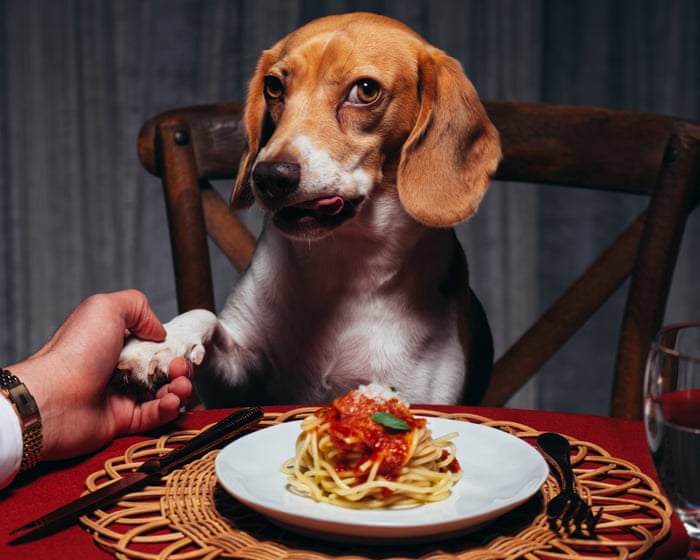
This year, Dogue features Bad Bunny’s beagle, Lena Dunham’s Mexican hairless dog Ingrid and her Chinese crested Cornichon, and Millie Bobby Brown’s miniature poodle. The Bad Bunny cover, shot by Eric Rojas in a nostalgic style reminiscent of Lady and the Tramp, showcases four-year-old Sansa. She gazes sweetly at the camera, one paw gently held by her owner, her tongue slightly askew, with a bowl of spaghetti in front of her.
This stands in contrast to the reception for British Vogue’s Kidman cover, shot by Venetia Scott. The appearance of the Australian-American actor sparked online debates, with some arguing it was overly airbrushed. Others questioned whether it was an AI-generated image of the Practical Magic star.
Marian Kwei, a celebrity stylist and Vogue contributor, says she “knew immediately that this was going to stir mixed reactions.” Many saw it as a win for representing older women in an industry and world that often treats them harshly—Kidman is 59. Others argued it wasn’t cause for celebration, given it presented her as so ageless.
Kwei ties the cover to the broader current trend “where everyone is kind of looking like each other.” In 2019, New Yorker writer Jia Tolentino wrote about what she saw as the emergence of “a single, cyborgian face,” also known as “Instagram face.” Seven years later, it’s only become more extreme. Smooth, poreless, youthful faces are now so mainstream that in some circles, wrinkles are being rebranded as the new status symbols.
The September issue of Vogue US—the first from its new editor, Chloe Malle—features actors Kaia Gerber (24) and Homer Gere (26), stars of the new Ryan Murphy series The Shards. Photographed by Steven Meisel, a major name in fashion, and styled by Spencer Singer, the shots have been criticized as bland. Jacob Gallagher of the New York Times said the cover “has about as much electricity as a JC Penney back-to-school catalog.”
Photographer Misan Harriman posted on Instagram his 2020 Black Lives Matter-inspired cover, which also featured a duo—model Adwoa Aboah and footballer Marcus Rashford—and made him the first Black male photographer to shoot a British Vogue cover in its 104-year history, alongside this current one. He wrote underneath: “An interesting observation about socio-cultural change could be made here.”
Kwei says: “I think the reason why that has sparked criticism is … those engaging with these covers are looking for deeper context … We are tired of the nepo babies.” The cover, she says, “feels a little soulless.”
The choice of cover star has also drawn criticism. Gerber, a model and actor, is the daughter of 90s supermodel Cindy Crawford, and Gere is the son of Richard Gere. Their lineage—and the fact that their parents were once married—gives them star power and intrigue, but they are stars yet to fully prove their skills. According to the fashionJournalist Lauren Sherman says: “It really comes down to this: covers matter more than ever because they get shared online, but it’s also harder than ever to find a celebrity who’s popular enough across different generations and subcultures to make a real impact.”
The fact that Gerber and Gere are who they are brought the cover into comparison with the 1992 one, shot by Herb Ritts, featuring their then-married parents. Where Crawford and Gere were on a beach – Wintour was famous, from her very first cover onward, for moving models out of the bland studios that had dominated Vogue covers until then and onto the streets – their children are in a grey studio. For Kwei, the 1992 cover had “some context – it helps build a story,” while “with the Kaia cover there isn’t enough context, there isn’t enough storytelling.”
The September issues of fashion magazines are the most important of the year – and what’s on the cover is meant to say something. “People have come to expect something very special,” says Kwei. Perhaps surprisingly, that has come in the form of Sansa the beagle. “I think it was brilliant. It’s very internet-first,” Kwei says, adding that it would be easy to “turn it into a meme.”
In the world of AI-generated faces, dogs become almost more real, certainly more full of character. Oli Port is the founder and editor of the canine fashion publication Dogue magazine. Launched in 2019, it was, says Port, “the world’s first dog fashion magazine.” She is in a legal dispute with Condé Nast, who launched their own version of Dogue in 2024. Port thinks dogs make perfect cover stars because “they are just so authentic” and “it’s fun to see dogs as the stars instead of humans because humans have so much ego … Dogs don’t really care, they just want a good snack.”
Lena Dunham’s dogs also feature on a Dogue cover. Photograph: Paul Hempstead/Dogue
Jen Golbeck, an expert in social media and co-author of The Purest Bond: Understanding the Human-Canine Connection, places the cover “in this space of so much AI-generated content [and] images of people that are AI-generated or AI-modified in a way that a lot of us find horrifying; like we no longer know what’s real.” As she points out: “Now we’re seeing models that don’t actually exist. They’re entirely AI.” This dog, on the other hand, is definitely not.
World’s Ugliest Dog contest 2026 – in pictures
Read more
She continues: “We’re [also] seeing this shift back towards early 2000s skinny culture and there’s a lot of politics with that aesthetic – it aligns with the Trump, Maga lady aesthetic and these patriarchal views on what women are supposed to look like.” Dogs, by contrast, don’t have those kinds of politics attached to them.
“Dogs are always one of those things that exist outside all of those factors that are making us stressed about life and our bodies and fashion and how we’re supposed to look; there’s something beautiful and comforting in that, that everybody wants some of right now.”
So what makes a good dog a good cover girl or boy? According to Amina, whose dog Sir Spud won this year’s second annual civilian Dogue cover contest: “Each one has a special, lovable personality, which is exactly what makes them man’s best friend and such adept cover stars.”
Sir Spud has his own take over email: “We dogs exude love, elegance, and class from our paws to our snouts. We are natural stars and belong on the front page; seriously, have you seen me?”
Frequently Asked Questions
Here is a list of FAQs about why dogs are becoming the new faces of fashion in the age of AI
Beginner Questions
1 What does it mean that dogs are the new faces of fashion
It means that instead of human supermodels dogs are being used to model clothing accessories and even luxury goods Youll see them in ad campaigns on social media for brands and in virtual fashion shows
2 Why are dogs specifically becoming popular in fashion right now
Dogs are universally loved and create an instant emotional connection In a world that feels increasingly digital and detached brands use dogs to feel more human warm and trustworthy They also look great in clothes
3 How is AI involved in dog modeling
AI is used in a few big ways It creates realistic virtual dogs for digital ads it helps edit photos to make dogs look perfect and it helps brands predict which dog breeds or styles will go viral
4 Do the dogs actually get paid
Yes the famous influencer dogs do get paid often in cash free products or treats and perks Their owners manage the contracts and the money similar to how child actors have guardians
5 Is this just a passing trend or is it here to stay
It looks like its here to stay Because AI makes it cheap and easy to create highquality dog content and because the public loves it it has become a permanent part of digital marketing strategies
Intermediate Questions
6 Are brands using real dogs or AIgenerated dogs
Both Real dogs are used for highend photoshoots and videos because they have unique personalities However AIgenerated virtual dogs are becoming common for fast fashion or social media ads because they are cheaper dont get tired and can be made to wear any outfit perfectly
7 What are the benefits of using a dog over a human model
Dogs dont have the same diva demands they attract a wider audience and they are excellent at grabbing attention in a crowded feed They also avoid the controversy of human body image standards making them a safer marketing choice
8 What kind of products are dogs modeling
It started with pet clothes and accessories