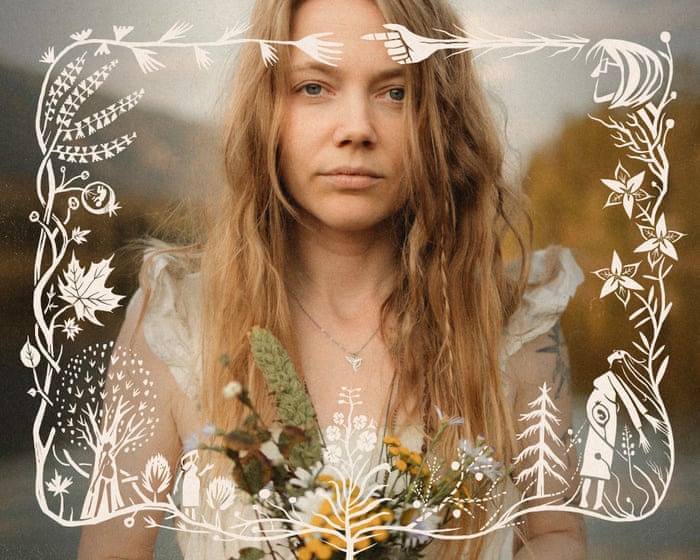
When holistic practitioner Emma Cardinal, 32, became pregnant in May 2023, she planned to have a home birth with midwives. Cardinal lives in a town in British Columbia with strong counter-cultural roots. “In the community I live in, home birth is something a lot of women prioritize,” she explains.
Then Cardinal came across a podcast from the Free Birth Society (FBS). One episode in particular, she says, made an impact: “Unpacking Ultrasound With Yolande Clark.” In it, Canadian former doula Yolande Norris-Clark falsely links ultrasounds to autism and ADHD, claiming that “ultrasound damages, modifies, and destroys cells.”
Norris-Clark, who was born in Vancouver, is arguably the world’s most prominent free birth influencer. She is also a key figure in FBS, a U.S. company run by her business partner and fellow former doula Emilee Saldaya.
FBS promotes an extreme version of free birth, where women forgo all prenatal care and give birth without doctors or midwives present. Since 2018, the organization is estimated to have generated over $13 million in revenue. A recent Guardian investigation identified 48 cases of late-term stillbirths, neonatal deaths, or other serious harm involving mothers or birth attendants linked to FBS.
Norris-Clark provides the intellectual foundation for FBS, shaping its radical stance on birth, while founder Saldaya handles the business. Most women discover FBS through its Instagram account, which has 132,000 followers, or its podcast, which has been downloaded 5 million times.
Norris-Clark is also a significant social media influencer in her own right, promoting a radical version of free birth that concerns even pro-free birth advocates.
After listening to the podcast about ultrasounds, Cardinal became alarmed. “I was petrified of miscarriage and stillbirth,” she says, explaining that her younger brother was stillborn. “There’s no chance I’m risking that.” Cardinal came to believe ultrasounds “aren’t super safe for the baby.”
At that point, Cardinal had not yet decided to free birth. She called a local midwifery practice and explained she wanted a home birth but did not want any ultrasounds during her pregnancy. The receptionist, Cardinal recalls, said that if she wanted to give birth with them, ultrasounds were non-negotiable. Cardinal thought it over and decided she wasn’t comfortable proceeding.
Instead, after listening to about 100 episodes of the FBS podcast, Cardinal decided to free birth. In one journal entry, she wrote: “I know it in my bones that free birthing is my safest and most liberated option.” She purchased FBS’s popular video course, “The Complete Guide to Freebirth.”
Cardinal’s son Floyd was stillborn in March 2024. During labor, Cardinal saw meconium in her waters—a possible sign of distress—but dismissed it because “I was told by FBS that meconium is totally normal.” She stayed home for three days, because “I remember hearing Emilee Saldaya’s voice in my head [from the podcasts], saying: ‘I wouldn’t be concerned for the first three days.'”
After Floyd died, Cardinal was hospitalized with sepsis and placed in an induced coma. She has undergone several surgeries to repair the damage from his birth and had to wear an ostomy bag for a time. “I didn’t think that could even be a reality after birth,” she says. “I almost had to have a hysterectomy.”
Looking back, Cardinal believes much of the information she received from FBS was “incomplete, biased, one-sided, and kind of dangerous.”The term “dogmatic” also applies to the information she received about ultrasounds, which are safe for unborn babies when used properly. She adds, “You can’t only highlight the positive aspects of free birth. What happens when things go terribly wrong?”
Norris-Clark has not replied to multiple requests for comment regarding the Guardian’s investigation, which is presented in The Birth Keepers podcast series. She has previously defended her partnership with Saldaya, describing FBS as “the most ethical kind of business you can run.” According to her, critics of FBS do not understand the commitment to women taking “radical responsibility” for their births. She has also stated that it is unfair to hold her accountable for the choices made by mothers who consume her content.
However, the attention on tragedies involving mothers worldwide who engaged with FBS content is creating a crisis for the business.
Saldaya has also not provided a detailed response to requests for comment, but told the Guardian in an email that “some of these allegations are false or defamatory.” She has previously responded to criticism by saying she does not care if women choose free birth, but wants them to have the choice. In recent comments to her followers, she described the Guardian’s reporting as “propaganda” based on “lies,” and suggested her work, words, and character had been misrepresented by “twisted, dark attacks.”
Cardinal is not the only Canadian woman to lose a child after a free birth influenced by FBS. Although Canada has universal healthcare, it is sparsely populated, with large “midwifery deserts.” Some alternative communities are skeptical of licensed professionals. As in other parts of the world, FBS messaging often resonates with women who have had traumatic experiences with maternity services or unnecessary medical interventions. The Covid pandemic also eroded many women’s trust in the medical establishment.
Not all women who want to avoid licensed providers are ready for free birth. Some turn to unlicensed attendants, believing they offer the best chance to avoid a hospital birth. Canada has a community of unlicensed birth attendants, partly due to the historical status of midwifery in the country. Unlike other nations with strong midwifery cultures, such as the Netherlands and Denmark, Canada has lagged behind other developed countries in recognizing midwifery. Midwives and their clients sometimes face skepticism or even hostility from healthcare professionals.
It is in this context that women turn to unlicensed attendants. Some, though unregulated, are skilled and experienced underground midwives. But others—such as those who only completed a brief online FBS course—have limited or no birth experience and lack adequate skills to manage potential emergencies.
The most popular of FBS’s schools, the Radical Birthkeeper School, has trained 850 “authentic midwives” from over 30 countries. In its three-month Zoom course, only about half the content deals with birth; the rest focuses on self-development and business skills. According to an online directory seen by the Guardian, there are at least 22 FBS-accredited birth keepers in Canada.
FBS advises its radical birth keepers (RBKs) to get out into the world and start attending births. “The very best way to learn how to do midwifery is by doing midwifery,” Saldaya told her RBK students in 2025. Many have since established their own businesses supporting women during free births.
Alexandra Smith, a 29-year-old life coach from Vancouver Island who hired an FBS-trained RBK for her birth, explains, “It’s a different way of thinking out here. People prefer to be off-grid. It’s a holistic space, with lots of hippies.”Everyone is talking about free birth and Waldorf education. Norris-Clark, she adds, is “very popular where I live.” She says women in her area see Norris-Clark as the “founding mother” of free birth, who has “brought a solution to systemic problems” in Canada.
During her pregnancy, Smith says she listened to the Free Birth Society (FBS) podcast regularly, sometimes multiple episodes a day, and found Norris-Clark particularly captivating. Were it not for FBS, she says, she would have had a home birth with a midwife.
Many of the women who follow Norris-Clark on social media, seeking pregnancy advice, are unaware of her more extreme views, which she sometimes shared with FBS students. “I actually don’t believe that gravity is true,” she told students in 2024, adding, “Maybe that just makes me crazy, and that’s totally OK.” In another class, she said students could cut a baby’s umbilical cord with an “old rusty fork.” “I don’t believe in germ theory,” she said. “I don’t believe in contagion,” adding, “But even if contagion were real… there would be a pretty much 0% chance of anything happening.”
Such radical beliefs are not part of FBS’s polished advertising and promotional materials. Smith says she believed, based on FBS marketing, that RBKs (Radical Birth Keepers) were “trained, unregistered midwives.” “I feel like I was falsely advertised to,” she says.
Others have made similar complaints about FBS. Earlier this year, a lawyer for FBS responded to a consumer protection complaint filed in North Carolina alleging a course was mis-sold by stating that the company had always been transparent about offering “personal development and sovereign-birth related education” rather than certified midwifery training.
The RBK Smith hired to attend her free birth was in her mid-20s. In a video testimonial she filmed for the RBK school, which had been available online until recently, she said the school “wasn’t your typical school in that it provides hard facts, information, data, and all of that stuff. It was different in that what I gained from the experience was this deep trust in birth, the deep sense of knowing that birth unfolds beautifully if we just step out of the way.”
When it came to the birth, Smith alleges her RBK was woefully underprepared and “like a deer in headlights.” Smith says the RBK missed signs her labor was unfolding abnormally. When Smith’s son Aksel was born on May 7, 2023, his umbilical cord was white, and he was floppy and unresponsive. Smith says the RBK did not attempt to resuscitate the baby, and Smith had to tell her to call 911. Aksel was rushed to the hospital and diagnosed with severe hypoxic-ischaemic encephalopathy due to oxygen deprivation caused by a placental abruption at his birth. The RBK has not responded to requests for comment.
Legal Cases and Public Warnings
As unlicensed attendants, including those trained by FBS, proliferate across Canada, authorities are seeking to clamp down on the practice.
On Vancouver Island, Canada’s most famous unlicensed birth attendant, Gloria Lemay, 78, is awaiting trial for manslaughter after a girl died 10 days after her birth, which Lemay attended, in January 2024. This is her latest legal battle in a career spanning nearly five decades.
In 1986, Lemay was convicted of criminal negligence causing death after a baby was stillborn at a birth she attended, though she was later acquitted when the Supreme Court upheld a lower court’s judgment that a child not yet born cannot be considered a person. Four years later, after a baby boy died of an infection three days after a birth attended by Lemay, she was fined $1,000 for refusing to answer questions at the inquest. In 2002, Lemay was found in contempt of an order prohibiting her from acting as a midwife. She was arrested in relation to that case.Moving to the most recent case in January 2025, a case management conference is set for January 2026. Gloria Lemay declined to comment on her upcoming trial, but it is understood she plans to fight the charges and plead not guilty.
Lemay trained Yolande Norris-Clark as a doula. Norris-Clark always credits Lemay with inspiring her lifelong passion for childbirth. Lemay attended Norris-Clark’s first two births and trained her. However, those familiar with both women’s careers say Norris-Clark’s views on birth are more extreme than those of her former mentor.
Lemay remains a highly divisive figure. Seen by some in the medical establishment as a dangerous fraud, she is equally beloved by many in the birthing community, who regard her as a folk hero comparable to the legendary U.S. midwife Ina May Gaskin. The Birth Care Alliance, a campaign opposing what it calls the “systemic overreach into birth sovereignty and midwifery,” is fundraising for her defense. Norris-Clark is also fundraising, describing Lemay’s trial as “the attempted martyrdom of a cherished elder.”
Lemay’s supporters say she wished to retire years ago but was repeatedly asked to attend births by women wanting to give birth outside the system. They describe her as highly skilled, supportive of medical transfer when necessary, and having attended thousands of births in her career, with only a very few ending tragically. To her critics, Lemay is a thorn in the side of the medical establishment, and they believe authorities have repeatedly targeted her.
Canadian health authorities are also warning about less famous and considerably less skilled attendants, some of whom are affiliated with Free Birth Society (FBS).
In 2023, the British Columbia College of Nurses and Midwives issued a public advisory about the FBS-affiliated birth keeper hired by Sarah Smith, stating she was not authorized to practice as a midwife and may have been offering midwifery services without permission. (The Guardian has seen no evidence she continued to attend births after Smith’s in May 2023.)
The following year, a different FBS-linked birth attendant was banned from hospitals across Alberta unless seeking medical care for herself or her family. This woman, who marketed herself as a “traditional midwife,” had been a member of the FBS community and appeared as a guest on its podcast. Several complaints were filed against her by concerned staff at two Calgary hospitals after she was linked to two stillbirths in 2021. (Her lawyer told The Guardian that her birth services have been limited to non-medical support.)
Smith’s son, Aksel, spent five weeks in the hospital before being discharged in June 2023. Deprived of oxygen during birth, he had severe disabilities and was tube-fed. Smith was his full-time caregiver. “You’re just trying to wrap your head around what happened,” she recalls of that time, “and my mental state was: how do we find a cure, how do we fix this?”
She adds: “It’s very lonely having a medically complex child in a holistic community. When things go wrong, it’s like it’s your fault.”
Aksel lived for six and a half months before he died. “In my grief,” says Smith, “it’s hard to think about how things could have been different.”
Frequently Asked Questions
Of course Here is a list of FAQs about the topic She was like a deer in headlights How untrained radical birth attendants gained influence in Canada framed in a natural conversational tone
Beginner Definition Questions
1 What does deer in headlights mean in this context
Its a metaphor describing a state of frozen panic and helplessness In this article it refers to the experience of a new parent facing a sudden serious complication during a home birth while their untrained birth attendant was overwhelmed and unable to help
2 Who or what is a radical birth attendant
This term refers to individuals often called doulas or birthkeepers who support home births but operate outside of any regulated professional training or licensing system They may reject standard medical guidelines in favor of a more ideological or naturalatallcosts approach to childbirth
3 Is a radical birth attendant the same as a midwife
No this is a crucial distinction In Canada registered midwives are highly trained regulated healthcare professionals who can manage lowrisk pregnancies and births prescribe medications and handle emergencies A radical birth attendant has no such formal training credentials or legal scope of practice
4 What is the main topic of this article or investigation
It examines how a network of untrained birth attendants in Canada has gained popularity and influence often through social media despite being involved in preventable infant deaths and serious injuries and how the system struggles to hold them accountable
Intermediate Context Questions
5 Why would someone choose an untrained attendant over a registered midwife
Reasons can include a deep distrust of the medical system a desire for a completely interventionfree experience ideological alignment with the attendants views or being unable to access a registered midwife due to waitlists or geography
6 What are the biggest risks of using an untrained birth attendant
The primary risk is the lack of skill to recognize or manage emergencies like hemorrhage shoulder dystocia or infant resuscitation This delay in getting appropriate medical care can lead to permanent injury or death for the parent or baby
7 How have these attendants gained so much influence
Largely through social media platforms where they build communities share powerful birth stories and market an appealing ideology of trusting birth