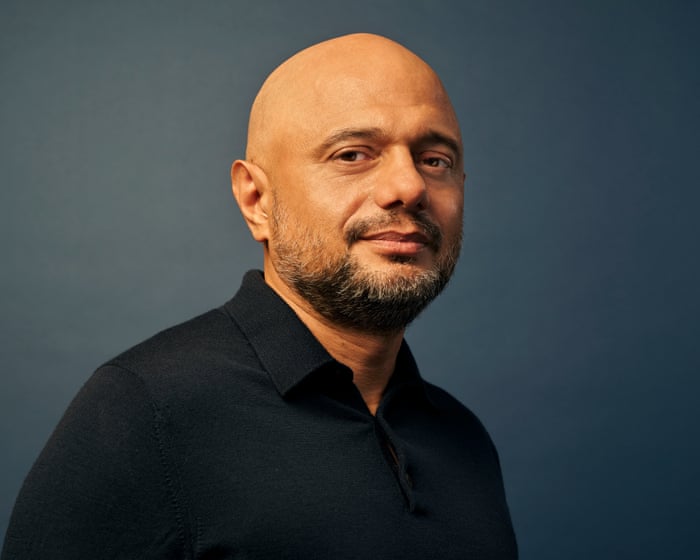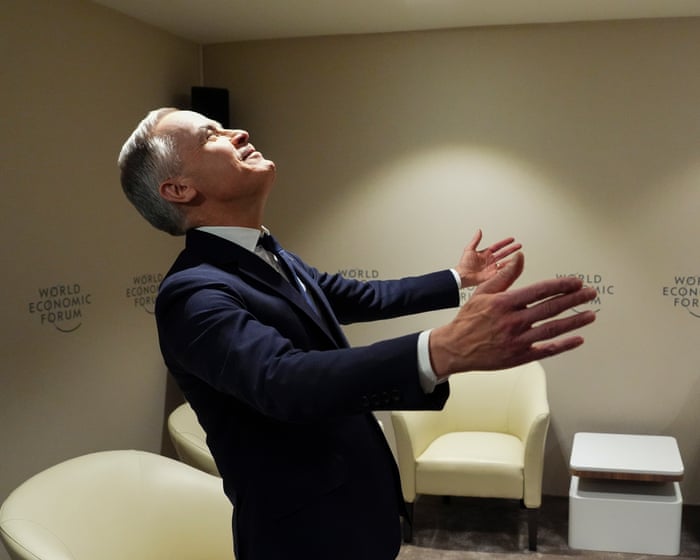
EU leaders should reflect on the key lesson Canadian Prime Minister Mark Carney shared at this year’s World Economic Forum. In a sharp analysis of this new era of aggressive great powers, where strength increasingly overrides rules, Carney rightly described the worsening of international relations as “a rupture, not a transition.” He also explained how liberal democratic “middle powers” like Canada—and European nations—must form alliances to resist coercion and uphold principles such as territorial integrity, the rule of law, free trade, climate action, and human rights. He detailed a hedging strategy Canada is already using, diversifying trade and supply chains and even opening its market to Chinese electric vehicles to counter Donald Trump’s tariffs on Canadian-made cars.
Carney’s clear-eyed view that the era of a Western-led “rules-based international order”—with all its flaws—is not returning stands in contrast to the hesitation of many European leaders. Some still seem to think they can flatter, bribe, or appease Trump into considering their interests. Fear that Trump might pull out of NATO or abandon Ukraine to Russian aggression has so far stopped them from taking a strong stand against his bullying of allies.
The U.S. president’s insistence on taking control of Greenland, along with his threat of punitive tariffs against European allies who recently sent a small reconnaissance mission there in support of Denmark, should be the red line that finally prompts a united and firm European response. Yet that is far from certain, as EU leaders remain split between de-escalation and bargaining on one side, and escalating to create leverage before any negotiation on the other.
Trump confused matters after a confrontational speech in Davos by announcing he had “formed the framework of a future deal” on Greenland in talks with NATO’s Mark Rutte and would not, after all, impose those threatened tariffs. But Europeans should not let this lull them into complacency.
Carney’s message in Davos was clear and timely: “When we only negotiate bilaterally with a hegemon, we negotiate from weakness. We accept what’s offered. We compete with each other to be the most accommodating,” he warned. “This is not sovereignty. It’s the performance of sovereignty while accepting subordination. In a world of great power rivalry, the countries in between have a choice—compete with each other for favor, or combine to create a third path with impact.”
In other words, Europe can only hope to curb Trump’s abuse of U.S. power by acting with unity and strength, and by partnering with like-minded countries such as Canada, Japan, Australia, Brazil, and India to establish new trade agreements and rules.
EU leaders are holding an emergency summit on Thursday evening in response to Trump’s demand to take control of Greenland from Denmark. They must back Denmark with concrete action by agreeing to impose retaliatory tariffs on €93 billion worth of U.S. goods if Trump takes further steps against EU members. Moreover, they should start activating their “trade bazooka”—the anti-coercion instrument that allows broad economic and regulatory measures against a foreign power trying to pressure Europe. This would begin by asking the European Commission to investigate U.S. attempts to coerce an EU member.
The European Parliament took an initial step this week to make Washington pay an economic price for Trump’s threats by indefinitely postponing a vote to ratify tariff cuts on U.S. goods. These cuts were part of the lopsided trade “deal” Trump forced on the EU last year. However, MEPs then undermined the EU’s trade-diversification strategy by voting to…The decision to send a long-delayed trade pact with four dynamic South American economies in the Mercosur group for review by the European Court of Justice represents a surrender to politically powerful beef farmers. This move will delay ratification by about two years and sends a discouraging message to other countries seeking trade agreements with Brussels.
The European Commission now faces a sensitive choice: either forfeit the economic benefits of the Mercosur deal, or defy the legislature by provisionally implementing it—as allowed under the agreement—while awaiting the court’s decision and eventual ratification.
The most important message from Carney is that political leaders must deal with the world as it is, not as they wish it to be. “Nostalgia is not a strategy,” he warned. European leaders would be wrong to cling to old-fashioned Atlanticism in the mistaken belief that another compliment or concession to Trump will satisfy his insatiable demands. To begin with, no European leader should agree to join his so-called “board of peace,” which is a transparent attempt to cement U.S. hegemony outside international law and the United Nations.
Now is the time for Europe to embrace a difficult emancipation and seek partners worldwide to keep the torch of rules-based governance and trade alive. Carney has shown the way.
Paul Taylor is a senior visiting fellow at the European Policy Centre.
Frequently Asked Questions
FAQs Europes Strategic Autonomy Reducing Dependence on the United States
Here is a list of frequently asked questions about the idea championed by figures like Mark Carney that Europe should pursue a more independent strategic path
BeginnerLevel Questions
1 Who is Mark Carney and why is he talking about this
Mark Carney is a former Governor of the Bank of England and the Bank of Canada He is a respected global financial expert He argues that for Europes longterm economic security political stability and ability to tackle global challenges like climate change it needs to build greater selfreliance and reduce its overdependence on the United States
2 What does dependence on the United States actually mean
It refers to Europe relying heavily on the US in several key areas military defense the US dollar for global trade and finance American technology platforms and at times following US foreign policy leads The idea is that this reliance can make Europe vulnerable to shifts in American politics and priorities
3 Isnt the US our closest ally Why would we want more distance
Yes the US is a crucial ally The argument isnt about ending the alliance but about rebalancing it The goal is strategic autonomyhaving the independent capacity to make and act on decisions that are in Europes own best interests even when they differ from Washingtons without being overly constrained
4 What are the main benefits for Europe in doing this
Stronger Sovereignty Europe can set its own rules on trade digital privacy and regulation
Economic Resilience Less exposure to US financial sanctions or political disputes that disrupt trade
Global Leadership A united independent Europe can be a more powerful leader on issues like climate change and international development
Security Assurance Building a stronger integrated European defense adds a crucial layer of security alongside NATO
Intermediate Advanced Questions
5 What are the biggest practical challenges to achieving this
Political Unity Getting 27 EU member states to agree on a single foreign defense and economic policy is extremely difficult
Cost Building independent military capabilities financial systems and tech champions requires massive investment