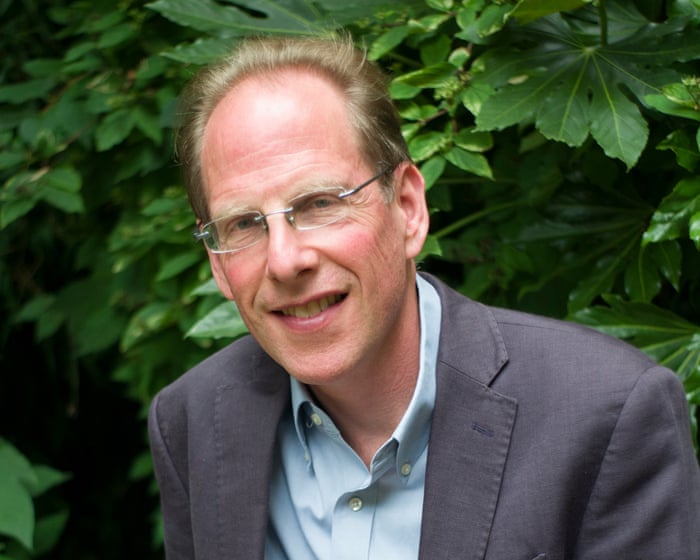
The scientist who created the “extreme male brain” theory of autism now says he regrets using that term, because it’s too easy to misunderstand.
Professor Simon Baron-Cohen’s theory—that autistic people tend to focus more on systems than emotions—has strongly shaped how the public views autism over the last 20 years. But while the science behind it has held up, Baron-Cohen says he now sees the “extreme male brain” label as unhelpful.
“Some of those terms were very easily misunderstood, and I do regret that,” he said. “It can lead to simplistic headlines like ‘autistic people lack empathy,’ which isn’t true.”
He added, “Some of that language, like ‘male brain’ and ‘female brain,’ I just don’t think it’s useful today.”
Baron-Cohen spoke to the Guardian ahead of a $34.5 million (£26 million) donation to Cambridge University from U.S. philanthropist Lisa Yang. He said the money will fund research guided by what the autistic community says is most important.
It’s one of the largest donations ever for autism research to a UK university. The funds will create the K Lisa Yang Centre for Autism Research at Cambridge, as well as a clinical autism centre inside the future Cambridge children’s hospital. Baron-Cohen will oversee both.
The research centre is expected to focus on improving life expectancy and health outcomes for autistic people, earlier diagnosis, and practical solutions to improve quality of life. Baron-Cohen says the physical health of autistic people, in particular, has been overlooked.
“Although people think of autism as being about the mind and the brain, what’s been neglected is the fact that autistic people tend to die younger,” he said.
Recent findings from his team—not yet peer-reviewed—suggest autistic people have a much higher risk of heart disease. The study, based on data from 141,672 people, found that autistic women had a 71% higher risk of heart attack, stroke, and other serious heart problems, even after accounting for known risk factors like blood pressure, diabetes, and obesity.
“If you’d asked me 20 years ago to look at autism and heart disease, it just wouldn’t have been on our radar. But it came from the autism community,” Baron-Cohen said.
Possible reasons for the link include difficulty accessing NHS services, lifestyle factors, or genetics. “It suggests that if your patient is autistic, you need to be looking for these things as well,” he said. “It could have a direct benefit.”
The centre will also likely explore the physical health experiences of autistic women, including distress related to childbirth and menstruation, which some earlier studies suggest may be more common.
“That could be linked to sensory hypersensitivity, but it could also be directly hormonal,” Baron-Cohen said. “The dialogue with the autism community is changing where we focus our attention and which problems need addressing—ones that were being neglected.”
Baron-Cohen has sparked controversy in the autism community before, starting with his “extreme male brain” theory. Critics said it framed autism as a lack of empathy and reinforced gender stereotypes.
In fact, he says, his own research shows that autistic people tend to differ in cognitive empathy—interpreting facial expressions and language—but not in affective empathy, which is the internal response to others’ feelings. “Once they know someone is upset, it upsets them and they want to do something about it,” he said. “There’s a kind of myth that autistic people lack empathy.”
More recently, Baron-Cohen’s team faced backlash over a plan to sequence the genomes of 10,000 autistic people. That project was eventually dropped.After a two-year consultation with the autistic community, he noted that there is now much more emphasis on consulting people early enough so that research priorities can be shaped or improved by their input.
“I can’t speak for everyone, but many autistic people think differently. They’re not just following trends or conventions—they think from first principles and can come up with very fresh perspectives on things,” he said.
The Cambridge donation comes as autism diagnoses continue to rise. In the UK, there was nearly an 800% increase between 1998 and 2018. And in 2024-2025, the number of children referred to mental health services with possible autism rose by almost 50% in just one year.
Some argue that “overdiagnosis” is to blame. But Baron-Cohen dismissed the idea that people would seek a diagnosis “in a casual way.” His team is running a pilot study to see if GPs can diagnose autism as accurately as specialist referral centres, which he said could “cut the waiting lists overnight.”
Frequently Asked Questions
Here is a list of FAQs based on the topic The pioneer of the extreme male brain theory of autism now says the phrase is not helpful
BeginnerLevel Questions
Q What is the extreme male brain theory of autism
A Its an old idea that autistic people have brains that are wired in an extremely male waymeaning they are very good at systemizing but less good at empathizing
Q Who came up with this theory
A Psychologist Simon BaronCohen proposed it in the early 2000s
Q Why did the creator now say the phrase is not helpful
A He said the term is often misunderstood People took it to mean that autism is caused by being too male or that it only affects males which isnt true He now thinks the wording causes more confusion than clarity
Q Does this mean the theory is completely wrong
A Not exactly The core ideathat autistic people often have strong systemizing skills and may struggle with empathyis still considered valid by many But the label extreme male brain is seen as misleading and outdated
Intermediate Advanced Questions
Q What specific problems did the extreme male brain label cause
A It reinforced harmful stereotypes that autism is a male condition that autistic women dont exist and that autistic people lack empathy entirely It also ignored the fact that many nonautistic men are not systemizers and many autistic women are
Q If the phrase isnt helpful what does BaronCohen suggest we use instead
A He now prefers the term empathizingsystemizing theory This describes the two traits separately without linking them to gender It focuses on brain types not male vs female brains
Q Does this mean the theory still blames autism on male hormones like testosterone
A The link to prenatal testosterone is still being studied but the new framing separates the biological research from the social label The problem was using male as a catchall description for a complex neurological difference
Q How does this change affect autistic women and nonbinary people
A It