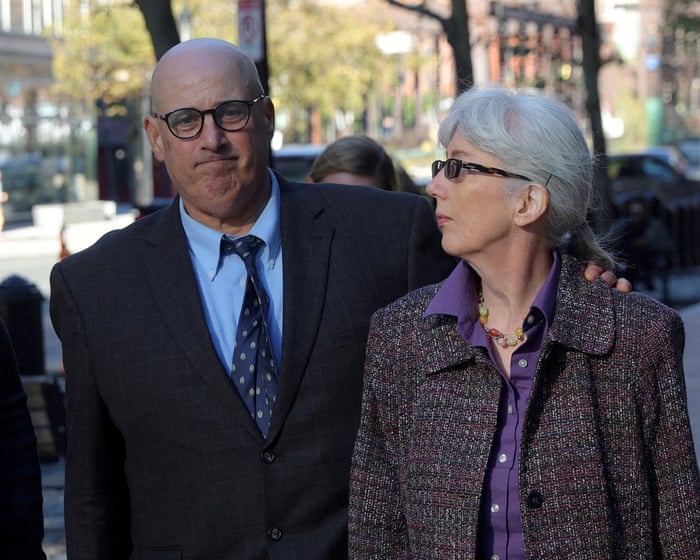
When Massachusetts couple Ina and David Steiner started their journalism careers covering Silicon Valley at the start of the 2000s, the tech beat still felt small and personal. Startups were just coming out of garages, and the reporters covering them often wrote their stories from their own kitchen tables. eBay was still a young online auction company built on the idea that “people are basically good.”
As online shopping grew, the Steiners launched an online magazine called EcommerceBytes. It served a growing group of small business owners who were increasingly using platforms like eBay to sell their products. “We talked about this being an opportunity for just average people, disabled people, elderly people to make extra income,” says David about the community that has grown with EcommerceBytes, which now has over 600,000 readers. “We were really excited about that.”
Their first 19 years covering the industry were a dream, the kind of happy ending you’d expect from a Hallmark Christmas movie couple. But like any successful partnership, it relied on a clear split of duties. Ina handled what got published, and David handled how it got done. “Back when we started there was no WordPress,” Ina says. “He had to somehow create his own system so we could still publish within our budget.”
But they never expected that dream to turn into a nightmare, with them as the targets of a relentless harassment campaign across the country, orchestrated by the very company that supported their work. “This was a Stephen King nightmare, a horrible nightmare,” Ina says. “And then to find out the company that I had covered for 20 years was doing this is surreal. It’s taken an enormous toll on us physically and mentally.”
The Steiners have become a striking example of the modern dangers reporters can face just for doing their jobs. Last month, they reached a $55.7 million settlement with eBay after six years of criminal and civil cases against the company, linked to former employees’ efforts to scare the couple into silence. The disturbing campaign unfolded over several weeks in 2019, with the Steiners receiving online threats and unsettling packages at their suburban Boston home: live spiders, a bloody pig mask like the one worn by the killer in the Saw movies, and a book about coping with the death of a spouse. Pornographic magazines addressed to David were deliberately sent to their neighbors, and their home was listed online as a spot for pop-up yard sales and swingers’ parties.
The Steiners had little idea who was behind the threats or what they had done to deserve them. “I thought it was some lone psychopath,” Ina said. “I reached out to my sister and said: ‘I have a stalker. Please tell everyone to disengage and disconnect from me on social media.’ We were so terrified and afraid for our family. I was feeling this sort of shame.”
They went into self-protection mode, rigging up noisemakers from pots and pans to alert them to possible intruders, installing cameras throughout their house, and sleeping in separate beds to make sure one of them had time to call for help if the other was attacked. All the while, local police were baffled by the case. They didn’t really start solving it until the Steiners gave them a license plate number from a car that had been watching them, which they traced back to an eBay employee who had rented the vehicle with a corporate credit card.
From there, the mystery quickly came apart: eBay was under pressure—struggling to keep up with competitors, facing activist investors, and embarrassed by Ina’s straightforward reporting on then-CEO Devin Wenig’s oversized pay package. Text message exchanges betweenBetween executives, it became clear just how far they were willing to go to make the Steiners disappear—and how personal the vendetta had become. It was a stark contrast to the cozy Silicon Valley of the past.
“Take her down,” Wenig wrote.
“I want to see ashes,” wrote chief communications officer Steve Wymer. “As long as it takes. Whatever it takes.”
According to investigators, the company’s security chief, James Baugh, acting on orders from above, then directed a group of young women who worked for him to target the Steiners—even as he was also harassing them and, in one case, having an extramarital affair with one of them. In 2020, the Department of Justice charged seven eBay executives and employees with cyberstalking. In 2022, Baugh was sentenced to 57 months in prison. In 2024, federal prosecutors reached a deferred-prosecution agreement with eBay itself. The company admitted to a detailed statement of facts, was charged with six felony counts (including interstate-travel and electronic-communications stalking), and agreed to pay the maximum $3 million criminal penalty.
Meanwhile, the Steiners’ $55.7 million civil settlement—in which eBay admitted fault and apologized but denied legal liability—brought a nearly two-year legal battle to a close. Wenig, who stepped down as eBay’s CEO in 2019, agreed to pay $2 million to the Steiners and $1 million to a First Amendment rights charity in Ina’s name. But the formal resolutions haven’t exactly ended the Steiners’ personal and professional nightmare. Since their 2019 ordeal, they’ve both been diagnosed with PTSD, see therapists, and take medication to manage anxiety. A simple trip to the grocery store still feels risky after all the stalking. David is still haunted by the memory of celebrating his 31st wedding anniversary with Ina over tuna and dry spaghetti, as their supplies ran low. “Every time we went out or I tried to shop, something would happen and I’d have to run home,” he says.
The Prime Video documentary Whatever It Takes, directed by Jenny Carchman, retraces the Steiners’ ordeal with the pace of a paperback thriller—among other things, revealing an eBay corporate security operation that seems like a mix between an NSA counter-terrorism strike force and a frat house. The couple was strongly against participating at first. But the documentary has helped their friends and neighbors understand the seriousness of their situation, and why they were so hesitant to accept help. “We felt toxic,” David says. “We certainly didn’t want anybody else involved in something that was directed at us—so we just stayed in our bunker.”
Somehow, though, the Steiners managed to find the strength to keep publishing—partly to keep the scandal from overshadowing the brand they built from scratch. “When people were writing about eBay targeting us, it was as if my 20 years of being a reporter didn’t exist,” Ina says. “I was reduced to: that lady who wrote the story about executive compensation.”
Given their own experience of being targeted, I wondered if they could empathize with the female employees who also found themselves caught up in the scandal.
“The New York Times did this interview with [one of the female eBay employees] and it was very sympathetic to her,” Ina says. “But from my point of view, it was like: she was harassing and terrifying me.”
David, of course, feels differently. “Ina, she’s a very forgiving person. But I’m just not there yet.”
The biggest victory in the Steiners’ civil settlement might be the absence of an NDA. They can speak publicly about the case and their ordeal and keep reporting on unfolding developments. While pursuing the civil case, they received a trove of more than 68,000 documents that have given them a much fuller picture.The true nature of the internal campaign to harass them, along with the executive failures that essentially allowed it to happen, is now clear. It’s tempting to call the whole sordid affair an early form of corporate terrorism. But given Wenig’s past role as CEO of Thomson Reuters, which runs one of the world’s largest newswire services, it reads more like a crime committed by news against news.
This serves as a reminder of how much Silicon Valley has changed since the Steiners first covered the tech beat, and how their scrappy operation stands out from the industry-friendly reporting that dominates the mainstream. For the Steiners, the $55.7 million settlement isn’t just a reward for a fight they wanted to win and then move on from, hoping for a happy ending—maybe on a tropical island where eBay is blocked. Instead, it highlights the honor of their struggle, the value of their integrity, and that principled journalism is still very much worth pursuing.
Unsurprisingly, EcommerceBytes’ loyal readers already understood the worth of that work. “We get emails and comments like, ‘We know you guys deserve a break, the compensation and the security, but please don’t stop publishing,'” Ina says. “That is really meaningful to find.”
Whatever It Takes is now available on Amazon Prime.
Frequently Asked Questions
Here is a list of FAQs about the eBay harassment scandal written in a natural clear and concise tone
General Background
Q What exactly was the eBay harassment scandal
A It was a criminal scheme in 2019 where top executives at eBays headquarters in California orchestrated a campaign to harass and intimidate a Massachusetts couple David and Ina Steiner who published a newsletter that was critical of eBay
Q Who were the victims
A David and Ina Steiner a couple who ran a blog and newsletter called eCommerceBytes They were targeted because their coverage annoyed eBays thenCEO Devin Wenig
Q What kind of harassment did the couple face
A A truly terrifying campaign It included sending live spiders cockroaches and a bloody pig mask to their home as well as threatening messages stalking them and even trying to install a GPS tracker on their car
Q Why did eBay do this
A The CEO was angry about the newsletters critical coverage He sent an email to his communications chief saying We need to take her down which triggered the bizarre and illegal plan
Q What happened to the people involved
A Several employees were fired In 2020 the US Justice Department charged seven former eBay employees Six of them pleaded guilty to charges like cyberstalking and conspiracy In 2022 the former head of security Jim Baugh was sentenced to nearly five years in prison The former CEO Devin Wenig was not charged in the criminal case but paid a fine in a related SEC settlement
The Details The Aftermath
Q Did eBay the company get in trouble or just the employees
A Both The employees faced criminal charges and eBay as a corporation paid a 3 million fine to settle the criminal case They also paid a separate 3 million fine to the SEC for failing to disclose the scheme to investors
Q How did the couple catch the harassers
A The harassers made several mistakes They used a rented van and the couple noticed the tracking device on their car They also sent threatening messages from anonymous accounts that were traced back to eBays network The FBI eventually raided eBays headquarters