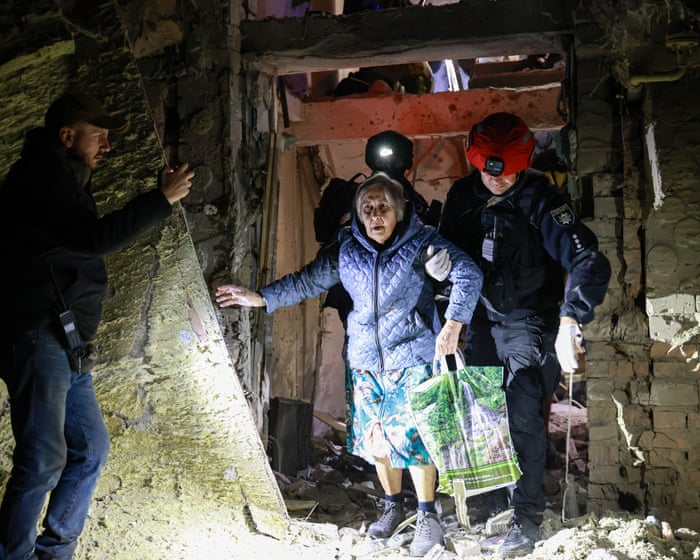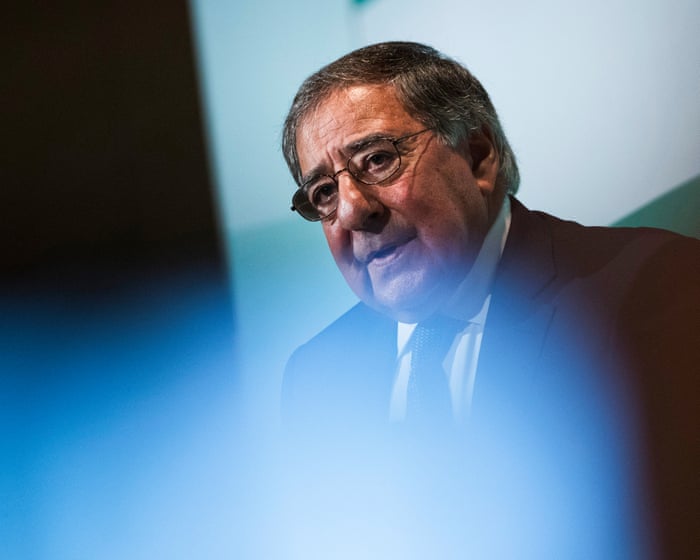
Donald Trump’s conflict with Iran is likely to drag on for another six months, according to Leon Panetta, the former US defense secretary, who warns that the president is struggling to find a way out of the controversial war.
In an interview, Panetta said the war with Iran—which Trump launched over six months ago—risks becoming another “forever war in the Middle East,” with no clear end in sight.
“It’s no secret that the United States and Iran are stuck in a terrible stalemate, with very few real options to end this war,” said Panetta, who also served as CIA director under Barack Obama. He suggested the conflict is on track to become “another failed war” in the Middle East, “like Iraq and Afghanistan.”
“I think it’s likely this war will continue for another six months without being resolved,” he added.
Panetta spoke to the Guardian just days after US Army Secretary Dan Driscoll abruptly resigned amid the conflict, following reports of tensions with Defense Secretary Pete Hegseth over a series of firings.
US service members “are going to war at a time when there’s tremendous turmoil at the Pentagon and in the command structure, which really creates a sense that nobody is in charge,” said Panetta, who served as defense secretary from 2011 to 2013. “And I think that whether it’s Iran or our adversaries, they’re now looking at the United States and seeing weakness in our ability to actually use our military strength to defend the country.”
He added: “My biggest concern right now is that we live in a very dangerous world, with major threats from China, Russia, North Korea, terrorism, and yes, Iran as well. But what worries me is that we’re sending a message of weakness to our main adversaries.
“While they continue to meet and support each other in this axis that’s been formed, I think they see the United States as particularly weak right now, and that’s a terrible message to send when we’re facing those kinds of threats.”
In a statement, the Pentagon insisted it was “firing on all cylinders” under Hegseth’s leadership.
“The idea that the Department is in disarray is completely baseless and an insult to every dedicated professional and warfighter in this building who comes to work every day to defend this nation,” said Sean Parnell, the chief Pentagon spokesperson. “This is what reform looks like.”
The White House was also contacted for comment.
In March, just three weeks after the US and Israel launched their military operation in Iran, Panetta told the Guardian he believed Trump was caught between a “rock and a hard place,” weighing whether to expand the war to eliminate Iran’s leverage over the Strait of Hormuz, or “simply walk away and declare victory,” despite the risk of looking like a failure.
Earlier this week, Panetta said he “absolutely” believes Trump is still in that position. “He’s boxed himself in,” he said.
According to Panetta, Trump now has three options. The first is to walk away and “admit that it’s a failed war,” which Panetta finds hard to imagine Trump doing.
The second is to prolong the current “stalemate, with periodic attacks back and forth, tit for tat,” where both sides try to “avoid starting a more dangerous war” while refusing to negotiate or surrender.
Panetta believes that approach would lead to “what all parties feared”: another prolonged war in the Middle East.
The third option, he said, would be for the US to take control of the Strait of Hormuz and remove Iran’s “most dangerous leverage point” over the US—“the ability to close and disrupt” that key global trade route.
“So the president either steps up and does what’s necessary to open the Strait of Hormuz, or, as IHe just keeps playing this game, pretending he’s somehow winning a stalemate when the truth is, he isn’t,” Panetta said. When asked if he thought the US could win the war, Panetta replied: “It’s only winnable if the United States makes a dramatic shift in its approach, making it clear that the main goal right now is to reopen the Strait of Hormuz.”
JD Vance responds to airstrike that killed four at an Iran wedding: ‘Things happen’
Read more
He also argued that Trump has hurt his own credibility by repeatedly and wrongly claiming that a deal to end the war is close and that the Strait of Hormuz is open. “So the real question is, will he actually make a decision to deliver?” Panetta asked. “For many reasons, right now he’s stuck in the worst possible position, because not only does he lack credibility, but any threats he makes are completely ignored.”
Earlier this week, JD Vance told reporters he wouldn’t call the current military conflict with Iran a “war.” When asked if he expected it to be over by November’s US midterm elections, the vice-president said: “I think the reality is I don’t know the answer to that. You’d have to ask the Iranians.”
Panetta told the Guardian he believes many Americans have “lost faith” in Trump’s “ability to handle this war,” pointing to recent polls that he said show a majority of Americans think the conflict with Iran was a mistake and oppose it. He also said he hopes the Pentagon and Trump’s broader administration learn from what happened with the very long deployment of the USS Abraham Lincoln, which arrived in Thailand this week after a record-breaking mission supporting US operations against Iran that lasted over 260 days without a port visit, amid reports of worsening living conditions and mental health issues on board.
“The bottom line is, you don’t send people into a war zone indefinitely without some plan for rotation,” Panetta said. “So it’s not just that the war is going badly—I think there’s also a growing lack of trust in our military, wondering whether they’re properly supporting the men and women who are risking their lives.”
Frequently Asked Questions
Here is a list of FAQs based on the provided statement covering various angles from basic understanding to expert analysis
General Definitions
Q Who said the war in Iran will last another six months
A A former US defense secretary made this prediction It is a personal assessment based on his experience not an official military statement
Q Is the US currently at war with Iran
A The statement implies an ongoing conflict or military operation involving Iran However war can mean anything from fullscale invasion to ongoing airstrikes or a shadow conflict For exact current status you should check live news from official sources
Q What does another six months mean in this context
A It is a forecast that the current level of military conflict whatever its form will not be resolved quickly and will likely continue for at least half a year from the date of the statement
Q Does this prediction mean the war will definitely end in six months
A No It is an estimate not a guarantee It suggests a minimum duration not a specific end date The conflict could easily last longer
Context Causes
Q Why would the former defense secretary make this prediction
A He likely bases this on several factors the difficulty of the terrain the strength of Iranian defenses the complexity of the political goals and historical precedents of similar conflicts in the region Its an expert gut check based on data
Q What are the main reasons the conflict is expected to drag on
A Common reasons for prolonged conflicts include the enemys ability to adapt the difficulty of achieving a clear political victory the risk of regional escalation and the time needed to degrade military infrastructure
Q Does this warning suggest the US is losing
A Not necessarily It suggests the conflict is a marathon not a sprint It indicates that victory as defined by the US will take time and patience rather than being a quick decisive win
Q Is this the same as the Iraq War