The Social Reckoning opens in cinemas this Friday, but the real world has already produced a sequel—or rather, a third instalment. Directed by Aaron Sorkin, the film follows The Social Network and continues the story of Mark Zuckerberg and his social media empire, focusing in particular on Frances Haugen, the employee who in 2021 leaked internal documents suggesting Facebook knew about the harm its products caused.
It’s no spoiler to say the film ends with Haugen testifying before the US Senate on 5 October 2021. That same day, Arturo Béjar, a consultant on Instagram’s wellbeing team (Instagram is also owned by Facebook), sent a long-gestating email to Zuckerberg and other senior Facebook executives about a similar issue. “I wanted to bring to your attention what I believe is a critical gap in how we as a company approach harm, and how the people we serve experience it,” Béjar wrote, before laying out shocking statistics from his team’s survey. For example, 24.4% of 13- to 15-year-olds on Instagram said they had received unwanted advances, and 21.8% said they had been bullied on the platform in the past seven days. What’s more, 51% of Instagram users said they had had a bad or harmful experience in the past seven days. Only 1% reported it, and of those, 2% had the content taken down—just 0.02%. This was far more harm than the company’s existing measurements suggested. Zuckerberg never replied.
By then, Béjar had worked at Facebook (which rebranded as Meta later that month) for eight years in total. He had learned how to communicate with Zuckerberg. “You couldn’t talk to Mark about, ‘We have to do this thing to prevent suicide because it’s the right thing to do,'” he says. “You had to put everything in terms of metrics. That was his language. That’s how he related to things, which is also what’s behind all the grief in the world right now.”
View image in fullscreenJeremy Strong as Mark Zuckerberg in The Social Reckoning. Photograph: Everett Collection/Alamy
Béjar has seen The Social Reckoning, and he recognises Jeremy Strong’s portrayal of Zuckerberg as a detached, awkward, humourless control freak all too well. “Oh, it’s accurate,” he says. “I don’t recall him ever being empathetic to the harm that somebody was experiencing and wanting to make that better … The only thing that really consistently came across in all my interactions with him was winning. He’s one of the most fiercely competitive people I know.”
One time, Béjar recalls, he and Zuckerberg were walking together after a fraught meeting. “One of the things that I used to say when bad things were happening is, ‘Are we having fun yet?’ Just as a little kind of defusing humour thing,” says Béjar. “And he looked at me, very intense, and said, ‘I’m not here for fun—I’m here for impact.’ That was my experience of him, over and over and over again.”
Revealed: Facebook’s internal rulebook on sex, terrorism and violenceRead more
That 2021 email was the beginning of the end for Béjar. He was still hoping Zuckerberg would respond to his appeal to engineer a “culture shift” in the way Instagram dealt with protecting its young users. The next day, however, Zuckerberg issued a statement to Facebook employees about Haugen’s testimony and the leaked “Facebook Files” that were being reported by the Wall Street Journal and others. “At the heart of these accusations is this idea that we prioritise profit over safety and wellbeing. That’s just not true,” Zuckerberg wrote. But by then Béjar knew it was true.
By 2023, Béjar was following in Haugen’s footsteps and testifying to the US Senate himself. He has testified under oath against Meta at least seven times since, by his reckoning, in various trials and hearings. The most reIn August, a landmark trial took place in California, brought by the attorneys general of 29 US states. It was significant and far-reaching, alleging once again that Meta knowingly designed products that were addictive and harmful to minors. In his testimony, Béjar stated: “You just cannot trust Mark Zuckerberg with kids.”
Frances Haugen, the former Facebook employee who testified against the company in court, is pictured.
In many ways, Béjar is the perfect witness: sincere, calm in his speech, emotionally intelligent, able to explain complex ideas in accessible ways, and armed with a wealth of inside knowledge. He seems to be the opposite of Zuckerberg. At times during our conversation, as we sit outside a café in north London, he has to pause mid-sentence, his eyes filling with tears. He apologizes afterwards for getting emotional, but that seems to be exactly what these issues call for.
There’s another reason Béjar has been such a powerful spokesperson: he has a direct connection to the issues through his teenage daughter. When she was in her early teens, around 2018, she told him she regularly received sexist comments and unsolicited nude photos from men through her Instagram account. Her female friends experienced the same thing. There was no point reporting it, she told him, because it never led to any meaningful action. Commenters might get blocked—after which they would simply open a new account under a different name—or Instagram would decide that the behavior didn’t violate their policies.
Until that point, like many early Facebook employees, Béjar believed he was making the world a better place. When he started in 2009, the company was booming and the idealism was infectious. “The promise was, we’ll create something that keeps you close to your friends. I think a lot of people back then believed in that. And that’s not what they built.”
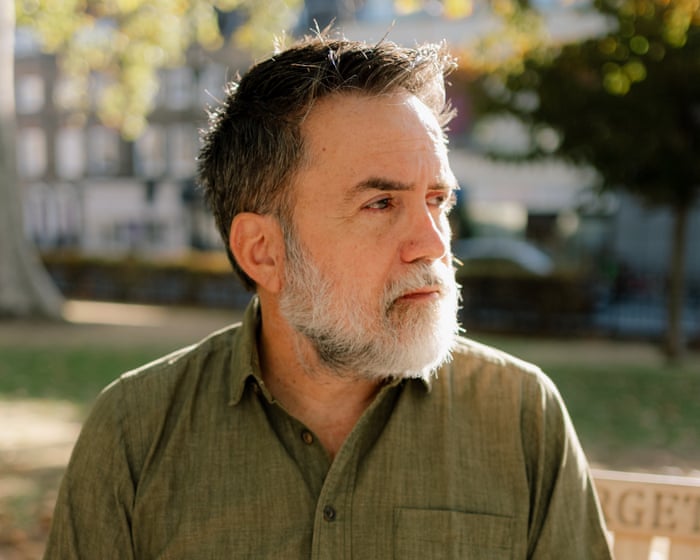
Béjar is pictured.
Béjar, 55, was an early tech enthusiast. Born in Mexico City to a doctor father and an artist mother, he taught himself to code and talked his way into a job with IBM when he was 15. He came to Silicon Valley in 1993 after a stint in London, and worked at Yahoo for 11 years before joining Facebook.
As a senior engineering and product leader at Facebook, Béjar was responsible for security but also for customer care: “developing tools that help people learn to be with each other online”—especially young people. For example, he developed a more nuanced way for young people to report content they didn’t like. If the button on Facebook said “report,” teens tended not to use it, but if it was changed to “I don’t want to see this,” three times as many teens would click on it. And if you could rate the intensity of that feeling, from “mildly annoying” to “really bad,” that made it easier to deal with problems.
“Most people who behave aggressively online, if you give them private, respectful feedback, they’re like, ‘Oh sorry, I didn’t mean to,'” Béjar says. “And that’s how we work as a society, right?” He gestures to the pedestrian street around us; people are peacefully going about their business. “What makes this street nice is not that there’s police everywhere enforcing our behavior, it’s that we have all these ways of signaling to each other what it’s like to be safe, even though you might have fundamentally different values.” He built more than a dozen Facebook products on that premise, he says, with extraordinary results. “Basically, half the people change their behavior the first time you go, like, ‘Yeah, we don’t do that here.'”
He left the company amicably in 2015 because he was going through a divorce and wanted to spend more time with his young son and daughter. By the time he found out about his daughter’sand had to pay $942 million (£713.7 million) in fines and damages. Dozens more cases are still pending. Government regulation is tightening worldwide. Perhaps the tide is turning.
If so, it would bring some relief to Béjar. He has spent much of the past three years campaigning, testifying, and talking to governments, academics, and regulators. He has interests beyond the tech world. Even while leaving Meta, he was writing the libretto for a musical collaboration with composer Philip Glass. He is writing an opera based on Charles Darwin’s theory of emotion in animals with British composer Jocelyn Pook. His daughter, incidentally, now makes a living restoring classic sports cars.
There is still work to be done. What is really needed, Béjar argues, is independent assessment and comparison of the safety of social media sites—the same way we monitor, say, vehicle emissions. “Every parent and every kid deserves to know: what is the likelihood that this bad thing is going to happen to you on any of these services?” But at last it feels like things are moving in that direction, he says. “It’s still just the beginning, but I do feel hope.”
Do you have an opinion on the issues raised in this article? If you would like to submit a response of up to 300 words by email to be considered for publication in our letters section, please click here.
Frequently Asked Questions
Here is a list of frequently asked questions about Arturo Béjars departure from Meta and his decision to become a whistleblower
Beginner Questions
Q Who is Arturo Béjar
A He is a former engineering director at Meta who worked on user experience and safety particularly for teens Before that he worked at Yahoo and was a prominent figure in the tech industry
Q What does it mean to be a whistleblower
A A whistleblower is someone who exposes information about illegal unethical or dangerous practices within an organization They often do this to protect the public or hold the organization accountable
Q Why did Arturo Béjar leave Meta
A He left because he became frustrated with what he saw as Metas failure to protect teenagers from harmful content and harassment on Instagram He felt the company was not doing enough to address these serious issues
Q What is the main issue he raised
A He raised concerns that Instagrams design and algorithms can harm teens mental health He also said the company ignored internal research about these harms and did not act quickly enough to fix them
Q What does the quote I dont remember Mark ever showing empathy mean
A It means that in Béjars experience Meta CEO Mark Zuckerberg did not show genuine concern or understanding for the users who were being harmed especially teenagers Béjar felt this lack of empathy was a major problem
Q What is Meta
A Meta is the parent company of Facebook Instagram WhatsApp and other apps It is one of the largest technology companies in the world
Q Why did he become a whistleblower instead of just quitting
A He wanted to bring public attention to the problem By speaking out he hoped to pressure Meta to change its practices and to inform parents lawmakers and the public about the risks to young users
Intermediate Questions
Q What specific harms did Béjar say Instagram causes
A He said Instagram can lead to anxiety depression and body image issues in teens He also said it fails to protect users from harassment bullying and unwanted sexual advances
Q What did Béjar say about Metas internal research