Young British people have plenty to be angry about: crushing student debt, private-school privilege, and a housing market they can’t break into. But unlike their French peers, they have little tradition of turning that frustration into collective action. I grew up in France as a Briton, and for years I’ve watched my French friends do something my British friends never seem to: take to the streets.
“To arms, citizens! Form your battalions! Let’s march, let’s march!” Given the rousing lyrics of La Marseillaise, it shouldn’t be surprising that France’s revolutionary spirit is not just a thing of the past.
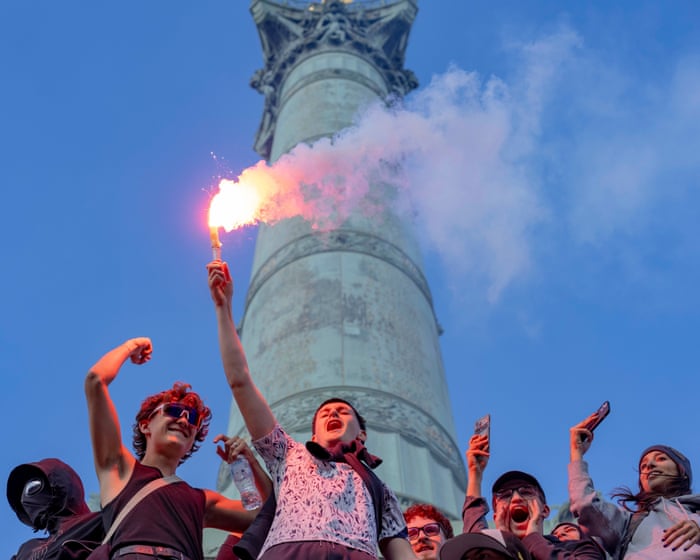
The lycée protests in the past week have shown the organization and bravery of French students. In Lens, a 15-year-old lost his hand to a police grenade during a blockade. More than 6,000 people have been arrested, many of them under 18. Hundreds of schools across France are either blockaded or closed. These teenagers know the risks and still show up day after day. I can’t imagine that happening in Britain, so what makes the French so different?
First, there’s the history. France’s republic was born of insurrection and has never forgotten it. French pupils learn that protest, uprising, and rioting are the origin story of their freedoms, so these methods are championed as ways to bring about change. We grew up in school with the idea that if you don’t like something, you have the power to change it. The language of rights, citizenship, and collective power is woven into French education. The French Revolution appears in the curriculum twice, for pupils aged 12 and again at 16; the student protests of 1968 are taught at age 14 and again at 17. Debating is encouraged in schools from as early as collège, or about age 11. Young people are expected to have an opinion and not be afraid to defend it.
Even I, at 11, started to feel patriotic during our moral and civic education classes, despite not having a French passport. Protesting is taught as a legally protected fundamental right and a civic responsibility. Of course, since lycéens are not yet old enough to vote, protest is the next best thing.
In the final year of lycée, pupils study Rousseau’s Du Contrat Social (The Social Contract), which argues that citizens should give up their unrestricted natural liberty only in exchange for civil and moral freedoms. You give up your individual interests for the volonté générale (general will) — put simply, you pay heavy taxes and in return you expect the country to work. That bargain is how the French understand their relationship with the state. When the government raises the retirement age, lets electricity bills soar, or cuts school budgets, that is seen as a breach of the social contract. Protest is the automatic response.
Britons, on the other hand, are subjects of the UK and are characterized more by an American-style individualism and a desire to live and let live. There is less collective spirit. Britain has an extraordinary history of protest, spanning Peterloo, the Chartists, the suffragettes, and the poll tax riots, but there is arguably a different cultural relationship to these events. They can be remembered as stand-alone episodes and interruptions to the national story rather than as the story itself. The Thatcher era also did permanent damage to unions, helping to make the British public a grumbling but compliant one, lacking in organizing power. I see what’s happening here in Paris: reasonable student demands met with awful violence | Helen Massy-BeresfordRead moreBecause these values are ingrained across French society, and in every generation, the student protesters are emboldened by the firefighters, nurses, lawyers, and teachers who have joined them in solidarity. Across social media, you can see these moments of support and unity. A viral video of the mayor of Saint-Denis, Bally Bagayoko, protecting students from the police is a striking example of this. It’s difficult to imagine British teenagers takParents have joined their children in protesting and have urged other parents to do the same for the planned general strike on 17 October. This is also a response to the police brutality seen in the past week. Many parents were once lycée students themselves and marched against education reforms and cuts. The many anti-Macron parents don’t see their children as delinquents, but as citizens exercising their rights.
That doesn’t mean every French parent supports every protest, or that French society is completely united behind its students. While the French state technically encourages protest through the curriculum, the force and violence it has used against its students suggests otherwise. Some students also resent the protests, especially those from conservative households who believe the blockades are a leftwing plot.
Students in France are not necessarily more political than their British counterparts – young British people are active, but tend to join established, larger movements such as Extinction Rebellion or the Gaza protests rather than start protests themselves. The biggest difference is the French willingness to take to the streets suddenly and en masse. Unlike in the UK, the French are taught to engage with the state as citizens and to challenge it when necessary. If anything, the lycéens are just being good students.
Kitty Sayers is a master’s student in journalism
Frequently Asked Questions
Here is a list of FAQs based on the article Angry French students are protesting in the streets British students are not and I think I know why by Kitty Sayers
Beginner Questions
Q What is this article about
A It compares French and British university students It asks why French students protest in the streets while British students generally do not
Q Who is Kitty Sayers
A She is the writer of the article She shares her opinion on why the two countries have different protest cultures
Q What are French students protesting about
A They are angry about government policies funding cuts and changes to their education system They feel their future is being threatened
Q Why arent British students protesting too
A The writer suggests British students are more focused on individual survival High fees and living costs make them worry about their own degrees and jobs rather than collective action
Q Is this article saying French students are better
A No It is not saying one group is better It is trying to explain the different social and political situations in each country
Advanced Questions
Q What is the main argument of the article
A The main argument is that French students have a stronger tradition of collective political action British students facing high debt and a competitive job market feel powerless and focus on individual success instead
Q What are the benefits of protesting mentioned in the article
A Protesting can bring attention to problems pressure governments to change policies and create a sense of solidarity among students It can lead to real political results
Q What common problems do British students face that stop them from protesting
A The article highlights high tuition fees large student debts and the need to work parttime These pressures leave little time or energy for activism
Q Can you give an example from the article that shows the difference
A Yes The article describes French students blocking roads and occupying buildings In contrast British students are described as more likely to sign an online petition or focus on their studies
Q What practical tips does the article suggest for British students who want to protest