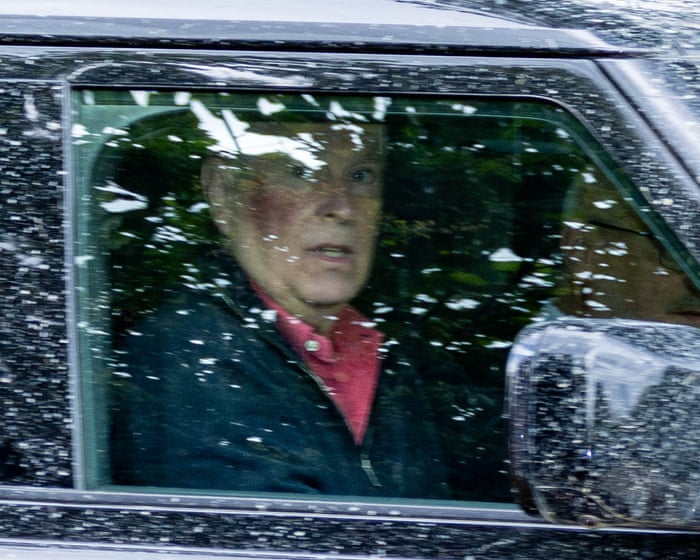
Andrew Mountbatten-Windsor earned private income by subletting three cottages on his Windsor Royal Lodge estate, while paying only a symbolic “peppercorn rent” to the Crown Estate, according to a report on royal property arrangements.
The National Audit Office (NAO) review also reveals that King Charles pays an “adjusted” rent from his private Duchy of Lancaster income—below market value—so that his disgraced brother’s non-working royal daughters, Princesses Beatrice and Eugenie, can live in royal palaces.
Meanwhile, the Prince and Princess of Wales’s Forest Lodge home in Windsor underwent £400,000 in repairs carried out by the Crown Estate before the couple moved in last year with their three young children. William and Catherine signed a 20-year lease in July for the Grade II-listed Georgian house, which includes gardens, a paddock, a barn, and three cottages on 7.4 hectares. They pay £307,200 in rent each year, reviewed every five years, according to the NAO. They paid no upfront premium and are responsible for internal renovations and changes.
Details of these properties were published in the report on Friday, which will form the basis of a Commons public accounts committee inquiry into royal properties. This follows public outcry in October when it emerged that Mountbatten-Windsor was paying a peppercorn rent for Royal Lodge, the Windsor mansion from which he was eventually evicted by Charles.
The NAO found that rent and lease arrangements for royals varied depending on why the accommodation was needed and whether the property was managed by the Crown Estate—a self-funding public corporation that manages assets for the crown—or the royal household. For properties managed by the royal household, “adjusted rent” was typically 60% of the open market value because the properties are in secure, cordoned-off areas that require tenants to undergo security vetting.
The rent for Beatrice’s St James’s Palace apartment is 68% of market value, while Eugenie’s Kensington Palace cottage is 64%. The NAO said Eugenie’s rent was 50% of the 2018 market value from 2020 to 2021, and ranged from 55% in 2022 to 63% in 2025. Beatrice’s rent was 60% of the 2020 market value from 2020 to 2021, and ranged from 62% to 68% between 2022 and 2025.
Charles also pays rent for Prince and Princess Michael of Kent’s Kensington Palace apartment, although there was no record of a valuation for that lease before 2026.
Mountbatten-Windsor, now evicted to Marsh Farm on the Sandringham Estate in Norfolk, had a lease that allowed subletting, though it’s not known how much he earned from it. He paid a £1 million premium and £7.5 million on refurbishing Royal Lodge under a 75-year lease in 2003. The report says he could be entitled to between £301,967.66 and £488,342.21 in compensation for surrendering the lease early. However, the Crown Estate has previously said it’s likely he won’t be owed any compensation once the cost of repairs for wear and tear is taken into account.
Sources suggested that Mountbatten-Windsor’s subletting didn’t generate a profit, and the rent was set only to cover maintenance and running costs for staff living there. But no figures—like repair and household costs versus rental income, or copies of rental agreements—have been made public.
Public money from the Sovereign Grant is used for the maintenance and running costs of occupied royal palaces. But sources suggested that the adjusted rents paid by the king for Beatrice and Eugenie’s palace homes covered the costs met by the Sovereign Grant for those properties, so there was no extra cost to the grant.
Norman Baker, a former Liberal Democrat minister, said the arrangements for Mountbatten-Windsor added “insult to injury… not only that Andrew was able to have a peppercorn rent for a gigantic property, but then to make potentially millions on the side from subletting properties. The money should have gone to the Crown Estate, not into [his] pockets.”
The Duke and Duchess…The Earl and Countess of Edinburgh paid a £5 million premium for Bagshot Park, their home on the Windsor estate. A new lease, granted in August 2007, replaced the previous one, with Prince Edward paying £1.38 million compared to the original 1998 lease. The couple now pay a peppercorn rent. They also earned income by renting out the stable block until 2020, according to the report.
Seven members of the royal family lease five properties from the Crown Estate. The lease terms vary and were agreed at the open market value at the time, with the Crown Estate seeking independent professional advice on the financial terms, the report said.
The royal household provides 11 working royals, including Charles and Camilla, with seven residences within the occupied royal palaces at no cost, in exchange for their official duties.
The report states: “Generally, we found [the Crown Estate] applied standard practices across the leases we examined, in line with its processes. Where we found differences, these related to specific terms within lease agreements for the same lease type. Each lease was agreed at different points in time over a 50-year period, so some variation in practice and outcomes is to be expected.”
A spokesperson for the Crown Estate said: “The Crown Estate welcomes the National Audit Office’s review, which confirms that its leases with members of the royal family were agreed in line with independent, professional advice and open market valuations. We look forward to discussing the report further with the Public Accounts Committee in due course.”
A Buckingham Palace spokesperson said: “We are grateful to the National Audit Office for this report, which aligns with the royal household’s commitment to transparency. We hope the findings will help correct, clarify, or provide context for a number of points regarding royal properties. As the report notes, arrangements for properties managed by the royal household vary based on several factors to ensure residences are filled appropriately, depending on their location, tenants, and purpose.”
Frequently Asked Questions
Here is a list of FAQs based on the scenario you provided
General Background
Q Who is Andrew and why is he renting cottages from the Crown Estate
A Andrew is the Duke of York He leases a large property called Royal Lodge from the Crown Estate which manages the Queens public properties The cottages are part of that estate
Q What does symbolic rent mean in this context
A It means he pays a very small amount of moneyfar less than the market ratejust to make the lease legally valid Its not meant to be a real financial transaction
Q Are these cottages on the same land as his main house
A Yes they are part of the Royal Lodge grounds in Windsor Great Park
The Subletting Details
Q So Andrew is subletting these cottages What does that mean exactly
A Yes He is the main tenant of the Crown Estate and he is renting out three separate cottages on his property to other people He collects the rent from them
Q If he only pays a symbolic rent why would he sublet them
A To make money He can charge the subtenants a full marketrate rent while he pays almost nothing to the Crown Estate Its a way to generate a significant income from a property he doesnt actually own
Q Is it legal for him to sublet Crown Estate property
A It depends on the specific terms of his lease Most standard leases require permission from the landlord to sublet If his lease allows it or if he got permission its legal If not it could be a breach of contract
Benefits Criticism
Q Whats the benefit for Andrew
A The main benefit is a very high profit margin He gets a steady rental income from the cottages with almost no housing cost to himself
Q Why is this arrangement controversial
A Many people feel its unfair He is a very wealthy individual living in a publiclyowned palace at a massive discount and then using that privilege to run a private rental business Critics say its a misuse of a public asset