Laura Daly was six years old when she first sensed something was wrong with her mum, Wendy. One day, Wendy got furious after locking herself out of the house. She reversed the car and slammed it into the garage door once, twice, then three times, while Laura sat silently in the back seat, her head jerking forward with each crash. On the seventh hit, the garage door bent just enough for Laura to squeeze under, get inside, and grab the keys.
“It was like I was watching myself,” says Wendy Barker, now 56. “Nothing would have stopped me.”
Inside their home in Hampshire, the anger faded and Barker broke down in tears. Until then, she had mostly managed to hide the worst of her behavior from her two children. “This time the symptoms slipped out,” she says. “I usually held them in until the kids were in bed. If my husband came home a bit late, plates and knives would fly. I often ask him now, ‘Why did you stay?’ He always says, ‘Because this wasn’t you. I knew you were still in there. We just needed to get you the right help.’” That search for help turned into a twenty-year struggle, ending with a diagnosis that almost no doctor had heard of.
Still, the guilt remains. “I deeply regret that my two children had to witness things they shouldn’t have,” Barker says. At the time, no one could explain her behavior. “I was like a coiled spring. Until I had that outburst of anger, screaming, and tears, it wouldn’t go away, no matter how much meditation people told me to do. And as soon as I got my period, it would start building up all over again.”
“I kept telling my doctor, it’s not just depression—something else is doing this to me.” Like clockwork, for one week each month, her symptoms disappeared, only to return for the next three weeks. At first, doctors thought it might be bipolar disorder. “I was Jekyll and Hyde,” Barker says. But the precise timing of her symptoms, which she tracked, suggested something else.
One day, while at home experiencing symptoms, Barker saw an episode of the BBC daytime show Kilroy about postnatal depression, with Dr. Katharina Dalton on the panel. Barker tracked Dalton down. Dalton, who coined the term premenstrual syndrome (PMS), said Barker had postnatal depression. “But she also said, ‘I think you have something else,’” Barker recalls. “She told me it was premenstrual dysphoric disorder.”
That three-word diagnosis changed Barker’s life.
Premenstrual dysphoric disorder (PMDD) only became an officially diagnosable condition in 2013, when it was added to the Diagnostic and Statistical Manual of Mental Disorders. In 2019, it was recognized by the World Health Organization, giving the condition credibility and weight—important for those who felt they hadn’t been taken seriously by medical professionals before. In 2000, Barker became one of the first women in Britain to be diagnosed. Symptoms include severe mood swings, irritability, extreme depression and anxiety, fatigue, and feeling overwhelmed. Current research suggests PMDD affects up to one in 20 women of reproductive age, though only 1.6% have a formal diagnosis. A third of those diagnosed have attempted suicide.
Many people—even doctors—have never heard of it, so those with PMDD are often misdiagnosed and go untreated. Even less is understood about how such a potentially debilitating disorder can affect both mothers and their children. However, in recent months, the UK’s first charity dedicated solely to supporting PMDD patients and their families has been established.
Daly, now 37, remembers overhearing “big, fiery” arguments between her parents before her mum got treatment. “I’d feel sad because she’d be crying—I hated seeing her so upset,” Daly says. “Mum was hard work at times. I’d sometimes hear her shouting at Dad and think, this isn’t fair.”
“I’d say nasty things and felt unable to stop, then afterwards think: that was awful,” Barker says. “Then the tears and depression would come, and I’d spend a week apologizing—then it would start all over again.” Her arms areA host of large, colorful tattoos cover her body. They hide the scars from self-harm during her darkest times. But she has also turned them into a symbol of her strength. Above one tattoo, Maya Angelou’s words are inked: “And still I rise.”
A breakthrough for Barker came when consultant gynecologist Professor John Studd tried estrogen implants with her. “It was the only thing that worked – my symptoms disappeared,” Barker says. But the NHS refused to fund the treatment because PMDD was classified as a syndrome – a group of symptoms often without a fully understood cause – rather than a disease. Barker wrote to doctors, MPs, and anyone who could help her get this life-changing treatment affordably as she moved from Hampshire to Edinburgh, where she now lives. “I ended up paying £600 every six months to travel to London and get a new implant fitted at my own expense,” she says. For Barker, it was essential; life on the estrogen implant was “heaven.” Her daughter even once lent her £1,000 to get a new one fitted when Barker’s own money ran low.
Yet a lingering worry troubled Barker. “I worried I’d ruined my relationship with my kids,” she says. “I was lucky to get treatment before their teens. But as younger kids, they grew up around me, not with me. I was on the outside looking in, trying to manage and hide my symptoms. They bore the brunt.”
“I kept saying to my doctor, it’s not just depression, something else is doing this to me.”
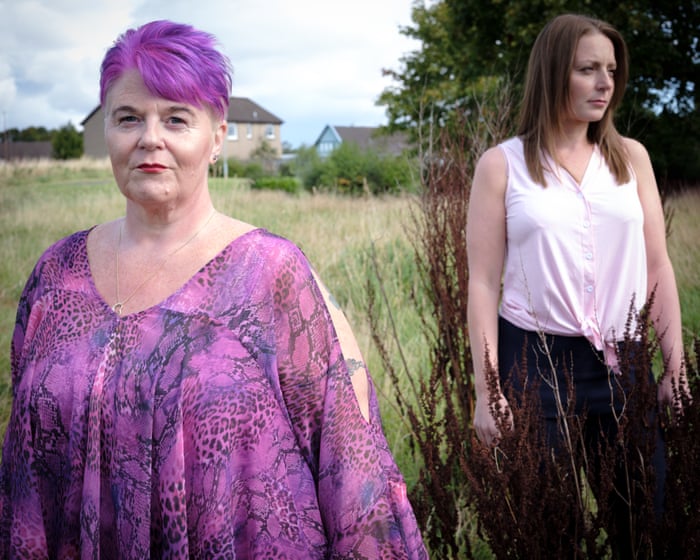
Wendy Barker was caught in an exhausting cycle. Photograph: Margaret Mitchell/The Guardian
These issues – navigating relationships with their children, dealing with outbursts, finding the right treatment, and overcoming guilt and shame – are common for mothers with PMDD. Brighton counselor Tamsin Taylor, known as the PMDD Therapist on social media, says mothers with the syndrome are often “riddled with guilt.” Since it’s not a curable condition and there’s no single “proven” treatment, clients come to her for help with the psychological impacts. “It’s a brutal condition,” she says. “These women are really suffering.”
Medical experts say PMDD is caused by the way the brain reacts to hormonal changes. Women’s health expert Dr. Louise Newson says, “It’s usually triggered by changing and reducing levels of progesterone. Changing levels of estradiol and testosterone can also have effects.”
Treatments vary in effectiveness from patient to patient – antidepressants (selective serotonin reuptake inhibitors), contraceptives, hormone therapy – but what all of them need is “love and support in a non-judgmental environment,” Taylor says.
In Taylor’s experience, the partner tends to bear more of the brunt than the children. “Women are fiercely protective of their children. Much of the guilt I hear is that they’ve overstepped with their partner. It can tear apart relationships,” she says.
New research released this year shows PMDD can significantly affect trust and intimacy for both those with the syndrome and their partners. Her methods help people with PMDD stop blaming themselves. It’s essential to make them feel heard, especially after medical professionals might have dismissed their symptoms as “classic PMS.”
“It’s very different from that,” Taylor says. “It’s much more severe, lasts longer, and shows up in different ways – some describe feeling extremely depressed, others get ragey.”
Jenny Fairhurst, 41, from Crewe, noticed symptoms after having her second child. “I felt like I was behind glass – watching my kids play but unable to feel joy or join in,” she says. “I felt dead inside. I’d snap with explosive outbursts at my partner and children for the smallest things.” Then would follow the inevitable feelings of “immense guilt.”
The back and forth was unsettling. “I questioned myself constantly – I couldn’t understand the change in my mindset, thinking, and emotions from one week to the next,” she says. “It was like I had a split personality. I was becoming hard to live with – and my cMy connection with my kids and husband suffered. I felt like I was losing myself.
The gynecologist said, “You’ve got PMDD.” And I said, “What’s that?” And I’m a GP!
One doctor dismissed it as “normal hormonal mood swings,” leaving Fairhurst feeling “dejected and unheard.” But those around her had really noticed the big change too. “My poor husband wouldn’t know whether he was coming or going with me,” she says. “It was like, which version today?”
After tracking her symptoms – “Day 22 was always my crash day,” she says – another GP finally listened. “It was such a turning point,” Fairhurst says. “I felt validated. Then, after trying different treatments, I discovered that taking Fluoxetine (an antidepressant) during the luteal phase of my cycle” – after ovulation but before menstruation – “helped me level out more intense symptoms.”
Things aren’t perfect – Fairhurst still experiences those unsettling intermittent symptoms – but her treatment gives her “that extra headspace to rationalise,” she says. Being a mum with PMDD is “soul-destroying when you know you’re not your best version of yourself.” But recent interactions with her 10-year-old son show that he understands the child-friendly language she used to describe the disorder.
“He knows that in the run-up to my period, everything’s a bit harder for Mummy,” Fairhurst says. “What’s been so lovely is, I’ll be lying on the sofa and he’ll sense I’m struggling, and say, ‘Are you OK? Are you feeling sad and getting your period?’, and envelop me in a big hug,” she says. “I think it’s taught him real empathy. And he shows it because I’ve tried not to hide my vulnerability from him.”
Fairhurst still dreams of the day she’ll be PMDD-free – many with it say their symptoms ease or disappear after menopause or, for some, after a hysterectomy. “I do look forward to the post-menopause years,” she admits. “But I’m thankful I’ve found a way to manage the symptoms; it’s allowed me to feel the love and joy from spending time with the kids, which PMDD had stolen.”
There’s currently so little understanding of this condition in the medical community that even doctors are blindsided when they’re diagnosed. Dr. Milli Raizada, 40, is a GP and an expert in women’s health, yet, by her own admission, when she was diagnosed with PMDD six years ago, she had never even heard of it.
She felt the profession she’d worked in all her life had let her down. “Too many doctors, myself included, don’t have the knowledge to help women who suffer in silence,” she says. As such, she’s clear on what needs to happen. “Better training. More research. Stop sidelining women’s health.”
Her husband first noticed symptoms as she came off the pill. “In the luteal phase, I’d be arguing lots with him and he said, ‘This isn’t normal’,” she says. “I’m usually resilient and a multitasker, but I suddenly had impostor syndrome, felt overwhelmed and worthless, and was hypersensitive and apathetic for two weeks of the month.” After snapping at her mother-in-law over a throwaway comment, Raizada knew it was time to act.
She made a gynecologist appointment. “I burst into tears as I walked in, and said, ‘I’m probably wasting your time, but I feel like I can’t cope,’ and he said, ‘You’ve got PMDD.’ And I said, ‘What’s that?’ And I’m a GP!”
She was prescribed Zoladex, which induces a chemical menopause. It has side effects that make long-term use unsustainable, but it has helped for now. Her marriage, though, suffered and ended in divorce. Her relationship with her children – now 12 and 10 – has improved. “They now understand how my cycle works,” she says.
Newson says PMDD often follows postnatal depression. “Women are even sectioned through misdiagnosis,” she says. She treats…PMDD can be treated with hormones like testosterone, progesterone, or oestrogen. She says that while antidepressants help some women, they don’t fix the root cause. “I used to prescribe them myself for PMDD – until I saw how life-changing it is to replace those missing hormones.”
“This condition is currently better understood by women than by health professionals,” she adds.
People with PMDD don’t just need medical help; they also need psychosocial support. That’s why Phoebe Williams, 28, recently started the PMDD Project, the UK’s only charity focused solely on premenstrual dysphoric disorder.
Williams first noticed PMDD symptoms when she was about 15. By 22, she knew something was wrong.
“One doctor said I was being dramatic and should just get on with it.”
Phoebe Williams runs the UK’s first PMDD charity. Photograph: Kat Wood/The Guardian
“I spent years asking myself, why am I like this? My friends didn’t react to their cycles the way I did,” she says. “I’d get angry for no reason, then feel depressed and anxious. My true self disappeared for a few weeks each month.”
“I’ve shared so many dark thoughts with different doctors,” she says. “I’d be really open and vulnerable. I was dismissed over and over.” Still, she doesn’t blame them. “It’s not their fault,” she says. “They didn’t know what PMDD was either.” But one doctor she does call out. “She said I was being dramatic and should just get on with it.” Another nearly misdiagnosed her with bipolar disorder, without asking about her cycle or hormones.
At 22, when she was experiencing suicidal thoughts, Williams finally found an obscure blog about PMDD. It was a breakthrough moment. “I just thought, ‘Oh my God. This is what I have!'” She printed it out and took it to a male doctor, who admitted he’d never heard of it but promised to look into it and get back to her. “He was amazing,” Williams says. “He called me the next day after researching it and said, yes, that’s exactly what you have.”
After dealing with misdiagnosis, being dismissed, a lack of information, and confusing medical terms, Williams started the PMDD Project because she realized more needed to be done for women like her. The charity aims to educate medical professionals, include PMDD in healthcare training, and set up a helpline.
“When you’re in a crisis, the last thing you want to do is explain what PMDD is,” Williams says. She also plans to create an employer accreditation program. “We’ll train workplaces on necessary adjustments, like flexible hours for those who are suffering.”
For families dealing with PMDD together, like Barker’s, it’s common to hear mothers talk about guilt and worry over how their children will be affected by intense episodes. But there’s another side effect that’s rarely discussed: trauma bonding. Daly says her mother’s PMDD has actually brought them closer. “Mum is absolutely my best friend,” she says. “We live on the same street, I see her all the time.”
Now, Barker says, they even laugh about that garage incident, with her kids joking about not wanting to get in the car with her. “I can talk to my mum about anything because she’s been so open about everything she’s been through,” Daly says. “I’m so proud of her.”
Samaritans can be reached at 116 123 or by emailing jo@samaritans.org. You can contact the mental health charity Mind at 0300 123 3393 or visit mind.org.uk.
Frequently Asked Questions
Here is a list of FAQs based on the scenario you provided
BeginnerLevel Questions
Q What does it mean when you say explosive anger shook my whole family
A It means the person had sudden intense outbursts of anger that created a scary or unstable environment at home
Q What kind of diagnosis could change everything for someone with anger issues
A Common diagnoses could include Intermittent Explosive Disorder Bipolar Disorder ADHD or severe anxiety The specific diagnosis depends on other symptoms
Q Is it normal to have anger that feels out of control every month
A No While everyone gets angry having explosive uncontrollable anger that regularly disrupts your family is a sign of an underlying issue that needs professional help
Q How can a diagnosis help with anger
A A diagnosis provides a roadmap It explains why the anger happens and points to effective treatments like therapy medication or lifestyle changes It takes the blame off being a bad person
Advanced Deeper Questions
Q What is the difference between just being angry and Intermittent Explosive Disorder
A Being angry is a normal emotion IED involves impulsive aggressive outbursts that are grossly out of proportion to the situation The anger feels like a physical rush that you cant stop
Q Could a monthly cycle of anger be linked to hormones
A Yes absolutely For both men and women hormonal fluctuations can trigger mood instability For women this is often linked to Premenstrual Dysphoric Disorder or perimenopause For men low testosterone can be a factor
Q What is emotional dysregulation and how is it different from anger
A Emotional dysregulation is a lack of control over your emotional responses Its like having a faulty volume knob Anger is one emotion but dysregulation means you cant calm down once youre upset leading to the explosive reaction