Julie Meyer sits in a starkly lit attic, surrounded by piles of £50 notes. She’s a blonde Californian in a crisp white shirt, her long, stockinged legs crossed at the knee, listening closely to the young man in front of her. As he speaks, she studies him. Finally, she says, “I’m going to make you an offer.” It could be a scene from a heist movie, but Meyer is in a BBC studio filming a 2009 episode of Dragons’ Den. A well-known entrepreneur with a venture capital fund, she’s ready to invest in contestants who catch her eye. For viewers, she offers this advice: “What is success? A lot of it is self-belief. Keeping going when most rational people would stop.”
This is an online spin-off of the original Dragons’ Den, so the stakes are a bit lower. But for Lex Deak, a 23-year-old with a big idea for a social media website, what happens in this room today could make or break him. He desperately wants to work with Meyer.
During the dotcom boom that swept through London like tulip fever in the late 1990s, Meyer was a big name. Apple’s colorful iMacs were flying off shelves, people were rushing to get online, and the web was becoming truly global. For a short, exciting moment, it felt like anyone could start a tech business—and get rich doing it.
At the center of it all was Meyer’s monthly networking club, First Tuesday. There, young hustlers with little more than an idea and a trendy brand name could raise millions with a handshake, as investors scrambled for a piece of the digital revolution. Alongside Martha Lane Fox and Brent Hoberman, founders of the online travel agency Lastminute.com, Meyer became the face of a movement—the star of a golden generation that was shaking up the male, pale, and pinstriped world of British industry.
Awards followed: the Davos forum named Meyer a “global leader of tomorrow,” and the Wall Street Journal ranked her as one of the most influential businesswomen in Europe. She had a newspaper column, was recruited as a UK government adviser, and in 2012 received an MBE.
For Deak, who watched Dragons’ Den religiously and took notes in front of the TV, Meyer seemed like the perfect mentor. When she offered £20,000 for a stake in his venture, Family Fridge (like Facebook, but for families), he didn’t hesitate to say yes. “I was very keen to get her involved, but very naive,” he says now. She gave him space in her office and introduced him to people. But the money? He never saw a penny.
“I was ready to be the young, talked-about tech entrepreneur. I’d been nominated as a rising star by the Institute of Directors. At the time, it felt like she had stolen an opportunity from me… it changed my path. She definitely did me wrong.”
Deak says Meyer never gave him a straight no; she just kept asking him to revise the business plan. Of course, not all deals made on air work out—many fall through after the show during the due diligence process. But as time went on, Deak found himself supporting a growing number of people who say they were hurt by their own dealings with Meyer.
Over the years, the one-time queen of the dotcom scene has left a trail of trouble behind her, with a series of failed ventures that involved everyone from the former chair of Marks & Spencer to the prime minister of Malta. The Guardian has seen evidence of insolvent companies, unpaid wages, debts to suppliers, and millions in lost investments. Those who admired and trusted her say they are left with deep regrets, describing a seemingly endless cycle of seduction and betrayal.
A former associate calls Meyer a “professional confidence trickster.” For her ex-boyfriend and business partner, Swiss millionaire René Eichenberger, she is a “master of manipulation and false narratives… Once she gets exposed in one country, she finds new supporters who believe.”In her and help her move on to the next jurisdiction.”
In recent months, the Guardian has heard more serious allegations against Meyer. Investors and founders say they have lost hundreds of thousands of dollars in three separate incidents, which they describe as scams.
Meyer did not respond to requests for comment. She has previously denied any suggestion that her activities are not legitimate. In her marketing, she calls herself “one of Europe’s leading backers of entrepreneurs” and says she has spent decades identifying groundbreaking companies.
Despite years of controversy, she has kept going—hiring new teams, starting new ventures, and constantly posting on social media to maintain her profile and find new contacts. “This will continue until the public sees who Julie Meyer really is,” says Eichenberger.
In a year-long investigation, the Guardian has followed the trail to London, Malta, Switzerland, and Greece, gathering accounts from dozens of former staff, business associates, and entrepreneurs. By speaking out, they hope their stories can serve as a warning.
London
If there was one place for a young, ambitious entrepreneur to be in the late 1990s, it was London. A Silicon Valley vibe was sweeping into the city, and it was at the heart of Europe’s first internet boom. Tony Blair had just entered Downing Street as the head of the first Labour government in 18 years, and the capital was buzzing with the energy of the Cool Britannia pop-culture revival.
“It was incredibly exciting,” recalls author and former BBC tech journalist Rory Cellan-Jones. “I mean, the complete opposite of going to BP’s annual general meeting. There were lots of parties. People were becoming rich overnight in a way that we in this country were absolutely not used to.”
It was into this electric atmosphere that Julie Marie Meyer first arrived in the UK, with an American accent and a master’s degree from France’s prestigious Insead business school.
Born in Michigan in 1966, she grew up in a small-town suburb of Sacramento, California. Her father, a doctor, insisted on a religious upbringing. According to Meyer’s own story, after graduating she left for Paris with just $1,000 in her pocket. She often recalls her parting words to her father, who saw her off at the airport. “He turned to my stepmother and said, ‘Don’t worry, she’ll be back soon. She doesn’t have that much money.’ And I spun around and said, ‘You watch, I’m going to live over there for the rest of my life. I don’t need your money.’”
Meyer spent a decade in France, moving from one job to another, before earning her master’s. In a blog post about those years, she says she became “obsessed with making money.” One day, she was driving with her boyfriend—15 years older than her—when he pulled over and told her: “Stop talking about money. If you’re good at something and focused on it, the money will find you.”
Meyer didn’t wait to be found. She crossed the Channel in 1998 and joined a venture capital firm where the boss, Thomas Teichman, reportedly rode a micro-scooter in the office. Their hottest new investment was a travel website offering discounted holiday deals. In March 2000, after just a few months of trading, Lastminute.com made history by floating on the London stock market with a valuation of £571 million.
Hoberman, Lastminute’s co-founder, had been approached to help run a networking business that paired tech company founders with potential investors. Too busy to do it himself, he pitched the idea to Meyer. “She was very outgoing, very good at bringing people together,” he says. “I thought she was an operator, in the sense that she was a real networker.”
So Meyer opened her address book and started making calls. On the first Tuesday of October…In September 1998, about 80 people gathered at the ultra-hip Alphabet bar on Beak Street in Soho, London. “From that first meeting grew an organization that would go on to spark many of the dotcom investments over the next 18 months, and eventually become a global business,” Cellan-Jones wrote in dot.bomb, his firsthand account of that extraordinary time.
Hoberman and Lane Fox spoke at the second event in November, where entrepreneurs wearing green name badges mingled with investors in red, all looking to make deals. Soon, the parties became so popular that they started renting out Lord’s cricket club. They hired a CEO, an American named Reade Fahs. He said he wanted the job because First Tuesday stood for something real—it was “commerce with a cause.” He described Meyer as the driving force: “If you had to pick one person to credit for First Tuesday, it would be Julie… I give her full credit. She had the vision.”
Within two years, Meyer and her co-founders had turned First Tuesday from a cocktail party into a company and franchised it worldwide. They claimed to have helped raise over $147 million (£98 million) for startups, including fashion retailer Boo.com and beauty site Clickmango.
A self-described workaholic with firmly right-wing political views, Meyer liked to call First Tuesday “my revenge on socialism.” But her success was short-lived. In March 2000, stock markets around the world turned red. The dotcom bubble had burst. By June, Meyer’s investors were pushing for a sale to recover their money. An Israeli company offered $50 million in cash and shares. Meyer wanted to hold out and keep going, but her male co-owners thought it was a good deal, and she was outvoted.
In the years that followed, she often talked about being dismissed and underestimated by men. In 2015, she told Harper’s Bazaar: “I think I’ve always been naturally distrustful of people telling me I can’t do things.” Proving her doubters wrong became a driving force.
If First Tuesday was her revenge on socialism, Meyer’s next venture, Ariadne Capital, was about showing the world she could succeed on her own. In a 2002 interview with the Guardian, headlined “Net’s queen bee still buzzes,” she laid out her plan. Ariadne would host networking events and earn fees by advising startups on how to find backers. It would also make some investments of its own.
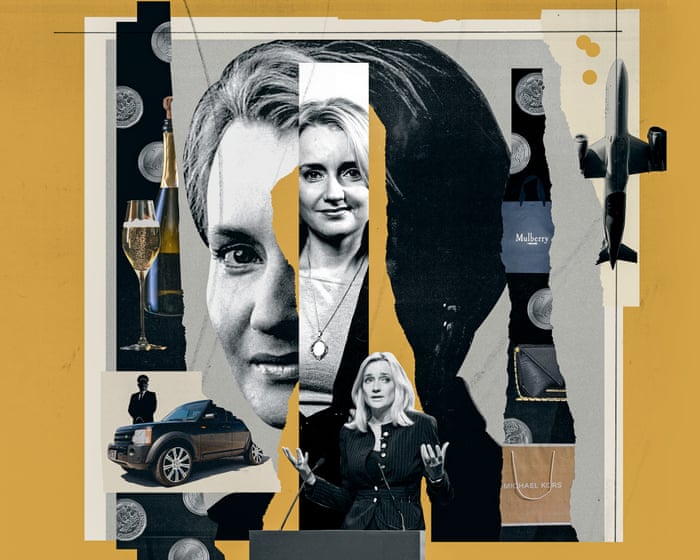
As Ariadne grew, its boss spent generously. Meyer’s team moved to £10,000-a-month offices near Trafalgar Square. For Meyer, there was a chauffeur-driven car, a personal trainer, and two personal assistants—one at the office and another to manage her home. Successful businesswomen had to look the part, she told Harper’s Bazaar. “During the week, I wear… Ralph Lauren, Mulberry, Michael Kors… and Roland Mouret.” She saw her facialist—an expert in Indian alternative medicine—every Saturday “without fail.”
In 2009, Meyer launched her venture capital arm, Ariadne Capital Entrepreneurs, or the ACE fund for short. Edward Wray, founder of the gambling group Betfair, was among the high-profile backers.
Rachel Lowe was hired in 2012 to help advise startups. When she arrived at the Ariadne offices, she says she felt like she was entering “a temple to Julie”: framed pictures of Meyer lined the walls. While the boss looked the part, Lowe says the organization felt chaotic. “Everything was an absolute mess,” she recalls. “There were just a lot of young people who had no idea what they were doing.”
Meyer, according to Lowe, had a tendency to explode with rage at staff: “I could tell whether Julie was in the office just by feeling something in the air… She ruled by fear.” But toward Lowe herself, Meyer was sweet and pleasant—at least at first.
“The Ariadne investment I looked at was snake oil. She understood fundraising and networking, but she didn’t understand the tech startup space at all.”
Meyer in 2010. Photograph: MAfter a few months with no issues, Lowe says Meyer started making excuses for not paying her invoices, eventually accusing Lowe of poor performance. Lowe took legal action against her. The judge ruled in Lowe’s favor and awarded her about £26,000, plus interest and costs. By that point, several staff members and suppliers were also claiming they hadn’t been paid. A PR agency sued for around £76,000 and settled out of court.
Writing anonymously on the recruitment site Glassdoor, a former employee claimed Meyer would sometimes hide from people she owed money to. “Once, when a supplier came to the office demanding payment, she snuck out down the fire escape.” (Meyer has previously said about the Glassdoor reviews: “There are a lot of people much more important than me who get written up on anonymous websites. Comes with the territory.”)
By the summer of 2017, Ariadne could no longer afford the rent on its offices. Staff were sent to work from home.
So where did it all go wrong? It seems the vision never quite matched reality. At first, Meyer had talked about raising £60 million for her ACE fund, but an investor report circulated in 2017 put the final total invested at just £7.6 million. Controversially, the report states that more than half the money raised – £4.4 million – was spent buying a 100% share in one of Meyer’s own ventures.
None of Ariadne’s investments produced a big return, and many resulted in a loss. A former employee, asked to put a value on a software company Ariadne had invested in, says: “When I looked at it, it was snake oil. She understood fundraising and networking, but she didn’t understand the tech startup world at all.”
Under pressure from creditors, Ariadne went into administration in December 2017. Those with shares in the ACE fund found they were worthless. Meyer said at the time: “I remain deeply sorry that it was necessary for me to put the company into administration, especially given the consequences for employees and unsecured creditors.”
A separate group of investors – which included Stuart Rose, the former boss of Marks & Spencer – also say they lost money. Lawyers acting for the group would later allege that funds meant for investment in a digital marketing startup were paid into a bank account controlled by Meyer, and then misused to fund Ariadne Capital.
In their report, administrators for Ariadne found no assets, other than a few investments they valued at just £2,528. Hundreds of thousands were owed to employees, a similar amount to the tax office – and a hefty £7,500 to the taxi company Addison Lee. For Meyer, though, this wasn’t the time to give up.
Malta
While accountants sorted out the mess in London, Meyer was already moving on to her next venture. By the summer of 2017, she had set herself up in a suite at Malta’s five-star Westin Dragonara hotel. On the top floor, her staff took over the business centre as a temporary office.
She bought a Maltese company with a license to manage investments. Soon, she was telling the press that Ariadne Capital Malta was going to raise a €1 billion European fund.
To attract the money, she needed to make some noise. So Meyer organized a summit, bringing together startups and big-money investors from across Europe. The prime minister of Malta spoke at the glittering summer launch, in the ballroom of the Dragonara hotel. On the terrace afterwards, Meyer held court, smiling as investors mingled, ready to write checks.
The event was a huge success, but behind the scenes, there were new allegations that Meyer wasn’t paying the bills. Mark Lightfoot, whose design agency had been hired for the event, says he was owed €60,000 for unpaid invoices. He says Meyer initially explained it away, blaming technical issues, and he believed she would eventually do right by him. “In my mind, it was like, here’s a chance to prove myself. She is a big, fancy American investor who’s here in little old Malta.”
The restructuring was, she said…He said, “All legitimate… Nothing in London. Everything in Malta. Julie 1, universe 0.”
He says that when Meyer offered to settle for half the amount owed, he realized his mistake and started legal action, getting a judge to freeze her bank accounts. Emails suggest she fought back hard, telling his lawyer that the family’s assets were at risk: “If … the entire Lightweight [sic] clan don’t want to experience a multi‑generational destruction of wealth, I strongly advise a fast publication of my proposed apology … I am so totally not joking.” Lightfoot dropped the claim, figuring that even a favorable court ruling wouldn’t guarantee payment.
Meyer has previously denied the allegations of not paying, telling the newspaper City AM in 2022: “I don’t remember Mark Lightfoot. I’ve been in business for 30 years, and don’t always remember names … We always pay people their salaries.”
By November, sources say there was a big hotel bill to settle. The knock on the door of suite 514 came in the early hours. It was the night manager, and he had a police officer with him. Meyer’s two personal assistants woke up with a start. Reception had let them in the day before, and they had spent the evening packing.
Meyer, who wasn’t there, had emailed her PAs a room plan with instructions: “Take everything in the drawers under the TV. All shoes in both closets … the more important clothes – expensive ones that I need now … Bring the princess crown in the safe, which is open.”
According to the email, they were to pack a couple of cases and leave the rest. They should avoid doing anything to “raise alarm that we’re doing a runner, and I’m fleeing the country … Be super-friendly to the staff in the hallway and don’t allow them to think there’s anything up.”
So when the assistants opened the door to the night manager, they stuck to the plan, convincing the police officer that everything was fine. According to one of the assistants, who asked not to be named, the journey home was tough: “I felt like everyone was watching us at that moment. Even at the airport people were staring at us,” she says. “I was, like, ‘Let’s just get out of this country as soon as possible.’”
Meyer still wasn’t ready to give up on Malta. In February 2018, she sent a message to her staff WhatsApp group, called “Inner Circle.” In it, she described a “major pivotal transaction” moving Ariadne’s assets out of the UK. “I AM NOT BLOND,” she declared. The restructuring was, she said, “all legitimate … Nothing in London. Everything in Malta. Julie 1, universe 0.”
The celebrations didn’t last long. In Malta, not paying wages is a criminal offense, and the state brought several cases of alleged non-payment to court. After Meyer failed to attend a hearing in April 2018, a magistrate ordered the police commissioner to find her within 48 hours, using all available resources.
By May, Malta’s financial regulator had suspended Ariadne’s fund management license. Less than a year after its flashy debut, the Mediterranean adventure was over. Meyer had managed to sneak a tiara out of a hotel, but her crown was definitely slipping.
Switzerland
Simon Davis, a 51-year-old entrepreneur from Johannesburg, will never forget the day he had to call his investors to tell them the bad news. At his request, they had transferred more than $200,000 to a Swiss law firm hired by Meyer, and it was all gone. “She just walked off with the money,” says Davis.
His South African company, ScarabTech, makes compact machines that communities can use to turn plastic waste into fuel. They were looking for funding to hire more staff. Someone mentioned Meyer, and Davis recognized her name right away. Nearly 30 years before, as a young man working in London, he had attended a First Tuesday event at the Science Museum. He got in touch, and she invited him to her latest investor event to pitch his idea.
View image in fullscreen: Meyer at a First Tuesday e-commerce meeting at Bloomberg.Photograph: Tom Jenkins/The Guardian
By this point, Meyer had moved to Zurich. It was Eichenberger, a Swiss judo enthusiast who had made a fortune in aviation, who suggested the move. They had met decades earlier, and when Meyer got back in touch with him in 2018, Eichenberger says they became a couple.
She started another new company, Viva Investment Partners, a Swiss-registered firm modeled on Ariadne. Eichenberger took a stake, and some of the old shareholders from London were even given shares. According to documents seen by the Guardian, Meyer had a six-figure salary, a company apartment in the best part of town, and a company credit card for meals, clothes, and hair salons.
From her office overlooking Lake Zurich, Meyer went back to what she knew best—hosting events for startups looking for funding. The gathering that Davis attended in January 2025 was small. But he was impressed: a handful of serious investors had come to hear the pitches. Meyer, it seems, still has valuable connections.
Afterward, he says she approached him with a proposal: Viva was planning a new fund to back a select group of startups, and ScarabTech had made the cut. Documents suggest she hinted at a $900,000 investment in his company.
He stayed in the apartment next to hers and says they spent the next few weeks refining the business plan. They would work late into the night, talking on the phone until 2 a.m. “She certainly applied her mind. She made you feel like you were doing it together. Which we were.” ScarabTech’s existing backers and a new investor agreed to join the fundraising, putting in $200,000—and Davis added $36,000 of his own.
In May 2025, he received a letter from Meyer: the deal was off. There would be no investment in ScarabTech due to what she said were concerns about inaccurate and incomplete numbers, and issues with the startup’s existing shareholders. She said she had been hoping to make a “good investment,” but that Davis had failed to take any feedback on board, adding: “This has been a huge disappointment to me and my team.”
“My heart sank. I still had some outside hope that maybe she made an error, but, no, there was no error.”
When Davis asked for the money he had raised from his existing backers to be returned, he received an unexpected invoice. Meyer wanted 162,000 Swiss francs (£145,000) in “success fees,” “corporate infrastructure fees,” and “management fees.” Davis is clear—he says he never hired Meyer to provide these services.
Meyer sent emails threatening legal action: “In very clear language: if you do anything to hurt my firm, I will hold you and each of your board directors … directly liable for the damage,” she warned.
Frantic, Davis approached the Swiss law firm whose account had been used for the payments. He says they told him the cash was gone. The Guardian understands that at Meyer’s request, the funds were transferred to an account in Lithuania.
“My heart sank. I still had some outside hope that maybe she made an error, but, no, there was no error,” Davis remembers. He produced a report for his investors, alleging “cross-border fraud and intimidation.” He notified the police in South Africa and the FBI in Delaware, US, where his company is registered, but no investigations were opened. He also notified police in the UK, and they closed the case on 13 January 2026, after determining that there were not enough leads to follow.
The Guardian has examined two similar cases, both in 2023, involving a price comparison site from the Middle East and a craft gin company from Barcelona. Investors and founders say the money for the startups—more than $200,000 in total—was transferred to Meyer, but then it disappeared, with the startups claiming they received nothing.
Eichenberger says he no longer speaks to Meyer. At first, they worked well together. He says he even helped settle her legal disputes with suppliers and former employees, one by one. Lawyers in Malta confirm the criminal cases have been closed.
It wasn’t long, however…However, before the problems surfaced, he says the events were losing money, and an acquisition by Viva of a UK software company went badly. Drive Software Solutions was wound up in 2023, and the liquidator’s report, filed last year, raises serious questions about missing pension money. It seems that contributions were taken from staff wages but never paid into a scheme.
When Meyer’s split with Eichenberger happened, it was explosive. The pair have been caught up in numerous legal battles over assets and shareholdings since they parted ways. He still owns shares in Viva, as he hasn’t found a buyer for his stake.
For her part, Meyer has rejected Eichenberger’s criticisms, telling a newspaper in 2022 that he “has an agenda to damage the firm, and is hostile to us, which is why he is gone.”
Many of those who have come forward to share their stories are a resilient group. Davis has moved on to other ventures. Lowe lives in the south of France and runs a vinyl record company. Deak has launched one tech business after another. His latest is a shopping app backed by Mumsnet founder Justine Roberts.
But not everyone has bounced back.
Greece
Along the sea road, among the warehouses, the building site sits empty. Construction stopped months ago, after the foundations were laid.
Malcolm Williams, 57, wanted to give back to the community where he grew up, on the South Atlantic island of Saint Helena. He founded The Green Fish Company and started raising money to build a tuna processing plant. While looking for backers, he was introduced to Meyer and invited to present his plan at her 2024 summer networking event in Greece. When not in Switzerland, sources say Meyer spends much of the year in Athens or on the island of Kea, where she owns a villa named Carpe Diem.
Williams spent thousands of euros to attend. When he arrived, he was disappointed. Instead of speaking to a room full of venture capitalists, he found himself pitching to other founders. The promised entertainment—a yacht and gala dinner—turned out to be just a ride in a couple of small motorboats and some sandwiches.
A letter of engagement shared by Williams, who spent thousands more attending another event and a meeting in Dubai, suggests Meyer had offered the prospect of a €500,000 “minimum” investment from Viva, subject to due diligence. The investment never came through. Two years later, he is still struggling to recover, and the tuna plant remains unbuilt.
“We’re back to square one,” he says. “We should have had our business up and running by now, you know, and we’ve just wasted time … It kicks the trust out of you.”
Those who are drawn into Meyer’s orbit all share one thing: a powerful desire to succeed. They say Meyer has learned to exploit that desire.
This investigation has uncovered 17 legal claims against Meyer and her companies from employees, contractors, and suppliers who say they were owed money. A 2024 extract from the debt register in Switzerland lists dozens of creditors, including a florist, photographers, and a hotel in the St Moritz ski resort. Lightfoot, who has been tracking Meyer’s activities for years, believes the total number of people claiming not to have been paid by her could run into the hundreds.
The business world is full of those accused of crossing the line from hustle to heist. What makes Meyer different is that she once stood for something—‘commerce with a cause.’
The UK’s Financial Conduct Authority (FCA), which had issued licenses to Ariadne in the UK, launched an inquiry into Meyer and her UK companies. Codenamed Operation Hibbing, it looked into whether rules around managing investments may have been broken. The probe ran for five years and took evidence from many of Meyer’s associates before being shut down in 2023. A spokesperson for the FCA says: “We sympathize with thPeople who lost money when the firm collapsed. We looked into this case thoroughly. At the time, there wasn’t enough evidence to press criminal charges, but we’re always open to reviewing any new evidence.
In 2022, Meyer was found in contempt of court. She had hired the top law firm Farrer & Co to try to stop negative press, but then didn’t pay their fees. They sued her for around £200,000, and a warrant was issued for her arrest after she missed court hearings. After that, the University of Warwick revoked her honorary doctorate. Last summer, her MBE was taken away. Still, on her LinkedIn page, she continues to call herself Dr Julie Meyer MBE.
Davis says that, in some ways, Meyer still wants to be a successful businesswoman. “I think she wants a win. So she works toward that, but if it doesn’t work out, she has the backup plan of knowing she can just take the money anyway.”
Lightfoot believes she is dishonest. “She’s a con artist; there’s nothing more to it. Her chosen field is venture capital and entrepreneurship. And she’s figured out a formula, her playbook, and it works for her.”
The business world is full of people accused of crossing the line from hard work to theft. What makes Meyer different is that she once stood for something – “commerce with a cause,” as Fahs put it; changing the world by backing the best new ideas. It’s a reputation she still relies on, a story she still seems to tell herself. And so she keeps going, long after most rational people would have stopped.
So far this year, Meyer has promoted a “Mediterranean Summit: Longevity, Tech Bio, MedTech, Wellness” at her base on the Greek island of Kea, along with several investment events in Zurich. In January, she charged £4,000 per person for a two-day gathering, promising to connect startups with “investors, industrialists, financiers and fund managers.” For another £4,000, attendees could join the “pre-summit” with a specially planned program featuring snow polo and a Swiss village tour.
All the allegations in this article were put to Meyer, but she did not respond. The Guardian eventually caught up with her near her flat in Zurich on a sunny afternoon in late January, as she was getting ready to host a drinks party for her latest networking event. Wearing a leopard-print coat and sparkling black trousers, with blond hair falling over her shoulders, she was, as always, dressed to impress.
But instead of a designer handbag, she was holding the handle of an orange plastic shopping trolley. The bottles inside clinked as it rolled over the cobblestones. She seemed like a cut-price version of the First Tuesday queen bee, unable to face the reality of her fall from grace.
When asked about the many allegations against her and the loss of her MBE, she paused for a moment, then insisted, in her unmistakable California accent, that we had the wrong person: “I’m not who you think I am. I’m just doing some shopping here … Could you please leave me alone? I’m not Julie Meyer.” Additional reporting: David Pegg
Think like a billionaire, a two-part series about Julie Meyer from the Guardian’s Today in Focus podcast, is available now. (Subscribe to Today in Focus wherever you get your podcasts.)
Get in touch
Contact our investigations team
The best public interest journalism relies on first-hand accounts from people in the know. If you have something to share on this subject, you can contact us confidentially using the following methods:
Secure Messaging in the Guardian app
The Guardian app has a tool to send tips about stories. Messages are end-to-end encrypted and hidden within the routine activity that every Guardian mobile app performs. This prevents an observer from knowing that you are communicating with us at all, let alone what is being said.
If you don’t already have the Guardian app, download it (iOS/Android) and go to the menu. Select ‘Secure Messaging’.
If you don’t need a high level of security or confidentiality, you canYou can email investigations.contact@theguardian.com.
SecureDrop
If you can safely use the Tor network without being watched or monitored, you can send messages and documents to the Guardian through our SecureDrop platform.
Finally, our guide at theguardian.com/tips lists several ways to contact us securely, and explains the pros and cons of each option.
Frequently Asked Questions
Here is a list of FAQs about the Julie Meyer Dotcom Queen story written in a natural straightforward tone
BeginnerLevel Questions
1 Who is Julie Meyer
She was a wellknown venture capitalist in the UK often called the Dotcom Queen for her early success funding internet startups like Lastminutecom
2 What exactly is she accused of
She is accused of mismanaging money from her investment fund Ariadne Capital Investors say she failed to return their money left behind significant unpaid bills and that the promised returns never materialized
3 What does missing funds mean in this case
It means that money investors put into her funds has not been accounted for or returned Audits and investigations suggest that millions of pounds are unaccounted for
4 Who lost money in this situation
Primarily wealthy individual investors and some smaller institutional investors who put money into her funds Also small businesses and contractors who provided services to her company were left unpaid
5 Is this a criminal case
It has been investigated by UK authorities While some civil lawsuits have been filed and companies have been liquidated it has not yet resulted in major criminal charges against her personally though the situation remains under scrutiny
Intermediate Advanced Questions
6 How did she build such a strong reputation if the money was missing
Meyer was a charismatic and wellconnected figure She was an early backer of major successes and a regular on TV and at conferences This high profile attracted new investors who trusted her Midas touch even as her later funds performed poorly
7 What specific broken dreams are people talking about
Many investors were not just looking for profit they were aspiring entrepreneurs or small business owners who invested their life savings or retirement funds They were promised mentorship and a path to success Instead they lost their capital and some were forced to close their own businesses as a result
8 What happened to the money from Ariadne Capital
Investigations suggest a significant portion was spent on high operating costs salaries and lavish marketing rather than being invested in startups Some funds were also reportedly used to pay returns to earlier investors a Ponzi