When you’ve been writing about the Tour de France for nearly 40 years, the same themes keep coming back, always shifting and changing. The ups and downs of France’s top cyclists have been a constant story since July 4, 1990, when the late Laurent Fignon put his foot down in the feed zone somewhere in the hedgerow country between Avranches and Rouen. It was cold, damp, and wet—which, given the heatwave worries gripping France right now, feels like a piece of history in itself.
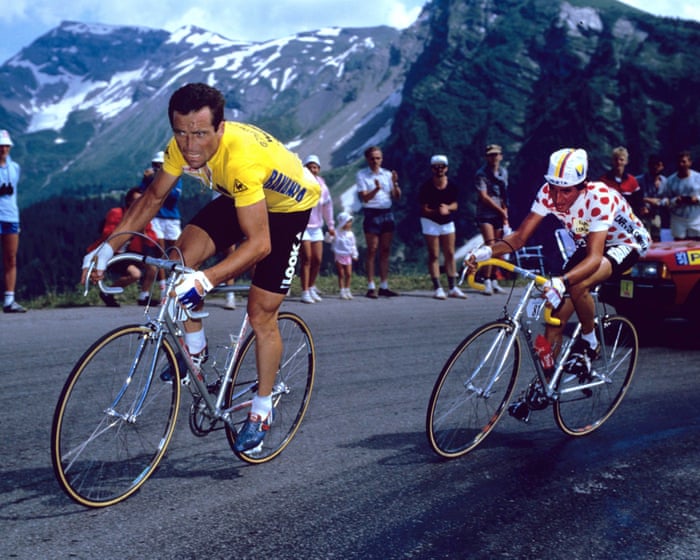
Fignon started as one of the favorites, but that day marked the beginning of the end for “the Professor.” The search for a successor to five-time winner Bernard Hinault had begun in 1986, the year the Badger retired, when the short-lived heir apparent was Jean-François Bernard. By 1990, doubts were growing, and they intensified with each passing year and every potential champion who emerged, faced the spotlight, and eventually fell apart: Richard Virenque, Luc Leblanc, Laurent Jalabert, Romain Bardet, Warren Barguil, Thibaut Pinot.
By 2014, the crisis was so bad that the French Cycling Federation tried to launch its own professional team, modeled on Great Britain’s Team Sky, hoping it would focus efforts and uncover the next champion. That ignored the mantra of French cycling guru Cyrille Guimard, who had nurtured Hinault, Fignon, and Greg LeMond, and insisted that Tour winners “are born, not made.” Hinault agreed when we met in 1993. “Super champions are rare—you don’t get many, maybe 10 a century. You can’t just build them.” The project went nowhere, but the croissants at the launch were pretty good.
In the 40 years since Hinault retired, the only Tour where a Frenchman raced like a potential winner was 2019, when Pinot was in brilliant climbing form. No one knows if he would have beaten the competition in the final days, because he dropped out with a torn thigh muscle while lying in fifth place. But that moment perfectly summed up the post-Hinault years: high hopes, high drama, and floods of tears.
This year, the story of heroic also-rans has suddenly changed, and cycling fans can argue about exactly when. Was it March 7 in the Strade Bianche classic, when Paul Seixas managed to hang onto Tadej Pogacar’s wheel, even if just for a moment? Or April 22, in the 20-odd seconds when Seixas broke away from the pack in the final meters of the Flèche Wallonne classic, becoming the race’s youngest ever winner? Or June 12, when he spent hours fighting his way back to the front of the Tour Auvergne Rhône Alpes after a heavy crash left him minutes behind?
My favorite Seixas moment came in stage four of the Tour of the Basque Country. Convention and caution said he should watch and wait on the final climb, protecting a healthy overall lead. Instead, he attacked on the descent and gained 20 seconds on his rivals—a completely unnecessary attack, racing for fun, because he could, straight out of the Hinault playbook. “Young and carefree,” as Fignon would have said. What sets the 19-year-old apart are two things: the drama that seems to follow every time he pins on a race number, and the fact that he clearly has the power to back up his flair. Guimard, now 79, says he has never seen Bardet, Virenque, or Pinot tear apart the field on a mountain climb the way Seixas can.
The excitement and hype around Seixas are huge, and fully deserved. Nothing like this has been seen in French cycling since the late 1970s, when Hinault was doing Badger-like things—like steering his bike into a ravine (Dauphiné, 1977), getting right back out, and winning classics, or perhaps Fignon.Laurent Fignon’s first season in 1982 was electric. If there’s a comparison, it’s Fignon, who made an immediate impact after turning professional. Hinault’s development was more gradual, with Guimard carefully controlling his progress.
View image in fullscreen
Paul Seixas, 19, has the strength to match his flair. Photograph: Yoan Valat/EPA
The warning sign for Seixas came with that crash at the Tour Auvergne Rhône Alpes, when his youthful carelessness nearly cost him. Over the next three weeks, he’ll be walking a tightrope: if he holds back his youthful energy, it will feel like a letdown, but if he lets his emotions run wild, he could fall apart. And all this while facing the two greatest Tour champions of the 21st century, Pogacar and Jonas Vingegaard.
“The dramatic, tragic story of a Frenchman who captivates the home crowd but is forced out by bad luck and immense physical suffering is a storyline the Tour has written many times.” That was Pinot in 2019. This July, the ending could be different, but the warnings from recent history are clear for everyone to see.
Frequently Asked Questions
Here is a list of FAQs about the long wait for a French Tour de France champion centered on the three contenders you mentioned
BeginnerLevel Questions
Q Why hasnt France had a Tour de France winner in so long
A Its a mix of bad luck tough competition from other countries and the pressure of racing at home The last French winner was Bernard Hinault in 1985
Q Who are the Badger the Professor and the teenager
A These are nicknames for three French riders who were expected to win but didnt
The Badger Bernard Hinault
The Professor Laurent Fignon
The teenager A reference to young stars like Romain Bardet or Julian Alaphilippe who came close but couldnt finish first
Q Did any of them actually win the Tour
A Yes Hinault and Fignon both won the Tour in the 1980s The teenager has not won yet which is why France is still waiting
Q What makes winning the Tour so hard for French riders
A The race is in their home country so they face huge pressure from fans and media Also modern cycling has strong teams from other countries that are very hard to beat
AdvancedLevel Questions
Q What exactly is the Badger style of racing
A Hinault was aggressive stubborn and would attack in any weather He rode with pure grit often winning by intimidating his rivals He won five Tours but his tough personality sometimes made him unpopular
Q How did the Professor lose the 1989 Tour by just 8 seconds
A Laurent Fignon was leading by 50 seconds going into the final stage But his rival Greg LeMond used new aerodynamic handlebars and a helmet while Fignon stuck with traditional gear LeMond made up the time and won by the smallest margin in history