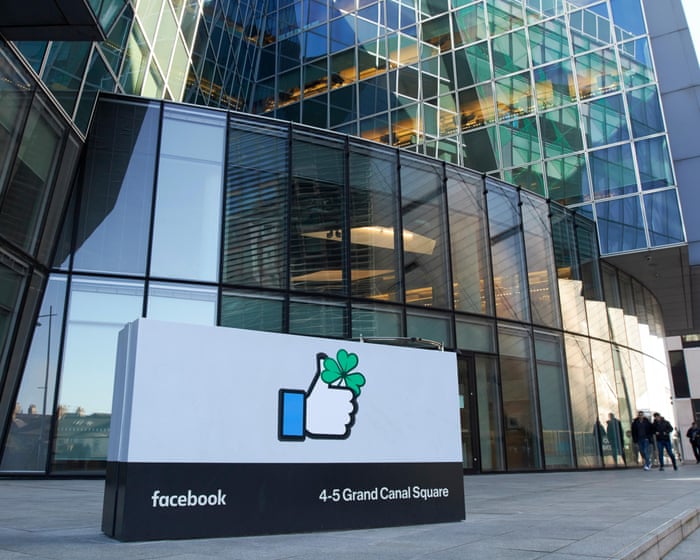
At first glance, Ireland looks like a model European country—strong on human rights and a progressive voice on the western edge of the continent. But there’s one important area where its record falls short, and it should raise concerns when the Irish government takes over the rotating six-month presidency of the EU on July 1. During this time, the EU’s rules on tech and artificial intelligence will be renegotiated. However, Ireland’s government and economy have been heavily influenced by big tech companies. Ireland is so compromised that, as president of the Council of the EU, it should step aside from all tech and digital sovereignty talks.
The last time Ireland held the EU presidency was in 2013, during negotiations on the General Data Protection Regulation (GDPR). A leaked Facebook memo describes a 2013 meeting where company executives met Ireland’s then prime minister to complain about the proposed data privacy rules. They left believing they had Enda Kenny’s promise that Ireland would use its “significant influence” as EU Council president to achieve what Facebook called a “positive outcome.” The executives also attended “a dinner hosted by senior Irish politicians to work through the various ways the Irish could be helpful.”
The 27 EU member states take turns holding the presidency. The presiding country chairs meetings and effectively controls the pace of negotiations on EU laws. It can prioritize some topics and let others fall by the wayside. For example, Cyprus—a small, vulnerable country in a volatile region—used its presidency from January to June this year to put mutual defense commitments on Europe’s agenda.
Attracted by tax breaks and a culture of easygoing charm, giants like Google, Meta, Apple, Microsoft, OpenAI, TikTok, and X have all set up their European headquarters in Ireland. The EU’s “country of origin” principle means that the country hosting a company’s European HQ is responsible for regulating it across the EU. This legal quirk has turned Ireland’s Data Protection Commission (DPC) into Europe’s main watchdog for the tech sector—a role Ireland pushed for as council president in 2013.
The effects of this setup are staggering. The DPC’s chairperson recently admitted that, apart from “amicable resolutions” on minor issues, Ireland hasn’t completed a single EU inquiry into Google or any of its subsidiaries in the 10 years since the GDPR was enacted. EU-wide protections are stalled because every other member state must wait for Ireland to act on an EU-wide response.
When the DPC has taken action against big tech firms, it has done so poorly and only under pressure from other European regulators. It moved with unusual speed in one case—against Elon Musk’s Grok AI—but then accepted a settlement that seems to have fallen apart. Ireland’s media regulator, Coimisiún na Meán, has a better reputation but much weaker powers. For a decade now, Ireland has kept the regulatory back door open, allowing giant US and Chinese companies to operate across Europe without consequences. It has become not just a tax haven, but a haven from regulation.
The economic dependence is stark. Three US companies accounted for nearly half of Ireland’s corporate tax revenue in 2024. In 2022, Ireland collected almost five times more corporate tax per person than France or Germany. You might admire a once small, poor, and unindustrialized country for winning the race to the bottom and becoming wealthy. But the consequences have been harsh for European democracy, competitiveness, security—and especially for children.
The 2026 film Molly v the Machines tells the story of how social media algorithms pushed suicidal content into the feed of 14-year-old Molly Russell, who took her own life in 2017. There are, and will be, more Mollys across Europe unless Ireland starts enforcing EU data rules that require “recommender algorithms” to be properly regulated.By default, these features are turned off because they rely on particularly sensitive personal data.
Ireland may not even be keeping up appearances anymore. The country’s newest data protection commissioner, Niamh Sweeney, was previously Meta’s top lobbyist in Ireland during the Cambridge Analytica scandal and the troubling period revealed by whistleblower Frances Haugen. The Irish government’s hiring process for Sweeney was absurd: the only tech expert on the selection panel was a lawyer for big tech. The criteria focused on general skills like “managing relationships,” rather than finding someone capable of investigating the world’s most advanced tech companies. No one checked during the hiring process whether the appointee was bound by Meta’s notorious practice of barring former employees from criticizing the company—a gag that silenced former Meta executive and whistleblower Sarah Wynn-Williams completely. Ireland gives the Data Protection Commission (DPC) tens of millions of euros to operate, but effectively cripples it.
And the revolving door keeps spinning: the previous data protection commissioner, Helen Dixon, has just started working for Meta’s law firm. That firm continues to represent Meta in many active cases against the DPC. Under Dixon, the DPC sued other European data authorities at the EU’s top court because they had voted that the DPC must investigate Meta’s use of people’s most intimate data. Although the case was dismissed, Dixon’s action gave Meta a year’s delay before an investigation could even begin.
In her book Careless People, Wynn-Williams describes Meta’s view of the DPC as a “lapdog.” This eerily mirrors the Irish financial regulator’s hesitation and deference to Irish banks in the years leading up to the 2008 banking crisis. Earlier this month, Ireland’s foreign minister posted a photo on LinkedIn posing with a Meta lobbyist. The caption read, “Great to meet with Meta yesterday to discuss priorities for Ireland’s upcoming presidency,” along with talking points from Meta’s 2013 memo that, by 2026, seem to have become Irish government policy.
Ireland is even accused of “blocking” class actions against tech firms on behalf of children by banning commercial funding, even though it allows such funding for commercial arbitration. According to the EU’s Eurobarometer poll this month, 92% of Europeans want the EU to better protect their children online. Ireland won’t deliver that protection unless other EU governments start demanding it. How much longer will European leaders tolerate Ireland sacrificing the mental health of their countries’ children?
There was a time when Europe seemed like the world’s answer to big tech’s worst excesses. Ireland has undermined that dream for a huge payoff. If it won’t step back from all tech discussions during its six-month presidency, then Berlin, Paris, Warsaw, Madrid, and Brussels should put the same kind of pressure on Ireland that some of them did after the banking crisis. What was unfair then would be entirely fair this time.
Johnny Ryan is director of Enforce, a unit of the Irish Council for Civil Liberties.
Do you have an opinion on the issues raised in this article? If you would like to submit a response of up to 300 words by email to be considered for publication in our letters section, please click here.
Frequently Asked Questions
Here is a list of FAQs based on your request covering the topic of Irelands perceived alignment with Big Tech and its impact on its EU presidency role
BeginnerLevel Questions
1 What does it mean to say Ireland is Big Techs lapdog
Its a criticism that Ireland writes tax and data rules that are very favorable to large US tech companies often at the expense of other EU member states interests
2 Why would Ireland want to help Big Tech
Because these companies create thousands of highpaying jobs in Dublin and Cork and their tax payments make up a huge chunk of Irelands national budget
3 How does this lapdog reputation hurt Irelands role as EU president
As EU president Ireland is supposed to be an honest broker mediating between all 27 member states If other countries see Ireland as biased toward US tech firms they wont trust it to lead negotiations on digital rules or tax reform
4 What is the EU president and why does it matter
The presidency rotates every six months The country in charge sets the agenda for EU meetings and chairs negotiations on new laws Its a powerful position to shape EU policy
5 Whats a simple example of Ireland favoring Big Tech
Ireland has a very low 125 corporate tax rate More importantly it used a legal loophole that let companies pay almost zero tax on billions in profits The EU forced Ireland to close this loophole
IntermediateLevel Questions
6 What specific EU laws has Ireland tried to water down to protect Big Tech
Ireland has been accused of slowing down the Digital Services Act and the Digital Markets Act Critics say Irelands data regulator has also been slow to fine companies like Meta for GDPR violations
7 How does Irelands tax deal with Apple undermine its EU presidency credibility
The European Commission ordered Apple to pay Ireland 13 billion in back taxes arguing the deal was illegal state aid Ireland