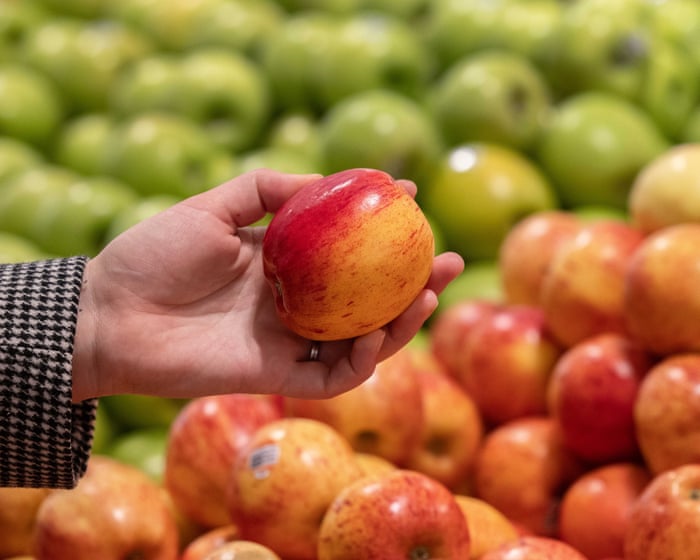
Environmental groups are sounding the alarm after discovering toxic “pesticide cocktails” in apples sold throughout Europe.
Pan Europe, a coalition of NGOs working to reduce pesticide use, purchased around 60 apples in 13 European countries—including France, Spain, Italy, and Poland—and tested them for chemical residues. The analysis revealed that 85% of the apples contained multiple pesticide residues, with some showing traces of up to seven different chemicals.
The group advises consumers to buy organic apples or to peel conventionally grown ones before eating.
In 71% of the samples, Pan Europe detected pesticides classified among the EU’s most hazardous—known as “candidates for substitution,” which the bloc aims to phase out as soon as possible. The analysis also found that 64% of samples contained at least one per- or polyfluoroalkyl substance (PFAS), often called “forever chemicals,” which are widespread in the environment and everyday products.
While pesticide residues are allowed in the EU below certain maximum levels, Pan Europe warned of the “cocktail effect,” where consumers are exposed to several pesticides at once in a single product.
Martin Dermine, a senior official at the coalition, criticized the European Food Safety Authority for assessing pesticides individually rather than evaluating the risk from combined exposure to multiple substances. “In this report, we show that 85% of the apples have multiple residues, and we don’t know if they are safe for consumption or not,” he said, noting potential links to cancer and infertility.
Pan Europe added that if the same apples were sold as processed baby food, 93% of the samples would be banned, as their pesticide levels exceed the stricter limits set for children under three. EU regulations are tougher for baby foods to protect early development.
Apples are among Europeans’ favorite fruits and the most widely grown in the EU, especially in Poland, Italy, and France. They are also among the most heavily treated fruits, with pesticides used primarily to combat apple scab, the main fungal threat to orchards. More than half of the many treatments applied each year—about 35 on average—target this disease.
Frequently Asked Questions
Of course Here is a list of FAQs about the study finding apples in Europe contaminated with pesticide cocktails written in a natural conversational tone
Beginner General Questions
1 Whats the main finding of this study
A recent scientific analysis found that a high percentage of conventionally grown apples sold across Europe contain residues of multiple pesticides at the same timewhat researchers call a pesticide cocktail
2 What is a pesticide cocktail
Its when a single piece of fruit has detectable traces of more than one pesticide Instead of just one chemical youre exposed to a mixture of several
3 Are these apples illegal or unsafe to eat
Not necessarily In most cases the individual pesticide levels were below the legal safety limits set for each chemical The big concern is that current laws dont adequately assess the potential combined health effects of these mixtures
4 Should I stop eating apples
No The health benefits of eating fruits and vegetables including apples are wellestablished The key is to make informed choices to reduce your exposure if youre concerned
5 Were organic apples included in the study
The study focused on conventionally grown apples Organic apples are grown under strict regulations that prohibit the use of most synthetic pesticides so they are far less likely to contain such residues
Health Safety Questions
6 What are the potential health risks of these pesticide mixtures
Scientists are concerned that combinations of chemicals could have cocktail effects where their combined impact is greater than the sum of their individual parts Potential longterm risks being studied include hormonal disruption developmental issues and increased cancer risk but more research is needed
7 Are children more at risk
Yes generally Children eat more food relative to their body weight and their developing bodies can be more sensitive to the effects of chemical exposures
8 Does washing or peeling apples help
Yes but its not 100 effective Washing under running water can remove some surface residues Peeling removes more but you also lose valuable nutrients and fiber found in the skin
Advanced Regulatory Questions
9 How is this possible if each pesticide is legally approved
Pesticides are tested and approved for safety