We have shown that even entrenched illiberal regimes are not invincible.
Zsuzsanna Szelényi, Programme Director of the CEU Democracy Institute and author of Tainted Democracy: Viktor Orbán and the Subversion of Hungary
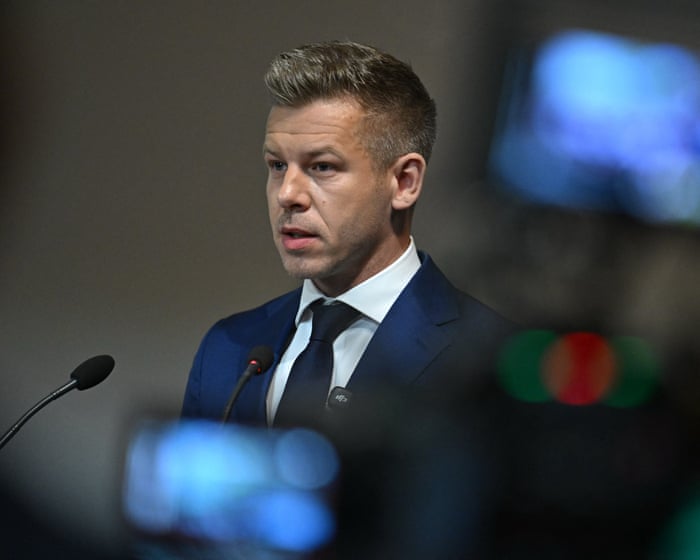
“Europe! Europe! Europe!” That’s what tens of thousands of us chanted on the banks of the Danube on Sunday as Péter Magyar addressed the jubilant crowd. With a record turnout of 77%, Hungarians have delivered a political earthquake, giving Magyar’s Tisza party the first real opportunity in 16 years to dismantle the system built by Viktor Orbán.
In truth, the foundations of Fidesz had been cracking for some time. A 2024 political scandal exposed a deep moral collapse at the heart of his regime. It also shattered one of the central myths of his rule: that his political instincts were infallible. Magyar’s improbable rise was made possible by the government’s worsening economic record and growing anger over its pro-Russian, anti-European stance. For years, Hungarian voters had felt trapped between an authoritarian government and a feeble, fractured opposition. Magyar broke that deadlock.
That he did so is remarkable. He was forced to confront a party-state: a system sustained by vast institutional, financial, and propaganda resources, and defended by relentless smear campaigns. I know how daunting that can be, having faced it myself as an opposition politician only a few years ago.
Yet Magyar understood something essential. He campaigned across the country with relentless energy, going to small towns and provincial centres long thought politically closed. His conservative-populist language insulated him from familiar attacks against liberal politicians. By placing the “east or west” question at the centre, he gave voters a clarity that has been long absent from Hungarian politics.
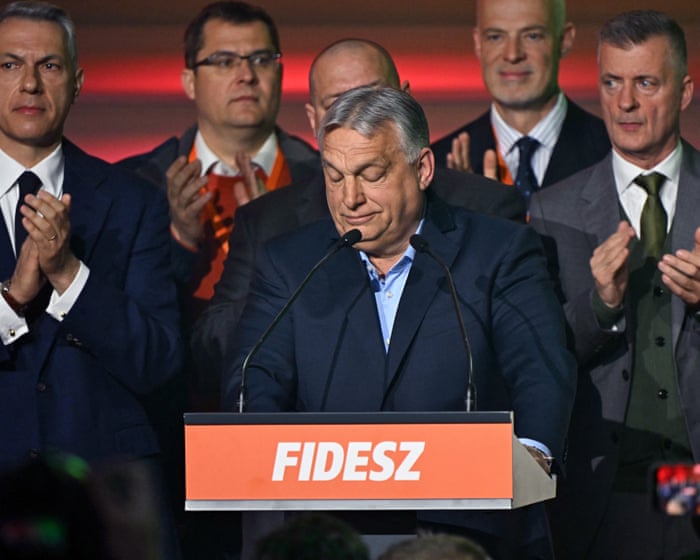
In his victory speech, Magyar made ambitious promises to restore the rule of law and repair relations with the EU and NATO. These promises will also be extraordinarily difficult to fulfil. Magyar may have won power, but he has not inherited a normal state. He faces severe economic pressures, immense public expectations, and an opposition in Fidesz that, even in defeat, retains extensive informal power and influence. Orbán’s system has infiltrated the state, the media, the economy, and the political culture itself. Removing Orbán from office is one thing. Dismantling Orbánism is quite another.
And yet, a decisive threshold has been crossed. In the end, the Orbán regime’s strategy of devoting every available resource to its own perpetuation produced not durability but exhaustion. The system hardened, overreached, and finally broke. I cannot be more proud that we Hungarians have shown that even entrenched illiberal regimes are not invincible.
But the hardest question of all is not whether Orbán can be defeated, but whether the political, legal, and moral wreckage he leaves behind can truly be repaired.
This is a victory for liberalism in the world.
Nathalie Tocci, International Relations Expert and Guardian Europe Columnist
Rarely is an election as significant outside a country as within it. Hungary is such a case. Péter Magyar’s decisive victory offers Hungary the opportunity to crawl out of the hole that Orbán has dug since taking power in 2010. The Hungarian people have overwhelmingly voted for change, and that is now a possibility—but it is not a foregone conclusion.
Poland’s example shows how hard it is to undo years of authoritarianism, especially when the system has been rigged to ensure its own self-preservation. It will not be easy for Magyar to rebuild the rule of law, an independent judiciary, a free press, a vibrant civil society, and the protection of human rights. He will face fierce opposition from all those who benefited from Orbán’s crony capitalism. Magyar’s election was therefore a crucial battle in what remains a long war.Hungary’s path back to democracy will likely be slow and uncertain, but the broader political impact of Orbán’s defeat is profound and immediate. It removes a persistent thorn in the EU’s side—particularly concerning Ukraine.
Globally, Orbán has been a trailblazer, symbol, and inspiration for the nationalist right. He rose to power when Trump was a real estate developer, Giorgia Meloni was an obscure junior minister, Marine Le Pen and Nigel Farage were fringe figures, and Alice Weidel worked as a financial consultant. The Hungarian leader has served as a model for far-right politicians across Europe and the U.S.—which is why his campaign sought endorsements from these figures, including an official visit from U.S. Vice President JD Vance just days before the election.
Orbán’s defeat does not guarantee an immediate return to democracy in Hungary, but it does mark a victory for liberalism globally—even more so than within Hungary itself.
No far-right leader can fill his shoes. That’s the thing to celebrate
Cas Mudde, Stanley Wade Shelton UGAF Professor of International Affairs at the University of Georgia and author of The Far Right Today
Hungary’s election is a reminder that much public discourse wildly overstates the strength of authoritarianism and the weakness of democracy. Orbán’s acceptance of the result also highlights how exceptional Donald Trump is in refusing to acknowledge his 2020 election defeat.
The outcome will be used to support all sorts of flawed claims—from this marking the end of the far right in Europe to the idea that Orbán lost because of his association with the toxicity of the Trump regime. In reality, this was a specifically Hungarian event, explained by Hungarian factors like 16 years of corruption and economic mismanagement—not international ones, including JD Vance’s visit to Budapest.
Certainly, U.S. Republicans may fare poorly in the midterms later this year, and the National Rally might again fail to win the French presidency next year, but this won’t be because of Orbán’s defeat. And while the Orbán regime has been the most important funder of the European far right’s infrastructure—including think tanks and universities—its political impact appears modest at best.
Nevertheless, this result carries strong symbolic value for European politics. Orbán replaced Marine Le Pen as the unofficial leader of the still deeply divided European far right during the 2015 refugee crisis. He also gave the far right a permanent presence in the European Council, where he vetoed or obstructed many EU decisions, and in the European Commission—Hungary’s commissioners have shown more loyalty to Orbán than to the EU.
Orbán is gone, for now. And while there are other far-right politicians (like Giorgia Meloni) and European disrupters (such as Slovak Prime Minister Robert Fico), none have the intent, power, or resources to fill the void left by Orbán’s defeat. And that is what we should celebrate today.
The EU must urgently find ways to deal with future Orbáns
Zselyke Csaky, Senior Research Fellow at the Centre for European Reform
This is a historic moment for Hungary and Hungarians—and the outcome is momentous for the rest of Europe as well. A 16-year-long illiberal, anti-democratic experiment has ended, and this is a time for celebration. But with a large majority comes immense responsibility for the new government in Budapest. Europe, too, has urgent lessons to learn.
Across EU capitals and in Brussels, Péter Magyar’s victory has brought huge sighs of relief. But the anxious anticipation before the vote, and the fact that many EU leaders simply hoped the “Orbán problem” would disappear after this election, reveals a deeper issue: the EU still lacks a coherent strategy for tackling democratic backsliding within its ranks.The union could face repercussions sooner than anticipated. Despite persistent efforts, the EU’s current framework lacks a mechanism to expel member states that violate the rule of law. In 2018, Brussels initiated Article 7 proceedings against Hungary over Viktor Orbán’s breaches and froze over €30 billion in EU funds. However, it failed to secure the unanimous support required to make a decisive impact. Many member states found it convenient to hide behind Orbán’s obstructive stances on issues like migration and other divisive topics. This experience underscores the need for the EU to better equip itself to handle similar challenges—not only future Orbán-like figures but also potentially more significant ones, such as Marine Le Pen or Jordan Bardella in France.
The election in Hungary presents Europe with an opportunity to emerge stronger and address its underlying issues. It is a chance to finally provide Ukraine with the necessary support, secure an ambitious seven-year EU budget, advance enlargement, and reduce the unanimity requirement in foreign policy that has allowed individual countries to hold the continent hostage.
With European Parliament elections approaching in 2027, the EU must act swiftly. What Europe does in the coming months will determine whether this victory marks a genuine turning point or merely a temporary respite.
Under new leadership, Hungary is expected to support Ukraine. The scale of Péter Magyar’s Tisza party’s landslide victory—projected to secure a two-thirds constitutional majority—is nothing short of historic. This outcome will enable Magyar to begin dismantling Orbán’s extensive control over Hungary’s government, judiciary, media, and other institutions. Many long-standing Fidesz strongholds fell to Tisza, leaving Orbán with no grounds to dispute the parliamentary results. The new government is likely to be sworn in smoothly on May 12.
Magyar will immediately work to unlock billions of euros in frozen EU funds, with Brussels expected to show flexibility. He will reverse Orbán’s veto on aid to Ukraine, paving the way for €90 billion in support. While cautious on this issue before the election, Magyar can now align Hungary more closely with the European mainstream on most matters.
Domestically, Magyar is expected to dismantle Fidesz’s propaganda apparatus and institutions like the Sovereignty Protection Office, which Orbán used to harass NGOs and critics. The new prime minister will enjoy a brief grace period but will face pressure to roll back measures like retail price caps, part of Orbán’s “family protection” policies.
Challenges remain. Magyar’s team has limited governing experience, yet public expectations are high. Additionally, lavish government spending in early 2024 will constrain his budgetary options. The grace period may be short-lived.
Frequently Asked Questions
Of course Here is a list of FAQs about the hypothetical departure of Viktor Orbán framed around the panel discussion topic
BeginnerLevel Questions
1 Who is Viktor Orbán and why is he so significant
Viktor Orbán is the Prime Minister of Hungary a role he has held since 2010 He is a highly influential and controversial figure in European politics known for his nationalist illiberal democracy model tough stance on immigration and frequent clashes with the European Union over ruleoflaw and democratic standards
2 Has Viktor Orbán actually left office
No this is a hypothetical scenario The FAQs are based on a discussion panel exploring the potential consequences if he were to leave the political scene
3 What does left the scene mean
It could mean several things losing an election retiring from politics or being unable to lead due to other reasons The phrase implies a major shift away from his direct dominant control over Hungarian politics
4 Why would his departure be a big deal for Europe
Orbán has been a powerful disruptive voice within the EU often blocking or challenging collective decisions on issues like migration sanctions and support for Ukraine His absence would significantly change the dynamics of EU negotiations and the balance of power between nationalist and federalist visions for Europe
Intermediate Impact Questions
5 What would change in Hungary first if Orbán left
Internally there would likely be a power struggle within his Fidesz party The extensive system of loyalists in media business and institutions he built might begin to fracture Opposition parties would see a major opportunity potentially leading to political instability or a more pluralistic system
6 How would this affect the European Unions internal politics
The EU would lose its most vocal internal critic This could make it easier to pass decisions requiring unanimity particularly those related to supporting Ukraine or further EU integration The illiberal bloc in Europe would lose its most experienced leader
7 Would Hungarys policy on the war in Ukraine change
Its very likely Orbán has been the most Russiaskepticskeptic EU leader delaying and opposing aid packages for Ukraine A new government would probably align more closely