Why is everything—art, sex, nature—marketed to us as a tool for something else, instead of being valued for its own sake?

Why is everything—art, sex, nature—marketed to us as a tool for something else, instead of being valued for its own sake?

For decades, Metro-Goldwyn-Mayer films have opened with Leo the roaring lion, framed by the motto ars gratia artis: art for art’s sake. Given that MGM is a profit-driven giant, we might question the sincerity of such a lofty ideal. Yet it captures one of the few legitimate reasons to make movies. Art created for anything else—profit, self-promotion, propaganda—isn’t truly art, at least not in its purest form.

So it was jarring to see a recent ad for the National Art Pass, which offers free or discounted entry to UK galleries and museums. The tagline “See more. Live more” sounded fitting—art does enrich our lives. But the “more” here turned out to be purely quantitative, not qualitative. “Grow some years on to your life with art,” declared the main slogan, followed by: “Spending time in galleries and museums could help you live longer.” Art not for art’s sake, but for your heart’s sake—and the physical heart at that. This kind of messaging has become widespread, with Arts Council England promoting the idea that “engaging in creative and cultural activities has proven health benefits for individuals and communities.”

I was shocked by the poster, but not surprised. For a long time, I’ve quietly mourned the instrumentalisation of everything: how nothing seems valued for itself anymore, only for its usefulness in serving some practical function. I first noticed this troubling trend in 2010, when I had the misfortune of reviewing Gretchen Rubin’s The Happiness Project, which chronicles a year spent relentlessly pursuing happiness. One passage struck me so deeply I can almost recall it word for word. After a tense start to a day with her husband, Rubin writes: “We hugged—for at least six seconds, which, I happened to know from my research, is the minimum time necessary to promote the flow of oxytocin and serotonin, mood-boosting chemicals that promote bonding. The moment of tension passed.”

I was left with the chilling image of a woman holding her husband not just out of love or affection, but to release hormones and reduce stress. Those sentences showed how her happiness project led her to do everything with her mood in mind. Nothing else seemed to matter as much, not even truth. Reflecting on her year-long experiment in treating herself as a happiness machine, she wondered, “Maybe I was seeing what I wanted to see,” then added: “Maybe, but who cares?” Whatever makes you feel better, true or not.

In the years between witnessing hugging for happiness and creativity for longevity, I’ve seen countless other examples of life’s good things promoted not for their own sake, but for the material benefits they bring. This instrumentalisation has become so quietly normalised that we no longer see it as odd, let alone wrong. We hardly seem aware of how pervasive it is. Yet its effects run deep, repeatedly blinding us to what is truly valuable in life.

Before diagnosing what’s gone wrong and how to fix it, I should defend what might sound like an exaggeration: that everything is becoming instrumentalised. It may seem rhetorical, but I genuinely struggle to think of anything worthwhile that hasn’t been praised by someone for its practical benefits over its intrinsic merits. Take churchgoing. Most believers see worship as a devotional duty, not a pragmatic ticket to heaven. Yet today, it’s not uncommon to hear even Christians, like Deborah Jenkins in Premier Christianity magazine, citing research that “Being part of a church community can lengthen life, reduce depression and promote positive mental health.”I once skimmed a book that promoted prayer for physical health, citing a study which found significant medical benefits for the cardiovascular system, blood, muscles, and bones from performing daily prayers. Of course, if pressed, no one would claim these are the primary reasons to follow a religion. Yet, they are still presented as compelling arguments, seen as more credible and scientific than the idea that a loving creator cares how you spend your Sunday mornings.

On a more secular note, we are even given practical reasons to orgasm. A 2015 Telegraph headline—”An orgasm a day could keep prostate cancer away, scientists claim”—captures a now-common belief that one of the best reasons for a man to have sex or masturbate is not pleasure, intimacy, or relieving sexual tension, but protecting his health.

If you tried to find something people value purely for its own sake, without it being praised for health, wealth, or wellbeing benefits, you’d search for a long time. The Opera North website lists ten benefits of singing, only one of which—self-expression—relates to art and creativity. The others include feeling better, improving lung function, reducing stress, enhancing memory, coping with hardship, and boosting confidence.

Many who advocate reconnecting with nature do so with reasons that appeal to the same utilitarian, self-centered hedonism blamed for disconnecting us from the Earth in the first place. The National Trust highlights how “walking in nature can help wellbeing,” while the trend of “forest bathing” encourages us to treat woodlands like a walk-in clinic. These well-meaning advocates seem to miss the irony: if we engage with nature only for what it can do for us, we adopt the same exploitative mindset as those who cut down forests.

Even philosophy, the disinterested pursuit of wisdom, has fallen victim to instrumentalisation. Universities no longer just promote exploring life’s fundamental questions; now they emphasize how philosophy can help you buy a house or build a pension. It is often marketed as training “transferable thinking skills,” clearly aimed at the workplace. The University of Cambridge’s Faculty of Philosophy has a webpage dedicated to five résumé-friendly skills it teaches: intellectual, communication, organisational, interpersonal, and research.

Instrumentalisation is most harmful when applied to our interactions with others. Immanuel Kant considered it a “categorical imperative”—a moral absolute—to “treat humanity, whether in your own person or in the person of any other, always at the same time as an end, never merely as a means.” The language we use for instrumentalising others—dehumanisation, objectification, exploitation—reflects how corrupting it is. That’s why instrumentalising social connection is both immoral and self-defeating: focusing on what relationships do for us reduces others to tools for personal gain.

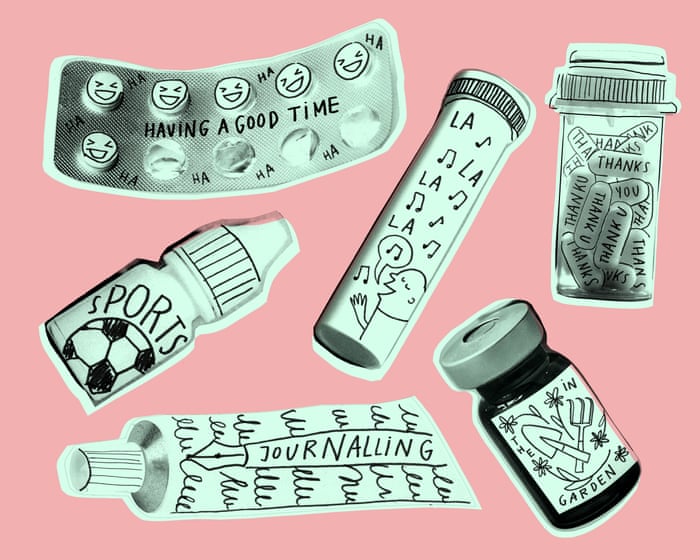
This list of instrumentalised activities is far from exhaustive. We could add gardening, sports, camping, swimming, activism, volunteering, baking, crafts, journaling, laughing, and saying “thank you.” Increasingly, we ask not what is inherently good about them, but what good they can do for us.When we say “good,” we mean health, wealth, and worldly success. People who love nature, art, learning, or friendship for their own sake might find it unappealing to focus on their practical benefits, but what harm does it do? After all, someone living a purely practical life and someone who isn’t might do exactly the same things.

This view overlooks that a good life depends not just on what we do, but how we do it. Two people might have identical cultural calendars—attending the same exhibitions, watching the same films, listening to the same music—but if their motivations differ fundamentally, they live in entirely different worlds.

To understand why, we need to revisit why anything has value. Aristotle, among others, observed that we do some things as means to an end, and others as ends in themselves. Only the latter have intrinsic value, while means have merely extrinsic value. When we ask where life’s ultimate value lies, it’s clearly in things with intrinsic worth.

This insight is so widely accepted it might seem obvious. Yet it’s worth repeating throughout our lives, because it’s easy to be pulled away from what truly matters by purely instrumental goods. Money is the clearest example. It’s only important for what it can buy and can help us obtain many things we value. Yet, all too often, we chase more and more of it, never feeling we have enough, and in doing so, we sacrifice time with loved ones and cherished activities.

Prioritizing extrinsic over intrinsic goods is a common mistake. But the instrumentalization of everything takes it further. It doesn’t just distract us from what’s good in itself; it strips those very things of their intrinsic value, turning them into mere means to ends. Worse, those ends often lack value in themselves.

Consider what instrumentalization serves: health, wealth, and psychological well-being. These are so obviously desirable that we might miss that none have intrinsic value. That’s clearly true of wealth, but it’s equally true of mental and physical health.

Take bodily health. We often treat it as the most important thing—hence the popular quote, “When you have your health, you have everything.” But we don’t value health for its own sake. We value it for two reasons: first, poor health often involves pain and suffering, which are bad in themselves; second, good health enables us to do things that give our lives meaning. A healthy life without love, meaningful activities, or experiences would be empty. Many people with chronic illness discover, surprisingly, that health isn’t the most important thing after all.

Even mental health isn’t intrinsically valuable. Mental illness is inherently bad because it involves suffering without gain. But good mental health, like good physical health, simply enables what is more fundamentally valuable. Some mental distress isn’t inherently bad either—grief, for example, shows our emotions are functioning correctly when bad things happen to people we care about.

Not even happiness—often cited as the ultimate benefit of instrumentalization—is an intrinsic good. It isn’t good if someone feels happy seeing others suffer due to prejudice. It wouldn’t be good to live in a chemically induced bliss, content but detached from reality. It isn’t good to be happily unaware of a partner’s infidelity. Blissful ignorance may sometimes be preferable to painful knowledge, but that doesn’t make it good.

So what is good in itself, if not health, wealth, and mental well-being?What is well-being? Philosophers have often made the mistake of trying to pinpoint a single “ultimate good” for humanity. Aristotle pointed to intellectual contemplation; Buddhists, to the end of suffering; Kant, to a good will; and utilitarians, to happiness. But there’s no real need to reduce everything of intrinsic value to just one state or activity. Aristotle was closer to the mark with his idea of flourishing as the highest human good, though he went too far in prescribing exactly what flourishing requires. We flourish when our lives are engaged with things that are valuable in themselves, not for any other reason.

Intrinsic human goods are all the things that make life worth living, needing no further justification. To ask “What’s the point?” of them is to miss the point—they are the point. We can’t argue for why they are valuable; we can only describe what makes them valuable and hope others see it too. For example, a day spent in the forest is worthwhile because it lets us feel the wonder of being alive and marvel at the natural world. Playing or watching a sport means taking part in or witnessing the struggle and joy of uniting mind and body more seamlessly than in everyday life. Learning a foreign language opens a door to another culture, allowing you to connect with its people and access its literature and media. All these experiences enrich our lives and broaden our perspective, which is valuable even if it doesn’t extend our lifespan or delay dementia by a single day. If you see them only as a way to build mental, emotional, or physical strength for the future, you’re shifting focus away from what’s valuable right now. Life isn’t a rehearsal for the future; it’s a game that’s already underway, and time is running out.

The line between intrinsic and extrinsic goods might seem clear in theory, but in practice it quickly blurs. Treating something as a tool doesn’t create extrinsic value—it just elevates that value above what is intrinsically worthwhile.

People have practical needs, and sometimes it’s more important to earn money or chop wood than to read a novel or play with your grandchildren. Many things must be done for practical reasons, and to spend your time only on what is intrinsically valuable would be an exceptional privilege, an indulgence, or both.

The debate over “art for art’s sake” versus “art as a teaching tool” can be misleading. Some art, like instrumental music or abstract painting, can only be appreciated for its own sake. But much literature, film, and drama offers insight into ethics, politics, and the human heart. Such understanding helps us live better and focus more on what truly matters in our own lives and others’. This kind of art can be seen as a means to moral education, but in good art, the means and ends are so intertwined that the distinction feels artificial. For instance, explaining why Anton Chekhov was a great playwright would be impossible without considering both his craft and the humanity it portrays. The issue with much didactic art isn’t that it contains lessons, but that they are delivered too crudely. Such works are not just bad art—they’re also poor teaching tools.

The relationship between intrinsic and extrinsic value is complex, and one problem with overemphasizing utility is that it flattens and oversimplifies this relationship. It encourages us to identify what is most useful, separate it from what is ultimately valuable, and prioritize it. In doing so, it often undermines or destroys the very benefits it claims to maximize.

Take social connection, for example. I recently heard about a study suggesting that doing anything—even reading—is better for our well-being when it’s done with others.We often find greater fulfillment in doing things with others rather than alone. This idea is now widely shared and understood, with many recognizing that social connection is vital for both mental and physical health. Yet one of the most valuable aspects of friendship and community is how they shift our focus away from ourselves and make us more attentive to the needs of others. To truly benefit from socializing, we need to engage in the right spirit—choosing to spend time with people because we care for them and they for us, because we find them stimulating, or because we enjoy being part of a shared experience or effort. If we socialize solely for our own personal wellbeing, we may miss out on the deeper rewards that connection usually offers.

Instrumentalization creates an illusion of efficiency by encouraging the direct pursuit of practical goals we all desire. However, this often backfires. If obtaining certain benefits becomes your main motivation, you’re likely to miss out on the very rewards an activity can provide. What seem like shortcuts often turn out to be dead ends, undermining what they aim to achieve.

If instrumentalization is such a significant error, why do we embrace it? After all, we don’t intentionally set out to strip meaning from our most valued activities.

Instrumentalization stems from several interconnected features of Western modernity. The Enlightenment brought to fruition the idea of the sovereign, autonomous individual—a concept with deep roots in classical and Christian thought. Over time, this idea has become common sense. Each person is seen as the master of their own destiny, the author of their own life story. Self-expression and self-determination are viewed as essential to being authentic.

Enlightenment thinkers were right to champion greater individual freedom in an era when power was held by a few over a subjugated majority. But human beings are also social creatures and can never be entirely self-sufficient. Modernity’s mistake lies in losing sight of this, placing too much emphasis on personal liberty and not enough on our interdependence. This has led to an exaggerated focus on autonomy, pushing the value of individuality too far. The result is atomization: a world where our separation from others has become excessive.

This atomized world has several traits that encourage instrumentalization. First, it fosters an illusion of control. Encouraged to see ourselves as autonomous, we overlook how much lies beyond our power. Life unfolds unpredictably, offering opportunities and throwing obstacles in seemingly random measure. We aren’t even in full control of ourselves—we had no say in our fundamental makeup: our dispositions, personalities, talents, and limitations.

Yet, primed to think of ourselves as free and independent, we imagine we can manipulate the world to get whatever we want. Happiness, health, and success are ours for the taking, as long as we make the right choices. Consequently, the world becomes a series of levers to pull and buttons to push, all bending to our will.

Our sense of autonomous agency has increasingly been expressed through our role as consumers. Freedom, above all, means the choice of how to spend our money, with the promise that everything we need can be bought. This consumer mindset shapes how we relate to everything, not just the things we purchase. As a result, the world has become largely transactional, where everything is seen as a tool for obtaining something else. It’s no coincidence that dating apps make it feel like we’re shopping for partners—we even approach relationships with a consumer frame of mind. Higher education is no longer primarily about expanding one’s horizons but is viewed as an investment in future earnings, with courses that don’t promise strong financial returns seen as poor value.A subtle yet pervasive form of instrumentalisation stems from reductionism, an idea that has quietly spread from the natural sciences into our broader culture. Reductionism suggests that to understand how something functions, we should break it down into its component parts. This approach served the natural sciences well for centuries, but its limitations become apparent in its relative failure within the social sciences. Economies, societies, and human psychology cannot be fully explained by simple mechanistic processes. We have come to realize that even in the natural sciences, taking things apart can only explain so much—it is equally, and sometimes more, important to understand how systems operate as a whole.

Much of today’s instrumentalisation is driven by a crude form of reductionism that ignores systems and fixates on isolated elements within them. For example, the rich experience of being outdoors is reduced to a means of stimulating blood flow or releasing hormones. Art, which stirs a wide range of often conflicting emotions, is valued only for its ability to evoke certain positive feelings. Social bonds, which bring both joy and heartache, are simplified into mere sources of emotional support.

When we combine an exaggerated belief in personal autonomy, a transactional consumer mindset, and a reductionist view of how things work, it becomes inevitable that we treat the world as a collection of resources to be plundered for our own well-being. The tragedy is that in doing so, we neglect rather than fulfill our deepest needs.

What would our culture look like if we reversed this trend of instrumentalising everything? Of course, we would still do many things as means to an end, and we would gladly acknowledge that many of life’s good things also bring instrumental benefits. But we would see these benefits as welcome side effects, not as their primary purpose. A de-instrumentalised world would be one where we pay more attention to what holds value right here and now.

Take friendship, for example. The personal benefits we gain from others are real, but they should not be the reason we spend time with them. Relationships are valuable because we value the people themselves, not because spending time with them releases endorphins in our brains. David Hume corrected this error over two centuries ago when he wrote, “I feel a pleasure in doing good to my friend, because I love him; but do not love him for the sake of that pleasure.”

Appreciating things for their own sake, rather than for what they might bring us, is liberating. It frees us from the internal pressure to constantly ensure that everything we do serves some further purpose. Living life to the fullest means fully appreciating what life offers, not trying to extract measurable benefits from it. It allows us to recognize that the good life is something we can experience every day, in both small and significant ways. Most importantly, it reminds us that the people and things we love are enough in themselves—they do not need to serve any additional function to justify the time and care we devote to them. To live in this world with the understanding that life is its own end is the key to achieving its true fullness.

Frequently Asked Questions
FAQs Why is everything marketed as a tool instead of being valued for itself

BeginnerLevel Questions

What does it mean for something to be valued for its own sake
It means appreciating something simply for what it islike enjoying a sunset for its beauty not because it makes you more productive or helps you sell something

Can you give a simple example of this problem
Sure Think of a walk in nature Its often marketed as a tool to reduce stress or a way to get your steps in rather than as a valuable experience in itselfjust being outside and enjoying the moment

Why does this kind of marketing happen
Primarily because of capitalism and consumer culture In a marketdriven society things are assigned monetary value Its easier to sell something if its presented as solving a problem or helping you achieve a goal

Is valuing things as tools always bad
Not always Practical benefits are real and important The problem is the overemphasis on utility which can make us forget how to simply appreciate experiences without expecting an external reward

How does this affect art
Art is often framed as an investment a status symbol or a way to decorate a room to impress guests rather than as an expression of human creativity to be engaged with emotionally or intellectually

Intermediate Advanced Questions

What are the deeper cultural or philosophical roots of this trend
It connects to ideas like instrumental rationality and commodification Western philosophy has long debated intrinsic value vs instrumental value

Does social media make this worse
Absolutely Social media often encourages us to document and share experiences primarily for validation or personal branding turning even personal moments into tools for social capital

What about the marketing of sex and relationships
Sex is frequently marketed in advertising to sell products framing it as a means to achieve desirability or status Relationships are sometimes discussed in terms of networking or social benefits rather than mutual connection

Is there a psychological impact from seeing everything as a tool
Yes It can contribute to anxiety