An election that could shape the future of UK politics for years is happening on Thursday. But it’s only taking place in a small part of northwest England, where just over 70,000 people are eligible to vote.
Why? There are several reasons—some tied to how the British political system works, others much more current.
In short—what’s happening and why does it matter?
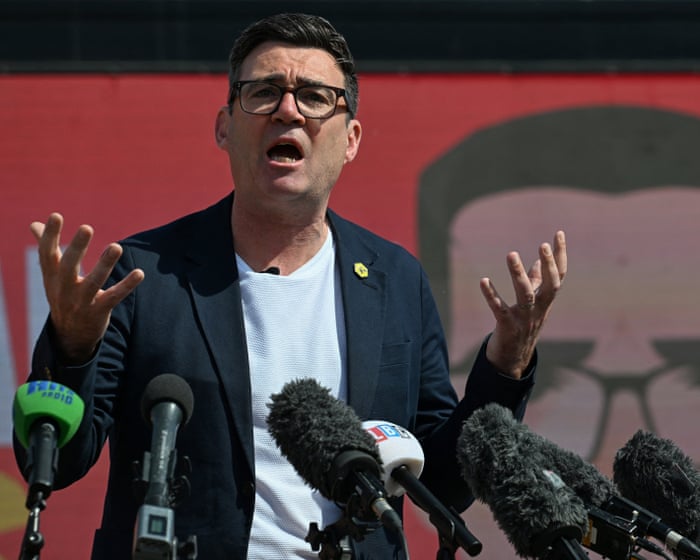
Voters in Makerfield, a mostly suburban area on the edge of Wigan, Greater Manchester, are choosing a new MP after the previous one stepped down. The candidate for the ruling Labour Party and the favorite to win is Andy Burnham, the mayor of Greater Manchester and a former MP.
If Burnham wins, many expect he will launch a campaign to replace Keir Starmer as Labour leader—and therefore as UK prime minister—or convince Starmer to step down. If things go as predicted, the UK could have its seventh prime minister since 2017 within just a few weeks or months.
How does this work constitutionally?
Under a very strong constitutional convention—the UK has no written constitution—the prime minister is always a member of the House of Commons, where all 650 MPs represent a specific geographic area.
Burnham was the MP for the neighboring seat of Leigh from 1997 to 2017, served as a government minister, and twice ran unsuccessfully for the Labour leadership. But he left Westminster when Labour was in opposition, after being elected mayor of Greater Manchester.
To challenge Starmer, Burnham needs a new seat. After much negotiation, one of his allies, Josh Simons, agreed to step down as the MP for Makerfield, triggering what’s called a by-election—a single-seat contest held when a vacancy opens up between general elections.
Why does Burnham want Starmer to go?
It’s not just him. Around 100 Labour MPs have publicly called on Starmer to quit, and many others feel the same way privately. A lot of it is self-interest—Labour is consistently polling well behind the hard-right populist party Reform UK, and performed terribly in May in elections for the devolved Scottish and Welsh parliaments, as well as local government seats across England.
But many Labour MPs also think Starmer lacks any real political vision or much of a plan, and they’ve seen him lurch from one U-turn to another. A number are worried that without action, Reform will win the next election.
Will Burnham win the seat?
The short answer is yes—most people believe he will, even if the result could be fairly close. The longer answer is that Makerfield is the kind of seat Labour used to win easily—the party has held it since it was created in a 1983 reorganization of parliamentary boundaries—but now struggles with.
With voters who are disproportionately older, less educated, and less likely to come from minority ethnic backgrounds, Makerfield—like dozens of similar post-industrial seats in northern England—now heavily favors Reform, led by Nigel Farage, the driving force behind the UK’s 2016 decision to leave the EU.
Burnham’s hope is that his charisma, along with his reputation as a generally popular mayor, will get him over the line. He’s also been helped by Reform’s somewhat misfiring campaign—the party’s candidate, a local plumber named Robert Kenyon, has faced criticism over past social media posts, including some sexist and otherwise lewd comments.
If Burnham wins, what happens next?
Starmer has repeatedly said that, just two years after a big general election win, he’s not going anywhere and will fight any challengers. Still, Burnham’s allies hope he can be persuaded to set a timeline for leaving.
If that happened and no other MP sought the leadership, Burnham could become prime minister within weeks. But at least one other MP, Wes Streeting, who resigned as health secretary last month, has promised to enter the race.
If there’s a contest, how does it work?
An MP needs at least 80 nominations from other Labour MPs to trigger a contest. Any other MP who reaches the same threshold also takes part, as does the sittingIf the sitting leader chooses to step down, their replacement would be decided by default. The names would then be put to a vote by Labour party members, a process that would take at least four or five weeks, given the need for hustings events and similar activities.
Who would win such a contest? Again, the money is mostly on Burnham, though some Starmer supporters argue he could appeal to the loyalty of Labour members who chose him in 2020. Streeting is seen as an outsider but is a skilled political operator, considered to be on the centre-right of the Labour party.
What would a Burnham government look like? Some cynics say it would be much like Starmer’s, but with better presentation. More seriously, many Burnham supporters appreciate his relaxed eloquence, especially compared to Starmer’s often strained and awkward style.
On policy, while Burnham was once on the centre-right of the party, as mayor he has developed a more left-leaning philosophy, based on a version of what is almost a European-style corporatism. Awkwardly known as “Manchesterism,” it argues that while free markets are central, they must be balanced by some state control, even ownership, particularly in essentials like utilities, transport, and housing.
Frequently Asked Questions
Here is a list of FAQs about the intense interest in a byelection in northwest England
BeginnerLevel Questions
Q What is a byelection
A Its a special election held between general elections to fill a single empty seat in Parliament usually because the MP resigned or died
Q Why does anyone care about just one seat in northwest England
A Because its often a very close race If a party that usually wins there loses it can signal a big political shift across the whole country
Q Is this byelection in a city or a rural area
A It depends on the specific seat In northwest England they can be in big cities like Manchester or Liverpool or in towns and countryside areas like Cheshire or Lancashire
Q Does the result actually change who runs the country
A Usually no because the government still has a majority in Parliament But it can make the government weaker or show they are losing support
IntermediateLevel Questions
Q Why is this particular byelection getting so much more attention than others
A Its often because the seat is a bellwether or because a major political scandal or resignation caused it The northwest has several highly competitive marginal seats
Q What does a safe seat versus a marginal seat mean here
A A safe seat is one where the same party always wins by a huge margin A marginal seat is a close contest Byelections in marginal northwest seats are fascinating because a small shift in voters can flip the result
Q How does a byelection affect the national political parties
A Its a big test for the party in power If they lose a seat theyve held for decades it can trigger a leadership crisis For the opposition winning a surprise seat gives them huge momentum and media coverage
Q What role do local issues play
A A massive role In a byelection voters focus on local problems more than national headlines A candidate who promises to fix a local hospital or save a factory can win over voters who normally support another party
Advanced Practical Questions