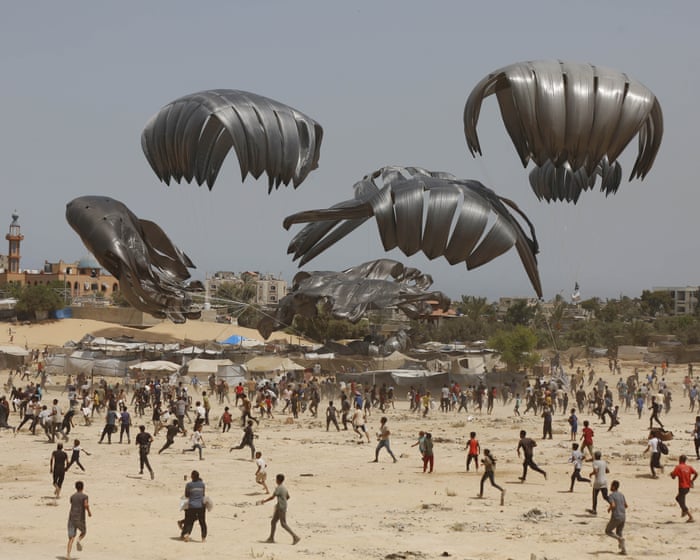
Israel and its allies are at a critical crossroads. Under international pressure, Israel has allowed a limited amount of aid into Gaza, but it is far from enough, and Palestinians continue to die from starvation. According to Gaza’s health ministry, more than 62,000 people, mostly women and children, have been killed.
A recent recording features Israel’s former intelligence chief, Aharon Haliva—who was in charge during Hamas’s 2023 atrocities—saying, “For every person on October 7, 50 Palestinians must die. It doesn’t matter now if they are children.” This is not only vengeful and obscene; it openly describes a war crime.
The death toll is expected to rise sharply. Defense Minister Israel Katz has approved plans to call up 60,000 soldiers to seize and occupy Gaza City, which would force out hundreds of thousands of Palestinians and worsen the catastrophe for civilians who are already exhausted, desperate, and traumatized.
Yet Prime Minister Benjamin Netanyahu has another option: accept a ceasefire proposal that Hamas has already agreed to, which is reportedly “almost identical” to an earlier U.S.-backed plan that Israel had accepted. Instead, Netanyahu appears to believe that prolonging the war will help him stay in power and delay his imminent corruption trial. Although there is growing domestic opposition to the war—with 74% of Israelis wanting it to end, and large protests focused on hostages and soldier casualties—Netanyahu may rely even more on his far-right coalition partners as a result.
Internationally, it is the suffering of Palestinians that is driving calls to end the war and damaging Israel’s standing. A Reuters survey found that 58% of Americans support recognizing a Palestinian state, and 59% view Israel’s actions in Gaza as excessive. Jordan called the plan for Gaza City a move that “kills all prospects for peace,” while France’s President Macron warned it would bring “true disaster.” Netanyahu’s aggressive responses to critics have only made him seem more isolated.
Palestinians in Gaza City face an impossible choice: stay under Israeli attack or try to flee with nowhere safe to go. Others, however, can choose to help give them a future rather than remain complicit. A ceasefire is urgently needed. The U.S. could help stop the violence, but instead it recently sanctioned International Criminal Court officials involved in the case against Netanyahu. If a broader Middle East peace is the goal, it cannot be built on the ruins of Gaza. Beyond symbolic recognition of Palestine, other countries must take stronger action—halting arms transfers, imposing sanctions, and using economic leverage, such as ending tariff-free access or suspending Israel from research programs like Horizon Europe.
—
Do you have an opinion on the issues raised in this article? If you would like to submit a response of up to 300 words by email to be considered for publication in our letters section, please click here.
Frequently Asked Questions
Of course Here is a list of FAQs about The Guardians stance on Gaza designed to be clear and accessible
BeginnerLevel Questions
1 What is The Guardians basic position on the conflict in Gaza
The Guardians editorial position is that Israels military actions in Gaza have caused immense civilian suffering and must be halted immediately They argue that countries supporting Israel primarily the US and UK are complicit in this violence by providing military and diplomatic support
2 Why does The Guardian focus on Israels actions
The Guardians stance is based on the scale of the humanitarian crisis the high number of civilian casualties and the view that Israel as the occupying power with a superior military has a greater responsibility to protect civilian life and adhere to international law
3 Does The Guardian condemn Hamas
Yes The Guardians editorials have consistently condemned the Hamas attacks on October 7th 2023 as a horrific act of terrorism However their central argument is that Israels military response has been disproportionate and cannot be justified
4 What does complicit mean in this context
It means that The Guardian believes countries like the US and UK are partly responsible for the continuation of the violence because their ongoing supply of weapons funding and political backing enables Israels military campaign
IntermediateLevel Questions
5 What specific actions does The Guardian want Israels allies to take
They advocate for these allies to use their leverage to demand an immediate and permanent ceasefire to halt all arms sales and military aid to Israel and to apply diplomatic pressure for a longterm political solution based on a twostate framework
6 How does The Guardian justify calling for a halt to arms sales
They argue that supplying weapons to a military engaged in actions that may violate international humanitarian law makes the supplier country complicit in those potential violations They cite the widespread destruction and civilian death toll as evidence
7 Has The Guardians stance changed over time
The core principlecriticism of Israels military actions and the humanitarian costhas been consistent for many years The specific call for allies to stop being complicit has become more urgent and central since the war that began in October 2023
8 Is this stance representative of all its journalists
The Guardians