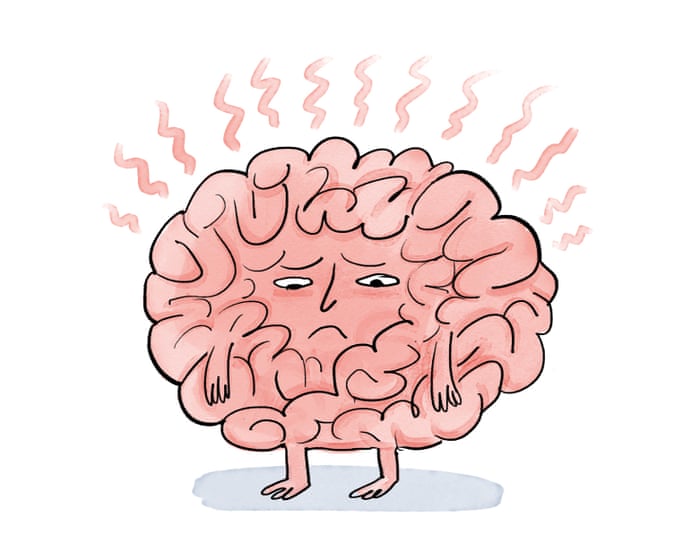
La inflamación es la respuesta del sistema inmunitario a una lesión o infección. Si te cortas y la zona se enrojece e hincha, eso es inflamación: las células inmunitarias acuden rápidamente para combatir gérmenes y reparar el tejido. Pero la inflamación también puede ocurrir dentro del cuerpo durante una enfermedad, y la inflamación de bajo nivel puede ser causada por la obesidad o el envejecimiento. "Un marcador de esa inflamación tiende a ser citoquinas elevadas en la sangre de las personas", dice el profesor Daniel M Davis, jefe de ciencias de la vida del Imperial College de Londres y autor de Salud Inmunitaria: Una Guía para Desmentir Mitos. "Son las moléculas que las células inmunitarias usan para comunicarse entre sí".
Hay más de 100 tipos de citoquinas en tu cuerpo, y algunas afectan al cerebro. "Si tienes fiebre, no es solo físico, también te afecta mentalmente", dice Davis. "Algunas citoquinas influyen en cómo te sientes".
Aún no hemos desentrañado esto lo suficiente como para saber qué parte del sistema inmunitario atacar para mejorar la salud mental de las personas.
Estudios con pacientes de artritis reumatoide han encontrado que los fármacos antiinflamatorios que bloquean las citoquinas también pueden mejorar el estado de ánimo. Las exploraciones cerebrales sugieren que esto puede deberse a que bloquear las citoquinas cambia la actividad cerebral.
Un estudio de casi 5,000 niños encontró que aquellos con niveles superiores a la media de la citoquina IL-6 en sangre a los nueve años, sin signos de depresión, tenían más probabilidades de desarrollar depresión a los 18 años. Otro estudio, esta vez en adultos, encontró un vínculo entre desarrollar una enfermedad relacionada con el sistema inmunitario y tener un diagnóstico previo de trastornos psiquiátricos, incluidos depresión y ansiedad.
Los científicos aún no saben lo suficiente para usar este conocimiento en el tratamiento de afecciones como la depresión o la ansiedad. "Varias líneas de evidencia apuntan a una superposición entre la salud inmunitaria y la mental, pero aún no hemos desentrañado esto lo suficiente como para saber quién podría beneficiarse, y exactamente qué parte del sistema inmunitario podríamos atacar de manera segura para mejorar la salud mental de las personas", dice Davis.
Preguntas Frecuentes
Aquí tienes una lista de preguntas frecuentes sobre el vínculo entre la inflamación y la salud mental escrita en un tono conversacional natural con respuestas claras y sencillas
Preguntas para Principiantes
1 ¿Qué es exactamente la inflamación
La inflamación es el sistema de defensa natural de tu cuerpo Cuando te haces un corte o tienes una infección, tu sistema inmunitario envía glóbulos blancos a la zona para combatir gérmenes y comenzar el proceso de curación Esto es inflamación aguda y es algo bueno El problema es cuando esta respuesta nunca se apaga por completo, lo que lleva a una inflamación crónica
2 ¿Cómo puede la inflamación en mi cuerpo afectar a mi cerebro
Tu cerebro no está aislado del resto de tu cuerpo Cuando hay inflamación crónica, las señales de alarma viajan a través de tu torrente sanguíneo y pueden cruzar la barrera hematoencefálica Esto puede desencadenar inflamación en el propio cerebro, lo que altera el delicado equilibrio químico necesario para un estado de ánimo estable, un pensamiento claro y buenos niveles de energía
3 ¿Significa esto que mi depresión es solo una enfermedad física
No exactamente Es más preciso decir que la salud mental y la salud física están profundamente conectadas La inflamación es una pieza importante del rompecabezas Puede hacerte más vulnerable a la depresión o empeorar los síntomas existentes, pero rara vez es la única causa Es una combinación de genética, experiencias de vida, estrés, dieta y tu salud física
4 ¿Es normal sentirse cansado y con niebla mental cuando estoy enfermo
Absolutamente Esa sensación de fatiga, niebla mental y bajo estado de ánimo cuando tienes gripe es un ejemplo perfecto de cómo la inflamación afecta al cerebro Tu cuerpo envía señales químicas a tu cerebro para que descanses y conserves energía Cuando esa respuesta se vuelve crónica, esos mismos sentimientos pueden quedarse mucho después de que la infección haya desaparecido
5 ¿Puede cambiar mi dieta realmente ayudar a mi salud mental
Sí, puede ser una herramienta poderosa, pero no es una cura mágica Una dieta antiinflamatoria rica en frutas, verduras, granos integrales y grasas saludables como los omega-3 le da a tu cuerpo los nutrientes que necesita para regular el sistema inmunitario Por el contrario, una dieta alta en alimentos procesados, azúcar y grasas no saludables puede promover la inflamación Piensa en la comida como combustible para tu sistema: mejor combustible lleva a un motor que funciona más suavemente
Preguntas Avanzadas y Más Profundas