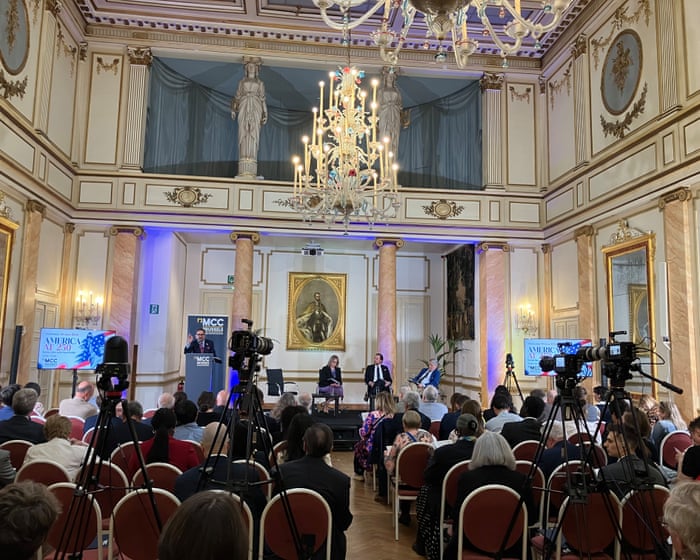
A ƙarƙashin fitilun chandelier masu kyalkyali a cikin wani dakin rawa na neoclassical, baƙi sun zauna. Da misalin karfe 10 na safe, taron jama'a ya taru a wani kulob na membobi masu zaman kansu a Brussels don taron bikin cika shekaru 250 na 'yancin kai na Amurka. Taron ne kungiyar MCC Brussels, wata cibiyar tunani a babban birnin EU wacce Viktor Orbán ya fi so, ta shirya.
Da yake bude taron na kwana daya, darektan MCC Frank Furedi ya ce bikin shekaru 250 "ya kubuce wa masu sauraron Turai." A cikin jawabinsa, ya yabi iyayen da suka kafa kasar kafin ya kaddamar da wani hari mai zafi kan "ajin siyasa marasa iya aiki" na Turai.
Amma a karkashin wannan kyakyawan kayan ado da maganganun masu karfin gaske, makomar MCC Brussels ba ta da tabbas. Cibiyar tunani, wacce ta hada kai da shirya abubuwan da suka hada da Nigel Farage da Suella Braverman, kuma ta karbi bakuncin dan majalisar Turai na jam'iyyar Alternative für Deutschland mai ra'ayin mazan jiya Alexander Jungbluth, tana fuskantar matsanancin karancin kudi. Hakan ya biyo bayan shan kayen siyasa da Orbán ya yi a watan Afrilu. Mutumin da ya doke shi da gagarumin rinjaye, Péter Magyar, ya ce jihar ba za ta kara ba da kudade ga taro da kungiyoyi masu ra'ayin mazan jiya ba, ciki har da "Mathias Corvinus Collegium da sauran kungiyoyin da ke da alaka da ita."
A karkashin Orbán, MCC a Budapest—wata cibiyar ilimi da ke da alaka da jam'iyyarsa ta Fidesz—ta sami babban canja wurin kadarorin jihar. Amma sabon firaministan ya sanar da bincike kan wannan canja wurin, yana kiran tallafin jihar laifi.
An kori Orbán daga mukamin firaministan Hungary a watan Mayu bayan shekaru 16 yana mulki. MCC Brussels ta fara aiki a watan Nuwamba 2022 a matsayin wani reshe mai zaman kansa na cibiyar iyayenta a Budapest. A shekarar 2024, ta bayar da rahoton samun kudaden tallafi na shekara-shekara €6.37 miliyan (£5.45 miliyan) daga MCC Budapest, wanda ya sanya ta zama daya daga cikin cibiyoyin tunani da aka fi ba da kudade a babban birnin EU.
Wannan arzikin ya bayyana a watan Yuni a Cercle Royal Gaulois, wani kulob na manyan mutane da aka yi masa ado da sassaka da aka yi wa wahayi daga tsohuwar Girka da hotunan sarakunan Belgium. A can, baƙi sun tattauna makomar wayewar Yamma.
Furedi, wanda a da ya kasance memba na wata jam'iyya mai ra'ayin gurguzu kuma yanzu ya zama babban mai akida ga sabon dama, ya ce MCC Brussels za ta bukaci wani madadin kudade tun daga watan Satumba. "Ko ta yaya, za mu ci gaba ta wani salo ko wane," in ji shi, ko da yake a "cikin mafi munin yanayi … dole ne mu kasance da kasancewar kan layi fiye da na zahiri."
Ya yi watsi da ikirarin Magyar na cewa canja wurin kudade zuwa MCC Budapest laifi ne, yana kiransa "shirme." Ya kara da cewa kudaden MCC Brussels "sun kasance a bayyane sosai." Magyar, in ji shi, "yana da hakki" a matsayin zababben firaminista "ya mallaki kudaden da MCC ta samu daga asusun jama'a … Abin da ba shi da hakkin yi shi ne rufe wata cibiya da ke yin aiki mai kyau."
Furedi ya ce MCC Brussels "ta dauki jigogin da babu wanda ya taba," yana kwatanta aikinta da "tattaunawar kunkuntar" a Brussels game da Green Deal da hijira. Ya yi nuni da wani taron kan kidan Romany da na Yahudawa a Gabashin Turai da kuma aikin da ke tafe kan "ilimin halin dan Adam a cikin labarin EU."
Amma ba taron cibiyar tunani na "tafiya ta kida ta Transylvania" ne ya sanya ta sami suna mai rigima ba. Masu suka suna zargin kungiyar da kare mulkin cin hanci da rashawa na Orbán a Hungary, duk da binciken da aka yi na cin hanci da rashawa da koma bayan dimokuradiyya. An kuma zarge ta da rashin bayyana gaskiya game da kudaden nata.
A farkon shekarar 2024, MCC Brussels ta goyi bayan zanga-zangar manoma a Brussels da himma, tana cin gajiyar fushin gaskiya game da karancin farashi da dokokin EU a duk yammacin Turai. Cibiyar tunani ta musanta shirya zanga-zangar, tana cewa ta shiga cikin zanga-zangar kuma ta yi bidiyo "don taimaka wa manoma su bayyana damuwarsu." Ta kuma buga rahotanni da ke ikirarin cewa manufofin EU "suna lalata" aikin gona. Sha'awarta ta zo ne a daidai lokacin da zanga-zangar manoma a duk fadin Turai ke samun goyon baya mai karfi daga kungiyoyin masu ra'ayin mazan jiya da masu kawo rikici.
[Hoto: Manoma da taraktoci suna zanga-zanga a kofar Brandenburg a Berlin a watan Janairu 2024. Hoton: Kay Nietfeld/AP]
MCC ta kuma zargi Hukumar Tarayyar Turai da "tura biliyoyin kudade cikin wata hanyar sirri ta kungiyoyi masu zaman kansu da cibiyoyin tunani" a cikin wani rahoto da ya kara rura wutar yakin neman zabe daga 'yan majalisa masu ra'ayin tsakiya-dama da masu ra'ayin mazan jiya kan tallafin EU ga kungiyoyin farar hula. MCC Brussels ta bayyana kungiyoyi 10 na tarayya da cibiyoyin tunani da ta ce sun karbi kudade a karkashin shirin EU na Citizens, Equality, Rights and Values. Wannan shirin yana da kasafin kudi €1.55 biliyan na 2021-27, wanda har yanzu aka raba shi ga kungiyoyi sama da 6,500.
Petros Fassoulas, babban sakataren kungiyar European Movement International (EMI), daya daga cikin kungiyoyin da aka bayyana, ya yi imanin cewa rahoton MCC ya taimaka wajen haifar da "yanayi, hali, ra'ayi" na adawa da kungiyoyi masu zaman kansu. Bayan shekaru na kudade masu tsayi, an ki amincewa da neman tallafin EMI na shekara-shekara €650,000 daga EU a shekarar 2025, kuma tallafin daga majalisar Turai don yakin wayar da kan jama'a kan al'amuran Turai bai taba zuwa ba. Fassoulas ya ce ba shi da hujjar cewa yakin neman zabe na hannun dama don yanke tallafin EU ga kungiyoyi masu zaman kansu ya haifar da wannan sakamakon, amma ya bayyana lokacin a matsayin abin mamaki.
Ya kara da cewa: "Yana da ban mamaki cewa a daidai lokacin da EU ke fuskantar hari daga yada labaran karya na Rasha, yakin neman zabe na Amurka da labaran kishin kasa, hukumar ta yanke tallafin ga wata kungiya da ta saba goyon bayan aikin Turai."
Marieke Ehlers, 'yar majalisar Turai daga jam'iyyar Dutch Party for Freedom mai ra'ayin mazan jiya, ta yi nuni da rahoton MCC kan kungiyoyi masu zaman kansu a matsayin misalin aikin su "mai ban sha'awa." MCC Brussels ta taka muhimmiyar rawa, in ji ta. "Shin ina amfani da [rahotanninsu] don yin tasiri ga aikina na siyasa? Ba na tsammanin haka. Shin ina ganin yana da ban sha'awa a karanta? E. Shin ina ganin yana da muhimmanci … a sami cibiyoyin tunani a duk fadin bangarorin siyasa? E."
Ba kowa ba ne yake ganin MCC Brussels ba ta da lahani haka. Roland Freudenstein, wani mai kallon Hungary na dogon lokaci, ya ce MCC Brussels "an kafa ta ne don kare cin hanci da rashawa na Orbán" tare da babban manufa ta zama tushen tunani ga alt-right na duk fadin Turai. Wani mai magana da yawun MCC ya ce: "Muna la'antar aikin cin hanci da rashawa daga dukkan 'yan siyasa da ma'aikatan gwamnati."
[Hoto: Magoya bayan jam'iyyar Tisza ta Péter Magyar suna jiran jawabinsa a Budapest a daren zaben a watan Afrilu. Hoton: Attila Husejnow/Sopa Images/Shutterstock]
Freudenstein ya yi aiki a Cibiyar Wilfried Martens, cibiyar tunani ta hukuma ta jam'iyyar European People's Party (EPP), a lokacin da jam'iyyar tsakiya-dama ta rabu kan ko za a kori Orbán da jam'iyyarsa ta Fidesz. Orbán daga karshe ya janye jam'iyyarsa daga EPP a shekarar 2021 kafin a kore ta saboda damuwa game da karuwar mulkin kama-karya a Hungary.
Shekara mai zuwa, an kafa MCC Brussels. "MCC ta zama mai matukar muhimmanci ga Fidesz a matsayin wani abu don daidaita warewar siyasa da Fidesz ke ji a majalisar Turai da kuma a siyasar Turai," in ji Freudenstein.
Canjin gwamnati a Hungary ba shine kadai matsalar MCC Brussels ba. An dakatar da ita daga rijistar bayyana gaskiya ta EU a watan da ya gabata, wani mataki da ke tayar da tambayoyi game da amincinta. Kasancewa a cikin rijistar, wani bayanan hukuma na kungiyoyin masu fafutuka, abu ne da ake bukata idan kungiya tana son ganin manyan jami'an EU.
Dakatarwar ta biyo bayan korafi daga kungiyar NGO Corporate Europe Observatory (CEO) a watan Fabrairu 2025 wacce ta zargi MCC Brussels da kasa bayyana kudaden nata. MCC Brussels ta yi rajista a jerin EU a watan Janairu 2024, amma ba ta bayyana kudaden nata ba har sai watan Agusta 2025. Mai magana da yawun MCC ya ce wannan "ya kasance cikin lokacin da aka ba duk sabbin masu rajista."
Olivier Hoedeman, wanda ya kafa kungiyar CEO, ya ce an fara korafin ne a lokacin da MCC Brussels ke "jagorantar hari kan kungiyoyin farar hula," yana kara da cewa "gazawarsu da kin bayyana kasafin kudinsu na kansu ya kasance abin kunya a fili."
Fiye da watanni 16 bayan an shigar da korafin, Hoedeman ya ce kungiyar CEO tana jiran amsar hukumar. MCC Brussels ta yi ikirarin cewa dakatarwar ta "dangane da siyasa" ce kuma ta samo asali ne daga takaddama kan ko ya kamata a hada MCC Brussels a cikin rajistar cibiyar iyayenta.
Hukumar Tarayyar Taura ta ki bayyana dalilin da ya sa aka sanya dakatarwar. "Ba mu yin sharhi kan shari'o'in gudanarwa da ke gudana," in ji mai magana da yawunta, yana kara da cewa "kungiyar da abin ya shafa" koyaushe tana da "damar bayyana ra'ayoyinta a rubuce kafin a yanke shawara kan cancanta."
A yanzu, MCC tana ci gaba da neman sabbin masu ba da kudade. Da yake tunani game da taron da aka halarta sosai a dakin rawa mai madubi a Cercle Royal Gaulois, Freudenstein ya ce: "Da ba don shan kayen da Orbán ya sha a watan Afrilu ba, da sun kasance suna ci gaba."
**Tambayoyin da Aka Yi Yawa**
Anan akwai jerin tambayoyin da ake yawan yi game da rikicin Gidauniyar Századvég, wata cibiyar tunani da ke da alaka da Viktor Orbán, da alakanta da hare-hare kan kungiyoyin farar hula.
**Tambayoyi na Matakin Farko**
1. **Menene kungiyoyin farar hula kuma me yasa suke da muhimmanci?**
Kungiyoyin farar hula su ne sararin da ke wajen gwamnati da kasuwanci, kamar kungiyoyin agaji, kungiyoyin kare hakkin dan adam, da cibiyoyin tunani masu zaman kansu. Suna kiyaye lafiyar dimokuradiyya ta hanyar rike gwamnati da alhakin aikinta da kuma baiwa 'yan kasa murya.
2. **Menene ma'anar kai hari kan kungiyoyin farar hula?**
Yawanci yana nufin gwamnatoci su zartar da dokoki don takaita kudade, sanya wa kungiyoyi lakabin wakilan kasashen waje, ko amfani da binciken haraji don rufe bakin masu suka. Manufar ita ce ta raunana muryoyi masu zaman kansu da za su iya adawa da gwamnati.
3. **Wane ne Viktor Orbán?**
Shi ne Firaministan Hungary, wanda aka sani da manufofinsa na kishin kasa da ra'ayin mazan jiya. Yakan soki dimokuradiyyar 'yanci ta Yamma kuma an zarge shi da wargaza cibiyoyi masu zaman kansu a Hungary.
4. **Menene Századvég?**
Cibiyar tunani ce mai ra'ayin mazan jiya a Hungary. Ana kiranta da "cibiyar tunani da Viktor Orbán ya fi so" saboda tana samar da bincike da ke goyon bayan manufofin gwamnatinsa kuma tana karbar kudade masu yawa daga jihar.
5. **Me yasa Századvég ke cikin rikici yanzu?**
Cibiyar tunani tana fuskantar tashin hankali na ciki. Manyan ma'aikata sun yi murabus kuma rahotanni sun ce ana bincikar ta kan rashin daidaiton kudi. Masu suka sun ce hakan ya nuna cewa tsarin Orbán yana cinye kansa, har ma da amintattun abokan kawance.
**Tambayoyi na Matsakaicin Mataki**
6. **Ta yaya Századvég ke da alaka da hare-hare kan kungiyoyin farar hula?**
Századvég cibiyar tunani ce mai goyon bayan gwamnati wacce ta taimaka wajen tabbatar da dokokin da ke takaita kungiyoyi masu zaman kansu da ke karbar kudade daga kasashen waje a Hungary. Yanzu, dabarun gwamnati da aka yi amfani da su a kan kungiyoyi masu zaman kansu ana juya su kan Századvég kanta.
7. **Wadanne matsaloli ne Századvég ke fuskanta a yanzu?**
- **Murabus:** Da yawa daga cikin manyan daraktoci da masu bincike sun bar aiki, suna nuni da yanayin aiki mai guba da matsin lamba don samar da farfaganda.
- **Dakatar da kudade:** Tarayyar Turai ta daskare biliyoyin kudade ga Hungary, wanda ya katse kasafin kudin jihar da Századvég ta dogara da shi.
- **Bincike na ciki:** Masu fallasa sun yi ikirarin cewa gidauniyar ta yi amfani da kudaden EU ba bisa ka'ida ba, wanda ya kai ga binciken gwamnati.
8. **Wannan rikici ne na gaske ko kuma wasan kwaikwayo na siyasa ne?**
Duka biyun ne. A bangaren kudi, Századvég na fuskantar matsaloli na gaske tare da dakatar da kudade da murabus. A bangaren siyasa, yana nuna yadda tsarin mulkin Orbán ke iya juya wa kansa, wanda ke haifar da tambayoyi game da makomar cibiyoyinsa.