Forget about those dimly lit period dramas where miserable women with no electricity quietly sob in tight corsets and accidentally brush hands by candlelight. When it comes to lesbian cinema, I’m much more into over-the-top heist capers and brooding, butch anti-heroes. After all, what could be more intensely gay than jumping into a life of crime with someone you’ve just met? My favorite of them all is the swaggering ex-con turned plumber Corky, who helps save Violet from her mob boss husband in the 1996 cult classic Bound. We first meet Corky tied up in a literal closet, but the metaphor doesn’t play out how you’d expect. She’s unapologetic and visible at a time when few films explored queerness at all. She shows off a labrys tattoo, spends her free time drinking beer in grimy dive bars, and eventually drives off into the sunset with her new partner-in-crime in a beat-up Chevy pickup. The simple charm of Corky as a queer heartthrob was somehow way ahead of its time, and her magnetic influence shows up everywhere from Bottoms to Love Lies Bleeding. — El Hunt
Eric Hunter, Edge of Seventeen
The lead of this underrated romantic comedy can be pretty awkward: a suburban Ohio teen trying his best Boy George looks at the local gay bar (they don’t work) and driving miles to surprise a one-time hookup to see if he’s still interested. It’s not about shame or self-mockery—it’s full of the classic charm of 90s New Queer Cinema that didn’t bother to explain itself. But Eric’s messiness is what makes it feel so real. The brilliance of Todd Stephens’ autobiographical, ’80s-set script is how it pairs queer people’s dual rebirths: coming out and coming of age. Eric isn’t just figuring out life beyond his family; he’s actively creating how he’ll look and act within his new chosen one. In its earnest, unassuming way, and through Chris Stafford’s tender performance, the film captures the thrill of self-discovery, moving from obsessing over a niche pop act to building a life that matches that fantasy. — Juan A Ramirez
Frank Dillard, Mrs Doubtfire
When I think of Mrs Doubtfire, I don’t just remember Robin Williams’ hilariously inconsistent Scottish-ish accent, but the raspy voice of Harvey Fierstein. In the 1993 movie, Fierstein plays Frank Dillard, the flamboyant gay brother of Daniel Hillard (Williams), a slightly manic divorced dad who stages an elaborate drag act as an elderly woman so he can spend more time with his kids. Frank is a makeup artist who helps his brother transform using wigs, prosthetics, makeup, and a wardrobe of tights and cardigans. I remember finding it groundbreaking that a film like this existed in 1993—a time of moral panic around HIV/AIDS—and featured a gay character who wasn’t sad or tragic. (Frank was in a happy relationship with a man his nieces and nephews adorably called “Aunt Jack.”) It was also quietly radical that the gay brother was the “expert” in this situation, tasked with helping his brother fit into femininity. Mrs Doubtfire is a film about strained family relationships, but making custom prosthetics to help your brother transform into an elderly British woman? That’s real love. — Louis Staples
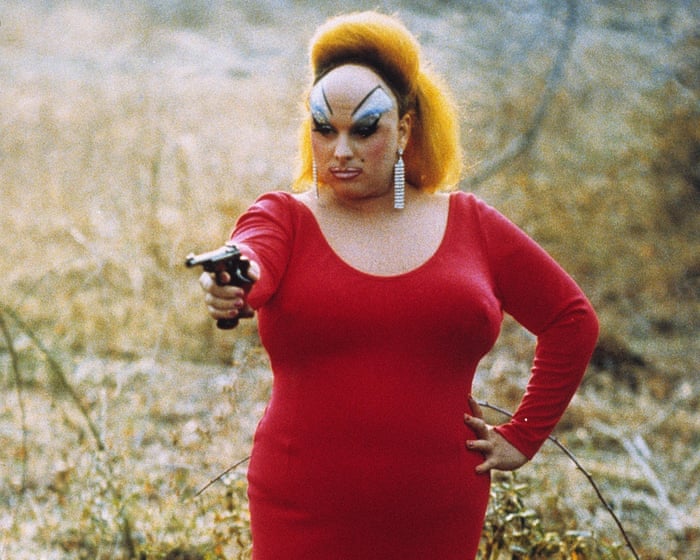
Divine, Pink Flamingos
Few onscreen characters are as likely to boldly stamp themselves onto your eyeballs asThe high-browed (but unapologetically low-brow), beehive-haired, mermaid-flared Divine. Known now as the flamboyant centerpiece of John Waters’ “Trash Trilogy,” Divine is the drag persona of Harris Glenn Milstead, who burst into Baltimore’s counterculture scene at the tail end of the 1960s. Here, she holds the title of the “filthiest person alive,” both figuratively and literally: a murderer and thief leading a merry band of misfits, deviants, and rogues on a true tour of vulgarity, with gruesome stops including piles of eggs, stolen babies, and feces. Trouble arrives when two nasty fools, the Marbles (David Lochary and Mink Stole), plot to knock Divine off her foul throne and claim the title for themselves. But they can’t match her sheer outrageousness, and no character since has either—Pink Flamingos still wears the crown for cinematic notoriety.
Miriam Balanescu
Barbara Covett, Notes on a Scandal
While it’s always heartwarming to see queer characters who might represent us at our most tender and vulnerable, there’s also something thrilling about watching them speak to us at our nastiest. Disguised as a prestige Oscar-bait film from Searchlight, 2006’s Notes on a Scandal was actually a depraved little surprise—a darkly funny and completely scathing thriller about a character who could, in the wrong hands, be a grotesque cliché: the bitter, sexually frustrated older lesbian. But with the sharply nasty yet specific words of Patrick Marber and a never-better, freer Judi Dench in the lead (the actor once called it one of her favorite roles), the repressed and despised schoolteacher Barbara Covett was both entirely, offensively uncensored and, at times, disarmingly and pathetically relatable. Her actions and diaries might be morally indefensible (even if falling in love and lust with Cate Blanchett is understandable to us all), but the tragedy of never coming to terms with who and what you are as a queer person—and how that can sour every want and impulse—remains powerfully stinging to the film’s bitter, refreshingly cynical end. Barbara might be the worst of us, but that doesn’t make her any less real.
Benjamin Lee
Helen Cooper, Kissing Jessica Stein
Kissing Jessica Stein is one of my favorite queer films—and not because of the title character Jessica (she’s cute, but too plain for my taste). Instead, it’s her sharp, spunky love interest Helen who will forever live in my personal Hall of Fame of fictional women. When we meet Helen, she’s not only wearing a pleather pinstripe blazer, but we see her return from a romp with one of her multiple boyfriends to lock eyes with a butch lesbian guest and gossip with her gay guy friends. In short, she’s living my dream life. Helen is direct, sexually empowered, and would probably choke on her martini if anyone called her “wifey material.” She’s here, she’s queer, and she never fit into the confines of heterosexual monogamy. She’s a reminder that, contrary to old stereotypes that bisexual women are just trying to please men, bisexuality is the ultimate disruption to the status quo.
Megan Wallace
Albert Goldman, The Birdcage
There’s a moment in The Birdcage when Armand (Robin Williams) tries to teach his partner, Albert (Nathan Lane), how to spread mustard on toast “like a man”—smearing it with gritted teeth instead of delicate hand movements. Albert fails hilariously, poking through the toast and falling into hysterics. The couple, desperate to convince their son’s ultraconservative future in-laws that Albert is just an uncle, quickly realize that plan might be doomed.It’s a perfect scene that captures the absurdity of performative masculinity and the brilliance of Albert. An aging drag queen with flawless taste, Albert is never the punchline. Instead, Lane plays him with such unapologetic confidence that he’s the source of nearly every laugh in Mike Nichols’ fast-paced comedy of errors. Albert commands every room, even when he’s dressed in a wig and pearls, trying to pass as his son’s mother. It was the first film I saw that showed two men living happily together. While they have to hide their relationship for most of the movie, every rewatch proves their bond is the most genuine thing in the film—and most of the chaos is just straight people drama they’re forced to clean up.
Shrai Popat
Megan Bloomfield, But I’m a Cheerleader
View image in fullscreen: Natasha Lyonne in But I’m a Cheerleader. Photograph: Everett Collection Inc/Alamy
Jamie Babbit’s delightfully campy satire of conversion therapy is anchored by Natasha Lyonne’s spot-on performance as Megan Bloomfield, who desperately wants to be normal despite her obvious queerness. Megan tries hard to be a high school cheerleader and kiss her handsome boyfriend, but it just doesn’t fit. One day, her family stages an intervention and sends her off to the most hilariously ineffective conversion camp imaginable. What makes Bloomfield shine is her innocence—literally everyone realizes she’s a lesbian before she does—and that fuels the utter ridiculousness that makes But I’m a Cheerleader so unforgettable. There’s plenty of it: RuPaul as a camp enforcer wearing a “Straight is Great” T-shirt but clearly being gay himself, obsessive devotion to gender roles in the hope that enough pink will make a girl straight, and Megan herself finding lesbian love while at the conversion camp. A wonderful bonus to Lyonne’s performance is that 25 years later, she’s become iconic again, this time for her quietly queer role as Charlie Cale in the ongoing series Poker Face, giving us a glimpse of what an older Megan might have grown into.
Veronica Esposito
Sérgio, O Fantasma
View image in fullscreen: Ricardo Meneses in O Fantasma. Photograph: Everett Collection Inc/Alamy
Sérgio is a garbage collector with the body of Saint Sebastian and the sex drive of a dog in heat. He’s all instinct and proud of it, prowling the outskirts of Lisbon at night, digging through the trash of a sexy biker, having (unsimulated) sex with strangers in a gimp suit, and choking himself with a shower cord while masturbating. Is he turned on by the memory of last night’s hookup or by the feeling of being leashed? The dimly lit city streets might not seem like the most beautiful setting, but in director João Pedro Rodrigues’ hands, a back alley lit by a garbage truck’s brake lights can look like a painting. I love O Fantasma for its completely unvarnished portrait of boredom and social detachment in a true outsider who refuses to fit in. Pride Month is a good time for queer people to remember that we don’t have to.
Owen Myers
The Babadook, The Babadook
View image in fullscreen: The Babadook. Photograph: Atlaspix/Alamy
This year marks a big 10th anniversary for the LGBTQ+ community. In 2016, according to queer folklore, Netflix accidentally put the Australian indie horror The Babadook—a film about a mother and son whose grief over the boy’s father’s death turns into a monster in a top hat—in its LGBTQ+ section. A screenshot of this supposed mistake went viral, and, just like that, the dapper but terrifying character—somewhere between Papa Lazarou from League of Gentlemen and an Edward Gorey drawing—became a regular sight at Pride parades around the world. While it’s unclear whether Netflix was actually at fault, or if the screenshot was a fake based on an existing “the Babadook is gay” meme, the fact remains that queer people have embraced this weird little guy.Just like all the other weird little guys before him, they’ve done it with enthusiasm. And whether or not director Jennifer Kent meant it, the Babadook is definitely non-binary, and definitely in a polycule with Pennywise, Count Orlok, and that creature from Pan’s Labyrinth with eyes on its hands. — Eleanor Margolis
Frequently Asked Questions
Here is a list of FAQs based on the theme of writers sharing their favorite LGBTQ movie characters covering definitions insights and practical takeaways
BeginnerLevel Questions
1 What does sheer outrageousness mean in this context
It means characters who are unapologetically bold flamboyant or eccentric They break social rules not for shock value but to express their true selves with confidence and joy
2 Why do writers focus on LGBTQ movie characters
Because these characters often face unique struggles and triumphs Writers find them rich for analysisthey show how identity love and resilience play out on screen especially when characters defy stereotypes
3 Can you give an example of a sheer outrageous LGBTQ character
A classic example is Dr FrankNFurter from The Rocky Horror Picture Show Hes a transvestite scientist who is flamboyant seductive and completely unashameda perfect mix of camp and rebellion
4 Is this just about funny or loud characters
No Outrageous can also mean characters who are defiantly themselves in quiet ways For instance Carol from the film Carol is outrageous for her timea wealthy 1950s woman who risks everything for a samesex relationship
Intermediate Questions
5 Why do writers say these characters are important for LGBTQ representation
Because they show that being queer isnt just about suffering These characters celebrate joy camp and defiance They remind audiences that LGBTQ people can be powerful funny and unapologetically weirdnot just tragic figures
6 What common problems do writers point out about these characters
Sometimes outrageous characters can become onedimensional caricatures Writers often critique when a characters flamboyance is used for laughs without giving them depth or a real story
7 How do these characters help straight audiences
They break down stereotypes by showing that LGBTQ people are complex A character like Priscilla Queen of the Desert teaches that drag and gender expression can be both art and survival
8 Whats a modern example of a sheer outrageous character