In French culture, seven is known as “l’âge de raison”—the age at which children are considered to know right from wrong and can take some moral responsibility. However, France’s national rail operator appears to set the bar a bit higher when it comes to trusting children to behave in a non-disruptive way on trains.
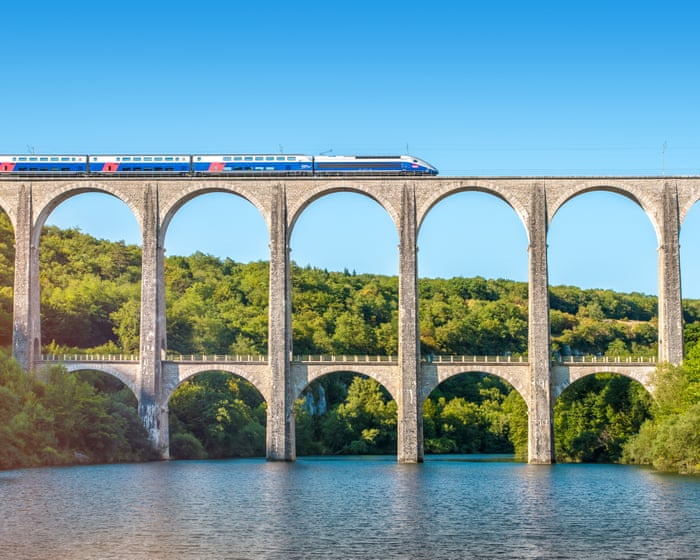
Earlier this month, SNCF launched its new Optimum Plus fare, offering select spaces on weekday TGV trains between Paris and Lyon with larger, more comfortable seats, premium food, and a ban on children under 12. The move was aimed at appealing to business travelers who frequently make that journey. But it has sparked a backlash and ignited a philosophical debate about children’s place in society, set against the worrying backdrop of declining birth rates in France.
“We can’t on one hand say we aren’t having enough children, and on the other try to exclude them from everywhere,” argues Sarah El Haïry, France’s high commissioner for childhood.
Anyone who has endured a long train ride playing endless rounds of I-spy with their own child—let alone sat near someone else’s—might understand the appeal of child-free spaces. Yet the reaction highlights a strong philosophical objection in a country that traditionally grants children considerable autonomy and responsibility. This is part of a broader mindset that prioritizes helping children integrate into society. It also raises practical concerns about what “no kids” attitudes signal for future birth rates.
SNCF’s move was surprising for a country known as family-friendly, one that respects children’s right to participate in everyday rituals—starting with the elaborate three-course meals served in school canteens. My own half-French children, raised in Paris, have been taught from a very young age to politely greet neighbors and shopkeepers, sit patiently in restaurants, and take turns on the park swings. The underlying logic is that treating children as valued, responsible members of society helps them grow into polite and respectful adults. How can they learn what society expects if they are excluded from public spaces as kids? That reasoning is hard to dispute.
As a result, the “no kids” rule has struck a nerve. SNCF is not just a public service provider; it is woven into French identity and the cherished tradition of long summer holidays. Generally, the railway is quite child-friendly: station staff hand out activity kits to young travelers during school breaks, and summer trains are often filled with unaccompanied children escorted to summer camps by young guides.
After the social media uproar, SNCF quickly downplayed the policy, noting that the Optimum Plus fare applies to only 8% of weekday seats on one business-heavy route, leaving 92% of weekday seats and all weekend seats open to everyone. The company eventually removed the age reference from its website description, but the debate continues.
A society that cannot tolerate the presence of children is “worrying,” El Haïry contends. The former minister has previously criticized the growing “no kids” trend in restaurants and hotels catering to affluent adults seeking peace and quiet. She is not alone in her concern. Last year, socialist senator Laurence Rossignol proposed a bill to outlaw child-free spaces. Now, politicians from both the right and left are uniting to condemn SNCF’s decision.
This isn’t just a moral issue. With France’s finances in crisis, politicians are aware that a falling birth rate adds long-term pressure. Compared to its European neighbors, France is actually faring relatively well, boasting the EU’s second-highest fertility rate in 2023. But the latest figures show that French birth rates are still declining, adding urgency to the debate over how society treats its youngest members.France’s birth rate is below replacement level and continues to decline. Recent data from the national statistics bureau, Insee, shows that 24% fewer babies were born last year than in 2010. The government is trying to reverse this trend, but family-friendly policies like extended parental leave, though welcome, are only part of the solution. They cannot fully ease concerns about the future climate crisis and the soaring cost of living, which also contribute to why some people hesitate to start a family.
Two years ago, President Emmanuel Macron announced a “demographic rearmament” aimed at boosting the country’s birth rate. As a next step, the government is introducing two additional months of paid parental leave starting this summer. This is great news for new parents and adds to the extensive support already offered by the French state: heavily subsidized childcare, free schooling from age three, and organized holiday clubs that ease the burdens often faced by working parents elsewhere.
While the practical impact of SNCF’s recent move—setting aside just a few seats on a few trains for families—is minor, the public backlash it sparked is encouraging. As a parent in family-friendly France, it is reassuring to see that attempts to treat children as a nuisance rather than as future adults and citizens are met with strong resistance. Keeping children welcome on trains and in public spaces won’t solve the problem of falling birth rates, but making them and their parents feel unwelcome would only make things worse.
Helen Massy-Beresford is a British journalist and editor based in Paris.
Frequently Asked Questions
Of course Its a concept thats gaining traction in several countries including France as a way to cater to diverse passenger needs Here is a list of FAQs about childfree areas on trains framed as real questions people might ask
Beginner Definition Questions
1 What exactly is a childfree area on a train
Its a designated carriage or section where children under a certain age are not permitted creating a quieter environment for passengers who prefer it
2 Is this a common thing in France I thought France was very familyfriendly
It is becoming more common especially on highspeed TGV trains France is familyfriendly but it also values vivre ensemble which includes providing spaces for different needsboth for families and for those seeking quiet
3 Isnt this discriminatory against families
The goal isnt to exclude families but to offer choice Just as there are familyoriented spaces these are quietoriented spaces It allows all passengers to select the environment that best suits their journey
4 How do I know if my train has one
When booking your ticket online or via an app it will often be listed as a seating option called Espace Silence or Voiture Silencieuse You can also ask at the ticket counter
Practical Booking Questions
5 If I book a seat in the quiet zone what rules should I expect
Rules typically include no noise from electronic devices quiet conversations and of course no children under the specified age Its a librarylike atmosphere
6 What happens if a family with a baby accidentally sits in this section
The train conductor will usually ask them to move to a standard carriage if space is available Its enforced to maintain the environment for those who paid for it
7 Can I travel with my teenager in a childfree area
Usually yes The age limit is typically around 12 or 16 A wellbehaved teenager is generally allowed as the zone is more about preventing young childrens unpredictable noise
8 Are these seats more expensive
Usually not They are often the same price as a standard seat in the same class you are paying for the specific environment not an upgraded service