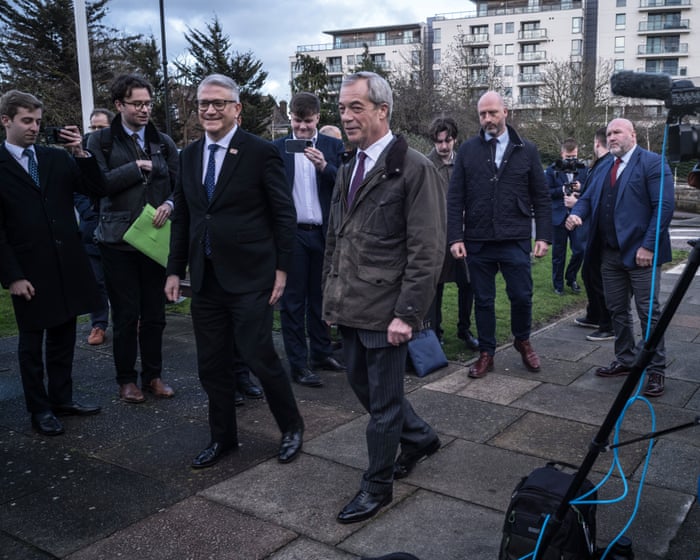
Nigel Farage’s dismissal of a journalist this week, telling her to “write some silly story … and we won’t bother to read it,” sparked an immediate and mixed reaction. Some saw it as a “masterclass” in handling the mainstream media, while others called it “rude, dismissive, misogynistic, arrogant.”
Behind the scenes, Farage’s treatment of the Financial Times’s Anna Gross—which drew laughter and applause from Reform UK loyalists at the event—caused concern and anger among political journalists across the spectrum. As the Reform leader was leaving, a Guardian reporter suggested he had been rude and upset the journalist. “Good,” Farage replied.
This is not the first time Farage has been accused of patronising a female journalist. Last October, when former BBC Radio 4 Today presenter Mishal Husain asked him about the potential consequences of shooting down Russian planes, Farage responded, “Listen love, you’re trying ever so hard.” A month later, he accused the Telegraph’s Camilla Tominey of playing a “silly little game” when she asked who his chancellor would be.
Amid a busy news cycle, this latest condescending remark might have been forgotten. But in a week where Farage hired a hardline anti-abortion theologian as his head of policy and promised to repeal the Equality Act on his party’s first day in government, it has raised the question: does Reform UK, and its leader in particular, have a problem with women?
Jane Martinson, former chair of Women in Journalism, said the clashes with female journalists clearly show Donald Trump’s influence. “Nigel Farage is really offering a sort of Trump-lite for the British people, patronising a respected journalist and newspaper because he disagrees with its scrutiny,” she said. “This is all about ignoring the public’s right to know and trying to control your own message by turning on the messenger, especially if they’re just ‘silly’ women.”
Reproductive rights and equality campaigners were alarmed after Farage hired James Orr, a rightwing theologian who opposes abortion even in cases of rape, incest, or serious risk to health, to replace Zia Yusuf as his head of policy. The Cambridge University professor, who heads the Centre for a Better Britain thinktank, is an influential figure in Trump’s administration and is admired by Vice-President JD Vance, who once called him his “British sherpa.”
Kerry Abel, chair of Abortion Rights, said it was “an alarming moment for Britain” and accused Farage of “borrowing tactics from America’s culture wars,” especially regarding anti-abortion ideology.
The hire came just over a week after Matt Goodwin, Reform UK’s candidate in the Gorton and Denton byelection, was accused of wanting a “Handmaid’s Tale future” after unearthed YouTube footage revealed he had called for “young girls and women” to be given a “biological reality” check.
For Heejung Chung, director of the King’s Global Institute for Women’s Leadership, Farage’s rhetoric about—and treatment of—women is part of a worrying trend that undermines discussions of gender inequality and women’s rights in a way that was “unthinkable” even five years ago. “It feels like a consistent and deliberate tactic,” she said. “I don’t think it’s that he’s an old-fashioned guy with questionable views; he wants to distract people into thinking their problems are because of women, or equality and diversity policies, or immigrants. Like Trump in America, it shifts the discourse, and that is very dangerous.”
There are signs that Labour and others on the left are willing to challenge Farage on this issue. On Thursday, Keir Starmer said plans to repeal the Equality Act, which provides women with extra protection in the workplace, were “shocking” and unBritish, arguing that Reform wanted to send women back to the “old days.”
Stella Creasy, the Labour MP for Walthamstow, described the attack on the 2010 legislation as…The policies were dismissed as “calculating, playbook, rage-bait politics” and poor economic policy. “The Equality Act provides the labour market with more talent, which boosts productivity and growth,” she argued. “This approach is about finding someone to blame for life’s unfairness, not about finding solutions.”
Paul Nowak, General Secretary of the Trades Union Congress, urged a united stand against the “nasty thread of misogyny” within Reform UK. He also highlighted Farage as a political risk, noting that “Reform already has a problem with women voters.”
While Reform’s support has historically been male-dominated, a shift is occurring. In the last election, 61% of Reform voters were men, but current polling for 2026 shows that figure has fallen to 55%.
Luke Tryl, executive director of More in Common, described a “Reform seesaw” among potential female supporters. Women in focus groups expressed interest in the radical change the party might bring but also voiced significant concerns about the risks of backing Farage.
Farage should be cautious of comparisons to Donald Trump. Polling indicates that 25% of women cite his support for Trump as a top reason not to vote for Reform, compared to 21% of men.
Farage may also want to reconsider his approach to journalists at future press conferences. “People do notice rudeness,” Tryl said. “If it becomes a pattern, it could backfire badly. On that seesaw, it all weighs down the side that says ‘this is too much of a risk.'”
When asked for comment, a Reform UK spokesperson said: “Nigel Farage treats all journalists equally. Scrutiny is a two-way street.”
Frequently Asked Questions
Of course Here is a list of FAQs about Nigel Farage and his relationship with and comments about women presented in a clear and direct QA format
General Beginner Questions
Q1 What is this issue about Nigel Farage and women
A Its about a longstanding pattern of comments attitudes and incidents where Farage has been accused of being dismissive disrespectful or making offensive remarks about women both in his personal conduct and political rhetoric
Q2 Has Nigel Farage ever apologized for these comments
A He has occasionally expressed regret for the wording of specific remarks when they cause significant backlash but he generally stands by the underlying sentiment or defends them as jokes or honest opinions
Q3 Is this just about his political opponents attacking him
A While political opponents certainly highlight it the criticism also comes from journalists commentators members of the public and even some former colleagues who point to a consistent pattern over decades
Specific Incidents Comments
Q4 What are some specific examples of things hes said
A Notable examples include
Saying no selfrespecting small business would hire a young newly pregnant woman
Suggesting women are worth less to banks after having children
Claiming women who cite workplace harassment are whingeing and should work in femaledominated industries
Making a crude joke about the wife of a French presidential candidate on live radio
Q5 Was there an incident with a female journalist
A Yes a notable incident involved journalist Cathy Newman During a 2014 interview Farage responded to a question about his views on maternity pay by asking her Are you planning to have any children This was widely criticized as irrelevant and personally intrusive
Q6 What about his comments on women in the banking sector
A In 2012 he stated that women who take time off to have children are worth far less to their employers than men specifically in the City of London He argued this was a fact of the commercial world a view many found reductive and discriminatory
Deeper Analysis Impact
Q7 Whats the common theme in these controversies