If a US-Iran deal is close to being reached, three months after Donald Trump launched Operation Epic Fury, it won’t come a moment too soon for oil markets. They’re heading toward a dangerous tipping point.
The spot price for a barrel of crude—basically, for immediate purchase—has jumped by about $100 since Iran predictably responded to the US and Israeli attacks by closing the Strait of Hormuz.
That price is still far below historic highs, and since it hasn’t skyrocketed, it might seem like markets have settled into an uneasy calm.
But beneath the surface, every passing week has pushed energy markets closer to what economists call a “non-linear adjustment”—basically, chaos.
So far, several factors have helped ease potential supply shortages. These include a record coordinated release of strategic oil reserves, rerouting some Gulf production through pipelines to bypass the Strait of Hormuz, and a sharp drop in imports to China, which some analysts think might mean Beijing is using up its stockpiles.
However, the International Energy Agency (IEA), whose executive director Fatih Birol has been warning from the start, said last week that oil stocks are being used up at a record pace. And several analysts have recently warned that we may soon reach the point where stocks fall to crisis levels.
That could push prices so high that it causes “demand destruction”—when consumption drops to match limited supply—on a scale that would be much more economically damaging than anything we’ve seen so far.
Hamad Hussain, who covers climate and commodities for the consultancy Capital Economics, recently warned: “If the strait stays effectively closed and commercial oil inventories in the OECD keep being drawn down at the same rate as in April, oil stocks could hit critically low levels by the end of June.”
He suggested that could push Brent crude prices to $130-$140 a barrel and risk “more disorderly and economically damaging cuts to oil demand.”
His warning echoed an earlier analysis by JP Morgan’s Natasha Kaneva, who said stocks in OECD countries could reach “operational stress levels” by early next month.
“Well before the system is empty, high prices start to ration demand,” she said. “Consumers drive less, industry cuts back, airlines reduce schedules, and refiners lower output,” she added, describing this as a shift from a “managed” adjustment to a “forced” one.
Or, as the IEA warned: “With global oil inventories already being drawn down at a record pace, more price volatility seems likely ahead of the peak summer demand period.”
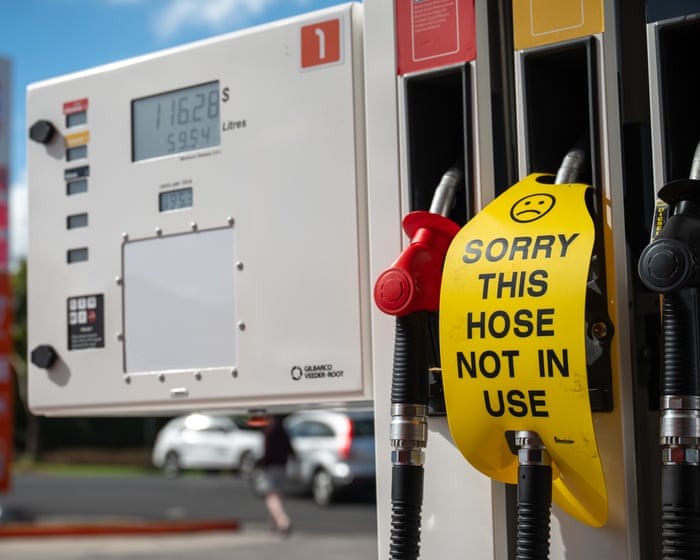
The US has been somewhat shielded from the oil shock because it’s been a net exporter of crude since the shale boom. But American consumers aren’t protected from rising global energy prices. Research by Professor Jeff Colgan at Brown University suggested last week that consumers have paid an extra $40 billion (about £30 billion), or $300 per household, in gasoline costs since the war began.
And the Washington-based Institute for International Finance (IIF) worried last week, in an edition of its regular capital flows report called The Long Tail of the Shock, that the disruption is now spreading far beyond oil markets.
“The first phase of the shock centered on the rapid repricing of oil as markets reacted to disruption risks across the Middle East and critical shipping routes. The second phase is proving more significant because the adjustment is spreading across LNG, refined products, fertilizers, shipping, and industrial inputs, causing a broader decline in supply reliability and production efficiency,” the IIF said.
The institute stressed that oil prices, which tend to drop…With every new rumor of a peace deal, the seriousness of the broader disruption may have been downplayed.
“Crude oil prices might soften from time to time as recession fears grow or geopolitical tensions ease temporarily, but LNG, fertilizers, shipping costs, and some industrial inputs will stay high. That’s because the real issue isn’t just about oil supply anymore—it’s about the reliability and flexibility of the entire global production system,” it said.
It’s still unclear whether any deal would involve fully reopening the Strait of Hormuz and giving up Tehran’s control. But even if shipping traffic resumes quickly, the IIF predicts only a “partial return to normal,” with the energy system remaining “tighter and more fragile than before the shock.”
In fact, by showing it’s no longer willing or able to protect free navigation through Middle Eastern waters, the US may have permanently raised the cost of global commodities.
In the midst of the immediate crisis, governments in many countries have already taken steps to limit energy demand, trying to reduce the impact on consumers. Forecasters have also lowered their expectations for GDP growth in oil-importing countries, as higher costs weigh on economic activity.
But if peace talks fail again and the weeks drag on without a resolution, the oil market could enter a new, more volatile phase. In the short term, that would mean rising inflation and possibly outright shortages of oil-based products. Over time, though, those challenges could be overshadowed by fears of a recession.
Trump has suggested he doesn’t think about the finances of ordinary Americans when negotiating with Iran. But it’s not just his own citizens who have a stake in resolving the standoff: in increasingly fragile energy markets, dragging out talks for even a few more weeks could be disastrous.
Frequently Asked Questions
Here is a list of FAQs about the current state of oil markets and the potential impact of a USIran deal
BeginnerLevel Questions
Q Why are people saying the oil market is at a dangerous point
A Because prices are very high and supply is tight Any small disruptionlike a war or a major accidentcould cause prices to spike even higher hurting the global economy
Q How would a deal between the US and Iran help lower oil prices
A Iran has a lot of oil it cant sell due to sanctions A deal would allow Iran to legally export millions of barrels a day again adding more supply to the market and driving prices down
Q Why cant the US just tell other countries to pump more oil right now
A Most big producers are already pumping near their limits They dont have much spare capacity to quickly add more oil to the market
Q If a deal happens will gas prices drop immediately
A Not instantly It takes weeks or months for Iran to restart production and ship oil But the expectation of a deal could cause prices to start falling right away
IntermediateLevel Questions
Q How much oil could Iran actually add to the market if sanctions are lifted
A Estimates vary but Iran could likely add 1 to 15 million barrels per day within 612 months Thats about 115 of global supplyenough to significantly ease prices
Q Whats the main obstacle to a USIran deal right now
A The biggest hurdle is Irans nuclear program The US wants strict limits and inspections to prevent Iran from building a nuclear bomb Iran wants all sanctions removed first Theyre stuck on who blinks first
Q Is there a risk that a deal could actually make the market more volatile
A Yes If a deal looks likely but then falls through the disappointment could cause prices to spike suddenly Markets hate uncertainty and failed negotiations create exactly that
Q Why dont OPEC countries just cut production to keep prices high if Iran comes back