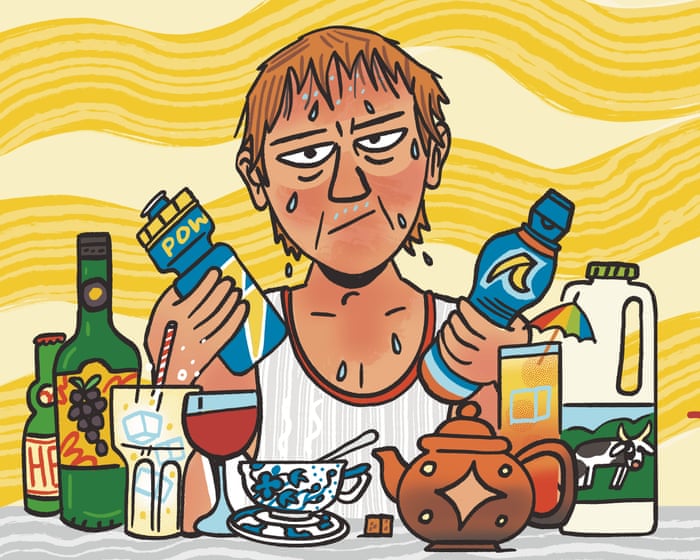
Staying hydrated is really important. In the kind of hot weather we’re seeing more often around the world, sweating can be the only way our bodies cool down. And feeling thirsty isn’t always a reliable sign of how much water we’ve lost or need. When temperatures climb toward 40°C, not drinking enough water can become dangerous quickly—much faster than most people realize. The good news is that for most people, simply remembering to drink plenty of water regularly throughout the day is enough to avoid the worst effects. But if you want to know why dehydration is so risky, whether you really need extra electrolytes, or if a cup of tea can actually cool you down, keep reading.
First, it helps to understand that our bodies are always producing heat—and losing water—all the time. “All the cells in our body are constantly using fuel for energy, whether it’s for movement or just staying alive,” says Dr. Lewis James, a lecturer in sport, exercise and health sciences at Loughborough University. “About 75 to 80% of the energy we use turns into heat.” If we had no way to get rid of this heat, even lying on the couch would raise your body temperature by about 1.3°C in just one hour—enough to make you feel feverish. But of course, we do have ways. Normally, we lose a good amount of heat through convection and radiation: blood vessels in our skin widen, letting the blood cool down from the outside air. The problem is that when the outside temperature rises, this process becomes less effective and eventually stops working. At that point, our main way to cool down is sweating. Our bodies produce tiny droplets of warm water mixed with trace minerals, which usually evaporate when they hit the air, pulling heat away from the skin. And as we rely more on sweating, it becomes more important to replace the fluids we’re losing.
“During a normal day, a person who doesn’t exercise loses very little water through sweat—probably less than 500ml a day,” says James. “But if the outside air is hotter than our skin, sweating is one of the only ways we can lose that heat. It doesn’t usually get that hot in the UK, but when it’s above, say, 35 or 36°C, that’s when it becomes a concern.”
In the short term, even mild dehydration can affect how your body and brain work. “Typical symptoms include headaches, tiredness, trouble concentrating, and worse physical performance,” says Bridget Benelam, a nutrition scientist at the British Nutrition Foundation. “The body responds to dehydration by holding onto water, so processes like temperature control and blood circulation become less efficient. Over longer periods or at more severe levels, dehydration puts real strain on the body.” This can, she says, lead to problems with thinking and physical performance, “increase the risk of issues like constipation, urinary infections, and falls, and in extreme cases, be life-threatening.” At its worst, dehydration can be fatal, but problems start building up before that—you’ll be thinking too slowly to take care of yourself.
So how can you tell if you’re dehydrated? Don’t wait until you feel thirsty, because that usually happens after you’ve already lost 1 to 2% of your body weight in fluid, meaning you’re already mildly dehydrated. The simplest—and for most people, best—way is still the pee test, says James. Small changes in color can warn you before thirst kicks in. “If you’re producing very little urine and it’s very dark—from dark yellow to brown—that can mean you’re dehydrated,” he says. “It’s not, as you might read in some places, a perfect sign—your kidneys are amazingYour body is great at concentrating urine when it thinks it’s needed, so sometimes you’ll have dark urine even if you’re not actually dehydrated—but it’s still a fairly reliable sign. The opposite is also true: if your urine is pale, you’re probably well hydrated.
View image in fullscreen
A hot cup of tea can help cool the body down. Photograph: Halfpoint Images/Getty Images
Realistically, you want to stay ahead of dehydration, which is why it’s smart to make a conscious effort to drink more water regularly. “People often wake up already dehydrated because our bodies lose a lot of water overnight through breathing and sweating in warm bedrooms,” says Dr Neil Maxwell from the University of Brighton, a specialist in applied environmental physiology. “I’d guess that 70-80% of people start the day at a disadvantage, being dehydrated after a hot night during a heatwave. Starting the morning with 300-500ml of water sets a stable baseline before daytime temperatures spike.”
Just in case you’re thinking about it, there’s no real benefit to drinking a whole day’s worth of water first thing in the morning—you’ll just pee out anything your tissues can’t use right away or your kidneys can’t process. In general, it’s better to drink moderate amounts fairly often. “If you eat three meals a day, try to drink a large glass of water with each meal,” says James. “If you have a pint of water with every meal, plus the occasional drink in between, you’ll most likely get enough water each day. Drinking with meals also slows down how fast water passes through your system, which might help you absorb it better.” If you’re exercising, you’ll want to increase that a bit: the standard advice is to aim for about 500 to 750ml of water for every hour of intense training, depending on how much you sweat. But it also helps to plan ahead: if you’re heading to the gym or going for a run, drink about 500ml of water a couple of hours beforehand. That gives your kidneys time to process the fluid, balance your blood volume, and get rid of anything extra, so you’re not sloshing around unnecessarily.
View image in fullscreen
A pint can be refreshing… but best to stick with one. Photograph: coldsnowstorm/Getty Images/iStockphoto
Does it matter what you’re drinking? As long as it’s non-alcoholic (and relatively low in calories), it only matters in that some drinks might confuse your body’s signals. “Sparkling water and diet soft drinks can hydrate you effectively, but the carbonation can make you feel full or bloated, which might trick your brain into thinking you’re done drinking before you’re fully rehydrated,” says Maxwell. “Regularly drinking highly acidic diet soft drinks or flavored waters with citric acid can wear down your teeth, so you need to weigh that against their hydration benefits—though it’s not a reason to avoid them completely. Tap water or filtered water is still the best choice for daily hydration during a heatwave, but the best drink is ultimately the one you’ll actually drink.”
Fruit juice and milk (or plant-based milk alternatives) are fine for hydration, but keep in mind that it’s easy to take in too many calories if they’re your go-to. “Milk is hydrating and provides nutrients like protein, calcium, and vitamins,” says Benelam. “Fruit juice and smoothies hydrate and contain vitamins, but they also have free sugars. The recommended limit is 150ml per day—one small glass.” If you’re making homemade smoothies, you can always cut down on sugar by using more vegetables than fruit: celery, spinach, and cucumber all help with hydration and add important minerals.
When it comes to tea and coffee, you might have heard that caffeine acts as a diuretic, making you produce and pass more urine. This isn’t entirely accurate.It’s not really something most people need to worry about. The effect is so tiny that you’d have to drink about five espresso shots at once to notice any real diuretic effect. “Any diuretic effect is massively outweighed by the water you’re taking in from the drink, especially if you’re someone who doesn’t drink much water otherwise,” says James. Caffeine might slightly mask the feeling of thirst, so again, you can’t rely on feeling satisfied after drinking it. Other than that, it’s fine.
Alcohol is a bit trickier. Technically, one low-alcohol drink (around 4% ABV) can have a net hydrating effect. Even though alcohol is a much stronger diuretic than caffeine, a pint of lager or a fruit cocktail contains enough water to balance it out. But this effect doesn’t last. Once you have two or three drinks, the higher alcohol concentration in your blood starts to suppress the body’s anti-diuretic hormone vasopressin, which leads to what some people call “breaking the seal.” One pint can be lovely and refreshing, but it’s best to stop there.
You might think drinking hot tea when it’s over 30°C is counterproductive, but it’s a bit more complicated. “First, personal preference matters,” says James. “Most people prefer drinks cooler than room temperature, so in that sense, you’re likely to drink more cold drinks and better protect yourself from dehydration. But when it comes to body temperature, there’s some truth to the idea that tea can actually cool you down in certain situations.”
If you have a cup of tea when it’s already warm outside, your body’s heat receptors detect a rise in internal temperature and signal your brain to cool off. As a result, blood vessels near the surface of your skin widen, and you start sweating more—a cooling response that’s usually stronger than the heat you took in. In contrast, if you have a cold drink, the opposite happens. The cold fluid in your stomach pulls blood away from your skin, so the drink doesn’t cool you down as much as you’d think. “The warming effect of a hot drink is cancelled out by increased heat loss, while the cooling effect of a cold drink is cancelled out by reduced heat loss, except in very specific situations that depend on the environment,” says James. “If you’re in very humid conditions or exercising, you can’t lose much heat to the environment because the sweat you produce can’t evaporate fast enough.” A good rule of thumb is that if sweat is already dripping off you, it’s probably too hot to rely on tea for hydration.
What about electrolytes? There’s been a big marketing push for them in recent years, with supplement and sports drink companies suggesting that topping up your potassium, magnesium, and especially sodium is necessary for everyone—not just athletes or people who sweat a lot. But the evidence for that is mixed at best, especially since most people in the UK already consume too much salt. “For the majority of people, you’ll get enough electrolytes from food,” says Professor José González-Alonso from Brunel University. “If you eat a banana or an apple during the day, you’re already getting electrolytes—there’s nothing magical about sports drinks.” If you’re exercising intensely or for a long time (more than 60 minutes in hot weather), sweating much more than usual, or simply can’t snack regularly, then topping up your levels can be helpful. If you’re drinking a lot of water, it also helps prevent your kidneys from flushing out electrolytes too quickly.Drinking enough water also helps prevent hyponatremia, which is when your blood sodium levels drop dangerously low. (The name gives it away: “hypo” means low, “natrium” is Latin for sodium, and “emia” means in the blood.) “Even casual exercisers and avid gardeners can get hyponatremia if they drink too much plain water because they’re afraid of dehydration,” says Maxwell. “When you lose salt through sweat and then flood your body with lots of water, it dilutes the sodium in your blood. This can cause your cells to swell, which is dangerous.”
That sounds alarming, but it’s only likely to happen if you drink huge amounts of water very quickly without any salt in between. It’s worth repeating: if you’re not very active and you’re eating and drinking normally, you’ll be fine. If you’re doing something more intense—enough to make you sweat a lot—have some salty snacks and think about adding electrolytes. Other good food sources include avocados, sweet potatoes, and spinach. Plus, many foods have plenty of water to help keep you hydrated: cucumber, watermelon, strawberries, and mango are all over 80% water by weight.
So, even though drink companies make hydration sound complicated, the best approach is pretty simple: drink a big glass of water every couple of hours, ideally with a meal, and have more if it’s hot, you’re active, or you’re about to be. “The nice thing about water is that having a little too much isn’t a problem,” says James. “Think about energy intake—having a bit too many carbs regularly can lead to issues like weight gain or insulin resistance down the line. But if you drink a bit too much water, you just pee it out. So it’s easy to drink enough water to protect yourself from dehydration in most situations, with no downside.”
Frequently Asked Questions
Here is a list of frequently asked questions about staying hydrated during a heatwave based on the topics you provided
General Hydration Electrolytes
1 What exactly are electrolytes and why do I need them in a heatwave
Electrolytes are minerals like sodium potassium and magnesium They help your body balance fluids contract muscles and send nerve signals When you sweat a lot you lose these so replacing them is key to avoiding cramps fatigue and dizziness
2 How can I tell if Im dehydrated beyond just being thirsty
Signs include dark yellow urine dry mouth headaches feeling lightheaded and not urinating very often If you feel dizzy or your urine is the color of apple juice you need to drink fluids with electrolytes immediately
3 Is plain water enough or do I really need electrolyte drinks
For most people doing normal activities in moderate heat water is fine But if you are sweating heavily water alone isnt enough You need electrolytes to help your body actually absorb and hold onto that water
4 Can I make my own electrolyte drink at home
Yes Mix 1 liter of water teaspoon of salt 2 tablespoons of sugar and a splash of lemon or lime juice This mimics a basic sports drink without the artificial colors or high cost
Tea Coffee Cooling Down
5 Will drinking hot tea help me cool down in a heatwave
Surprisingly yesbut only if youre already hot Hot drinks trigger your body to sweat more and as the sweat evaporates from your skin it cools you down However if youre already dehydrated the extra sweating can make things worse
6 Is iced tea or iced coffee a good way to stay hydrated
They count toward your fluid intake but be careful Many iced teas and coffees contain caffeine which is a mild diuretic If you drink them choose unsweetened versions and balance them with plain water
7 Does drinking cold water vs roomtemperature water matter for cooling
Yes cold water can lower your core body temperature faster But roomtemperature water is absorbed more quickly by your body A good strategy sip cold water to feel