It was always going to be a tight race. But when the results came in, they showed just how deeply split Iceland was over whether to restart talks with the European Union.
After a tense overnight count, the well-funded “no” campaign celebrated on Sunday morning as broadcaster RUV declared it the winner with about 52.8% of the vote. Given Iceland’s tiny population—just over 400,000—the margins were razor-thin.
Opponents accused the “no” campaign of fearmongering, with some comparing its tactics to those used by Brexit supporters in the UK’s 2016 referendum. The campaign’s focus on fishing and farming—two issues closely tied to Iceland’s national identity—as being threatened by EU membership was key to its success. The results showed a clear divide between voters in the capital region and those in the rest of the largely rural country, where some feel their national identity is at risk of being overlooked.
But perhaps it was also the wording of the ballot question that helped the “no” side win, despite the appeal of closer ties with Europe during a time of global instability and an unpredictable US president threatening Iceland’s larger neighbor, Greenland.
The question Icelanders faced was: “Should Iceland resume accession negotiations with the European Union?” A second referendum was planned once a deal was reached. It’s worth noting that Iceland is already part of the European Economic Area (EEA) and the Schengen passport-free travel zone.
This meant that a “yes” vote was really a “yes, maybe,” while a “no” vote was always a clearer, more decisive choice. One of the “yes, maybe” campaign’s slogans was “Já til að sjá” (“yes to see”), which felt vague compared to the bold claims of the “no” side. The “no” campaign argued that the EU would act as a “new superpower” over Iceland and could turn the country into a “quota-free fishing village,” where foreign companies could invest in Iceland’s prized and highly valuable fishing industry, putting fishing rights and profits in outside hands.
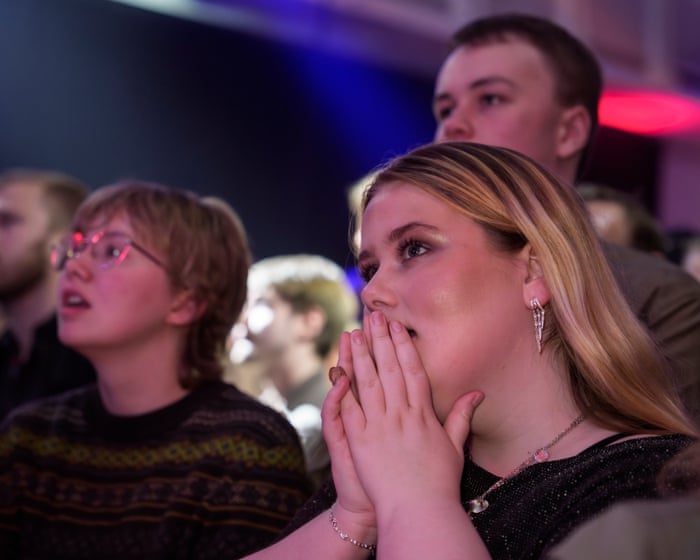
At a “yes” campaign party at Reykjavík Art Museum in the city center, when it briefly looked like “yes” might be ahead, Þòrir Snoor, a “yes” supporter, said: “The no side has done a lot of fearmongering and done it very, very well.”
While he had many peers who, like him, believed the euro could solve the country’s high inflation and high interest rates, the 25-year-old admitted: “A lot of my friends have said they are scared of the European Union.”
Wearing a blue EU cap, Snædis Inga Rúnarsdóttir, 30, agreed that the “no” campaign had been louder—and better funded. She said she would have to accept a potential “no” win, but criticized the swirl of misinformation around the referendum.
Iceland’s foreign minister, Þorgerður Katrín Gunnarsdóttir, had earlier said she feared the country might face a “Brexit moment,” amid warnings about the potential influence of misinformation, foreign interference, and AI in the vote. Just before midnight, with votes still being counted, she told the Guardian that whatever the result, “at least Icelandic people have shown it was the right thing to have a vote.”
Before being pulled back onto the dancefloor, she added: “And what I like the most is now foreign policy is, everything is, on the agenda.”
Frequently Asked Questions
Here is a list of FAQs based on the article Definitely no or maybe yes what decided the Icelandic referendum by Miranda Bryant
BeginnerLevel Questions
1 What is this article about
Its about how and why Icelanders voted in a referendum on a new constitution and the surprising fact that the vote didnt actually make the constitution law
2 When did this referendum happen
The referendum took place in October 2012 a few years after Icelands major banking collapse in 2008
3 What was the main question on the ballot
Icelanders were asked two things whether they approved of the draft of the new constitution and whether they wanted the new constitution to be used as the basis for further work
4 So did the people vote yes or no
The people voted a resounding yes Over twothirds of voters approved the draft constitution and a similar majority said they wanted it to be the basis for the final document
5 If the people voted yes why is the title about a definite no
Thats the big twist Even though the public voted yes the political parties in Parliament effectively said no They refused to pass the bill so the new constitution was never adopted
AdvancedLevel Questions
6 Why did Iceland need a new constitution in the first place
The old constitution was essentially a copy of Denmarks and many felt it didnt reflect Icelands national identity More importantly after the 2008 financial crash there was a huge public demand to rewrite it to include stronger checks on power and prevent future crises
7 How was this constitutional process different from others
It was a very unique crowdsourced process Instead of politicians Iceland elected 25 ordinary citizens to a Constitutional Assembly They used social media took public submissions and even opened their meetings to the public to draft the new text
8 Why did Parliament block it if the people wanted it
The article suggests several reasons Some politicians felt the process was rushed or legally flawed Others were concerned about specific changeslike reducing the power of political parties and making it easier for the public to call referendums In short many politicians saw the new constitution as a threat to their own power