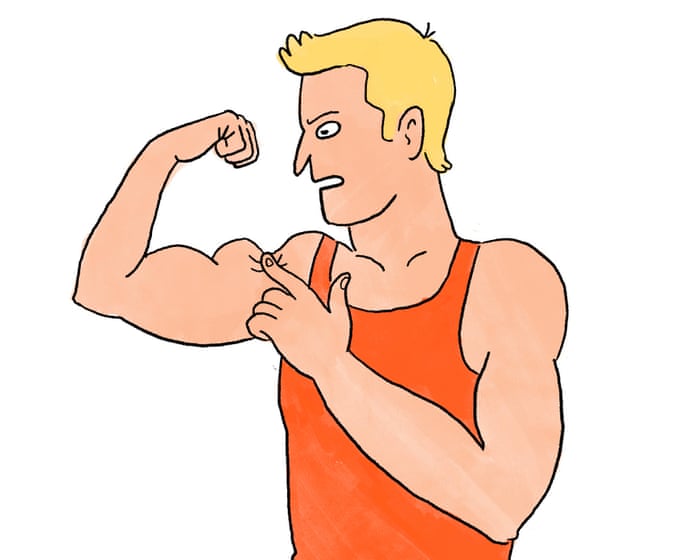
“This is not true,” says Prof Leigh Breen, a muscle physiology specialist at the University of Leicester. But it’s a statement he hears often, especially from people who have taken a long break from exercise. “They’ll often mention that their muscles have ‘softened’ or don’t feel as toned.”
The reality is that there’s no biochemistry linking the two types of tissue. Muscle and fat are distinct. “There’s no known process in the human body that would support muscle turning into fat, or vice versa,” says Breen.
He thinks the confusion comes from what happens when we stop exercising – particularly resistance training. We may begin to lose some of the muscle we built through training. And if we continue eating the same amount while exercising less, we may end up with an energy surplus, which can lead to an increase in body fat.
“What we eat during an exercise break can also influence how much muscle and fat mass we gain or lose.”
“This combination of a reduction in muscle mass and potentially an increase in fat mass can give the impression that one is turning into the other,” he says. “Which isn’t the case.”
If you take a couple of weeks off your usual training routine but remain relatively active, you’re likely to see fewer changes than if you are completely immobilised for an extended period because of an injury.
What we eat during an exercise break can also influence how much muscle and fat mass we gain or lose. Breen recommends keeping protein intake high while slightly reducing calorie intake.
Ultimately, our bodies are constantly changing, and small fluctuations in muscle and fat mass during breaks in our training are generally normal. “Slight fluctuations are generally nothing to worry about, as long as over the course of months and years consistent exercise and dietary habits have been maintained,” says Breen.
Frequently Asked Questions
FAQs Does Muscle Turn Into Fat When You Stop Working Out
1 Is it true that muscle turns into fat if you stop working out
No Muscle and fat are completely different tissues Muscle cant transform into fat one is proteinbased tissue the other is stored fat What actually happens is that your muscle shrinks while fat may accumulate which can look like a swap
2 What really happens to my muscles when I stop training
Without regular resistance training your muscles gradually get smaller and weaker This is called muscle atrophy Noticeable changes usually start within 24 weeks depending on your fitness level and how active you stay
3 Then why do people say muscle turns into fat
Because the two changes often happen at the same time Your muscles shrink and if youre also eating more or moving less you gain fat The visible result a softer less defined body makes it seem like the muscle became fat
4 How fast do you lose muscle if you stop working out
Most people start losing strength and muscle size within 2 to 4 weeks of stopping The rate depends on your training history age diet and daily activity
5 Can fat turn into muscle when I start working out
No thats the same myth in reverse Lifting weights builds muscle and burns fat but fat doesnt convert into muscle tissue Theyre separate systems in the body
6 Will I definitely gain fat if I stop exercising
Not necessarily Fat gain happens when you consistently eat more calories than you burn If you stop training but keep your diet and daily activity in check you may lose muscle without gaining much fat
7 Why do muscles shrink so fast
Muscle is expensive tissue for your body to maintain When you stop challenging your muscles your body sees no reason to keep the extra tissue and starts breaking it down Its a useitorloseit situation
8 Does muscle turn to fat faster as you get older
Muscle loss speeds up with age and fat gain becomes easier So the changes are more noticeable but its still muscle loss plus fat gain not conversion
9 If I stop lifting but keep doing cardio will I lose muscle
Youll lose less muscle than if you stopped