Recently, when two men wearing balaclavas rode their motorbike onto the pavement to rob me, I was completely unaware. My eyes were glued to a text message on my phone, and my hands were clenched so tightly around it that the thieves didn’t even try to snatch it. It wasn’t until an elderly woman screamed and I felt the rush of air as the bike sped back onto the road that I finally looked up. Though they didn’t succeed, the incident made me wonder: what else am I missing in the real world around me?
Even before my first morning coffee, I’ve already watched strangers’ lives unfold on Instagram, checked the news, replied to texts, swiped through matches on a dating app, and refreshed my emails twice. I check Apple Maps for the fastest route to work. Usually, I’ve left too late to catch the bus, so I rent a Lime bike using the app. Throughout the day, my brother sends me memes, I take a photo of a canal boat, and pay for lunch with Apple Pay. I walk home listening to music on Spotify and a long voice note from a friend, then watch a forgettable TV drama while scrolling through Depop and Vinted for clothes.
I’m always reachable, have no personal boundaries, and my attention span vanished long ago. Since the first iPhone in 2007, smartphones have become essential to modern life, with the average person in the UK spending four hours and 20 minutes online daily. “Social media offers frictionless access to an endless universe of mostly free digital drugs,” says Anna Lembke, author of Dopamine Nation. “The algorithm customizes the experience for each unique brain, making it highly reinforcing, while also adding just enough novelty in the infinite scroll to overcome boredom and tolerance. All these features keep us clicking and swiping long after we want to.” Over time, we build tolerance, meaning “we need more of it, and a stronger form, to get the same effect.”
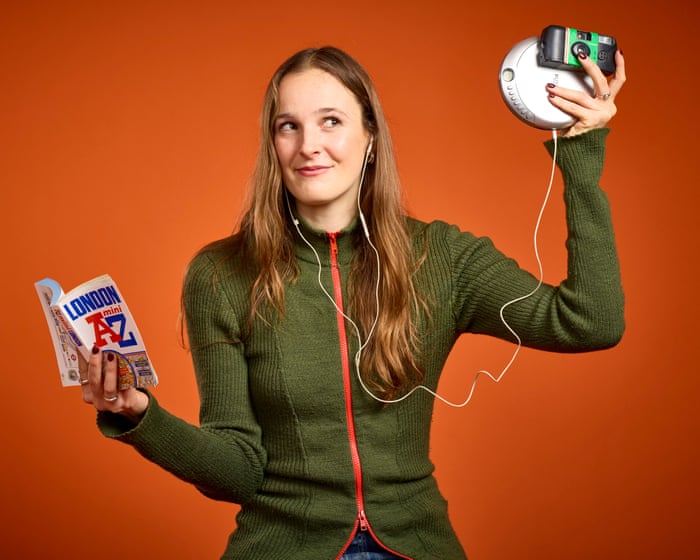
Increased screen time has been linked to depression, anxiety, and poorer sleep. But is it possible to live a low-tech life in a high-tech world? For a month, I tried: I swapped my iPhone for a Nokia that can only text, call, and play Snake; I also used a Walkman and a film camera. I picked up physical books, newspapers, and magazines; I navigated with a London A-Z map, hunted for my bank cards, or tried to use cash. The only exception was for work, where from 9 to 5 I used my laptop for emails and writing.
Day 1
“You’re going to look like such a performative hipster,” my flatmate Ben said as I set up my new devices. He was right. I left the Walkman behind, but my bag was still heavier than usual with a book, notepad, A-Z, and wallet. I hadn’t taken the bus to work from my new home yet, so I followed a hand-drawn map to the stop and ran for a bus. I foolishly hadn’t written down the bus number, but one sounded familiar. It wasn’t the right one, two friendly strangers told me, but I could switch at Angel. “We’ve outsourced our memory to our phones,” says Nicholas Kardaras, author of Digital Madness and a former assistant clinical professor of psychology at Stony Brook University, New York. “Unfortunately, the ease and comfort of being lubricated by technology means our human skills have atrophied. It’s use it or lose it.”
The bus crawled along. Normally, I would have looked up a different route. I tried to message a friend back, but it was difficult clicking each button multiple times for the right letter. “Hard work,” I managed. I read for the rest of the journey.
Day 3
On my lunch break, my sister and I went for a walk in the park. When she left me to do another lap, I felt an urge to check Instagram and my emails, but I was only getting the occasional SMS. I missed the back-and-forth WhatsApp chats with friends sharing fun facts about their day. I felt a bit unsettled, but I tried to focus on the changing leaves on the trees. I have…Thoughts that normally wouldn’t have time to surface are coming up. It’s stressful.
After work, I go to see the saxophone player cktrl at the ICA. I’m a little worried about collecting my tickets without access to the Dice app I used to buy them, but I show my passport instead. I would usually join the crowd filming a song or two to post some blurry, low-quality clips on social media to prove I had a great time. But I can’t, so I watch him play, completely focused. Then a flashlight shines behind me as someone films an entire track. I vow never to be that annoying person again.
Day 6
My digital detox is starting to stress out my friends. Nicole finally gets through to me, saying, “I hate your dumb phone.” She’d been texting but didn’t realize she had to click twice to send it as an SMS instead of an iMessage. Another friend wants to share a dating story and texts, “Omg this is a terrible time not to access voice notes.” And when my landlord messages asking for pictures of the new carpet on WhatsApp—which I can’t do—Ben texts, “You’re going to be such a liability this month.”
In the evening, my date sends me the address of a pub to meet at “for your A-Z.” I give myself plenty of time to decipher the tiny font on the map and find my way there. He’s running late, so I sit by the fireplace in the pub and read my book. I look like I’m waiting for someone to chat me up. When he arrives, he shows me how to turn on predictive text, which is a relief for my very tired thumbs.
Day 8
At lunchtime, I turn on the TV and watch Escape to the Country, where I learn about the housing market in Herefordshire. I want to cook myself an elaborate meal for dinner—and for entertainment—but when I get to the shops, I remember I can’t look up a recipe on my phone, so I settle for tomato pasta.
Day 9
My flatmate picked up a Nina Simone CD for me at a charity shop. I try to play it on my Walkman but realize it needs batteries. On my lunch break, I buy some (who knew there were so many sizes?) and walk home from the office listening to it. Spotify can be overwhelming with its millions of tracks, so it’s nice to remove the element of choice and focus on the album as it was intended, not scrambled by shuffle mode.
Rosanna Irwin, who runs Samsú—a collection of digital detox cabins in Ireland—knows the importance of analog listening. She leaves her guests with cassette tapes she makes with her father. After reaching a state of burnout from working long hours in tech—first at Meta and later for a climate tech company—she visited the Danish island of Samsø with her husband in 2023 and found peace amid the spotty phone service and incredible nature.
“My mental health was very poor,” she says. “I was spending a lot of time online, and I did an accidental digital detox on this island and came back invigorated from the experience.” She recommends a three-day retreat. “There’s a lot of science to show that it’s around 72 hours in nature where the true magic starts to happen.”
Day 12
I meet my friend at Vauxhall station, and we walk to a cafe for breakfast, then to Tate Britain. Camilla is pretty offline: she’s a doctor and doesn’t use social media. She rarely responds to texts and is maybe one of the most joyful people I know. But she says she feels so much guilt about not replying sooner and hates how phones are like an ever-present person in the room, distracting you from being fully engaged with the real-life friends around you.
The sentiment resonates with me; we both want to be more spontaneous.
Inspired by our conversation, I call Aakriti, who doesn’t live too far away. I meet her and two of her friends, and we eat empanadas. On the way home, I have to ask the only man on the platform for help.The overground isn’t due for 24 minutes, so I wonder if there’s a faster route. There isn’t, so I shiver at the outdoor station, wishing I could book an Uber.
Day 13
It’s pouring rain when I arrive at Canada Water, and I don’t want to ruin my A-Z map searching for Rotherhithe Street. I know The Mayflower pub is on the river, so I ask a man at a convenience store to point me in the right direction. I’m early, so I squint at my book in the candle-lit pub, feeling very Victorian. There’s a hilarious waiter telling dating stories from Grindr, which is much better than my book. This no-technology thing is making me nosy. I pay for my roast with cash, which feels almost fake now, like I’m in a game. Then my friend and I go to the cinema—the Picturehouse in central London, because it’s in between where we both live. They charge us £20 for a ticket, which I would never have paid had I known before we made the trip. I’m left fuming, but luckily the movie is good.
Day 14
I need to call the bank. My flatmate sent rent money to my Monzo account, which I can only access on the app, and I get a text saying I’ve gone into an unarranged overdraft. When I get to the tube in the morning, my Oyster card has run out, so I top up the credit and miss my train—I would usually have used a payment card on Apple Pay instead. I have to wait eight minutes for the next one. I’m flustered by the time I get to the office and feel stressed about not being able to check my balance or transfer money between accounts.
Day 18
There’s a group of children on a school trip on my train. The teacher is trying to keep them entertained by playing a word association game. “When I say ‘bread’,” she says, “you could say ‘sandwich’. Let’s have a go. ‘School’.” “Prison,” a child shouts back. When I arrive in Notting Hill, I study the map at the station to make sure I use the correct exit. I memorize key landmarks so I know where to turn—the Gate Cinema is by the road I need to get to Uxbridge Street. I’m late and don’t have time for mistakes, so I walk quickly down the street, scanning every restaurant until I find the Palestinian cafe I’m looking for.
Day 21
The worries I felt at the start of the experiment about getting lost and not being able to communicate with friends seem to have faded. I’m calmer and more present when I’m with people. I look around the train on my morning commute and notice that everyone except one person has their eyes glued to their phones. The man opposite me doesn’t have earphones, a phone, or a book. I try not to catch his eye, worried I’ve been staring. Things are less relaxed when I try to meet my friend Navid after work. We can’t pick a place to meet, and he’s frustrated because he can’t send me links: “Please return to WhatsApp, you Neanderthal.” He’s late, so I wait outside the station for 45 minutes. He arrives with a big grin, knowing I’m a bit irritated, but I get my own back by torturing him with two hours of experimental jazz.
Day 23
After work, I go to see my friend Scarlett, who is being held captive by a corgi puppy. It’s dark and damp when I arrive in south-east London, but I’ve written out the directions to the house as carefully as I can. I didn’t bring my A-Z because my bag was too heavy, but I’m certain I can’t mess up the 10-minute walk. I call my mum and we chat for 20 minutes before I realize I’ve missed the turning. In a panic, I ask her to look up my location on Google Maps—obviously cheating—but I’m now late and in the middle of a cemetery. I’ve gone completely the wrong way, and she has to talk me through the route to my destination.
Day 27
It’s been aIt’s been a busy weekend, so I feel like taking it easy today. I walk to a yoga class and then go for a stroll. While I’m out, listening to my one CD, I get a call from the guy I’m dating who has just finished work. We try to find a board game to play, but when the local charity shops don’t have any, we pick up some newspapers, magazines, and ingredients for a roast chicken instead. We then sit on the sofa, playing music and reading the old-fashioned way. It feels like we’ve already retired.
Day 30
I finally call the bank to pay my rent, which is late for the first time. I’ve been dreading the inevitable 20-minute call, which involves reading out sort codes and account numbers and spelling the names of my landlord and the various friends I owe money to. It’s quite unnerving to transfer money without seeing the details myself, and the woman on the phone keeps telling me it would be much easier to do this online.
Day 31
Despite the frustrations of the month, I’m sad the experiment is over. I’m left feeling that living offline inconveniences others: when we’re looking for a place to eat or a pub to go to, it’s up to them to check maps, and I can’t book Ubers. But I was happier and calmer—free from endless scrolling, waiting for texts, and the constant need to communicate. After about a week, I stopped reaching for my phone and found the patience to read. It was nice not to check work emails in the evenings. I’m determined to delete my main distractions: Depop, Hinge, and Instagram. Scouring charity shops for clothes is much more satisfying; dating without distractions is easier; and I can live without reels about botched Botox and AI animals.
“Big tech platforms aren’t addictive by accident—they’re addictive by design,” says Kardaras. “They sell their product by targeting the vulnerable: if the algorithm detects that a young person struggles with body image, self-harm, or depression, it bombards them with content that worsens their mental state.”
On my last day, I get an email from Scarlett: “I splashed my phone with water while listening to a Lily Allen album in the bath. Now I’m phoneless and actually want to copy you.” It seems I’m not the only one keen to disconnect.
Frequently Asked Questions
FAQs A Month Without a Smartphone
Beginner Definition Questions
1 What does a month without a smartphone actually mean
It means committing to not using your smartphone for a set period You might use a basic dumb phone for callstexts or simply leave your smartphone at home or powered off
2 Why would anyone want to do this
People try it to break addictive scrolling habits reduce stress from constant notifications reconnect with the physical world improve sleep and see how dependent theyve become on the device
3 Wont I be completely cut off from everyone
Not necessarily You can plan ahead by informing key people using a basic phone for essential callstexts and scheduling specific times to check email or messages on a computer
Benefits Outcomes
4 What are the most common benefits people report
Common benefits include less anxiety and comparison fatigue from social media better focus and productivity more time for hobbies and inperson conversations improved sleep and a greater sense of presence in daily life
5 Will I definitely become happier and healthier
Its not a guaranteed cureall but it creates space for healthier habits Many feel an initial sense of relief and calm Longterm happiness depends on what you choose to do with the time and mental space you gain
6 Can it improve my reallife relationships
Yes often significantly Without a phone to distract you youre likely to be more engaged and present during conversations leading to deeper connections with friends and family
Common Problems Challenges
7 Whats the hardest part about giving it up
The initial withdrawal period is often the toughest You might feel phantom vibrations boredom anxiety about missing out and frustration with the inconvenience of not having maps or instant information
8 Could it actually make me more stressed
It can especially at first If your work or family logistics heavily rely on instant messaging or apps the lack of convenience can be stressful Planning and setting clear expectations with others is key to avoiding this
9 What about practical things like maps banking or 2factor authentication
This requires preplanning Write down directions use a physical map do banking on