Until recently, the common understanding of muscle growth centered on a “tear and repair” process. The idea was that exercise creates tiny tears in muscle fibers, prompting the body to repair them and come back bigger and stronger. This is why many traditional trainers emphasize “no pain, no gain,” and why bodybuilding advice often involves pushing muscles to complete exhaustion—the more damage, the greater the growth.
While this approach has worked for many, especially those using performance enhancers to recover from intense workouts, current science points to a better explanation.
“The best evidence now shows that the main driver of muscle hypertrophy—the increase in muscle cell size—is mechanical tension,” says Dr. Anne Brady, a kinesiology professor specializing in muscle quality, physical function, and body composition. “Muscle damage does play a role, but it’s not the primary factor. Usually, it’s more of a side effect.”
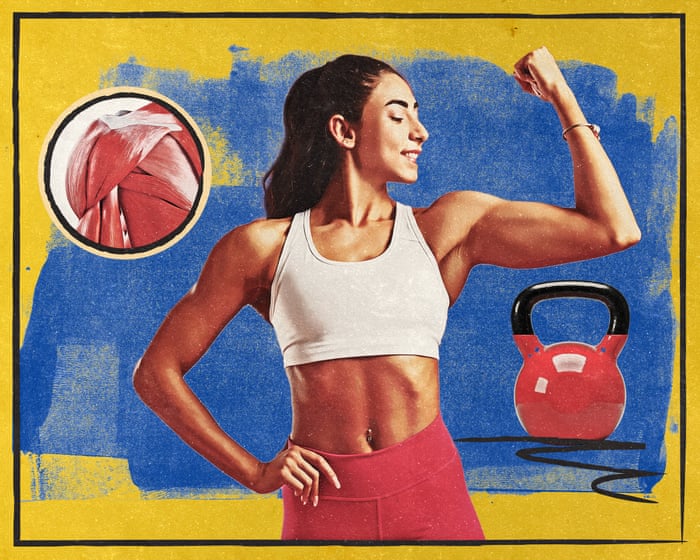
To clarify: when you lift a sufficiently heavy weight or perform enough repetitions to near failure—recognizable as your reps slow down and feel more difficult—the resulting tension stretches the membrane surrounding your muscle cells. Specialized sensors called mechanoreceptors detect this stretch and activate the mTOR pathway. This pathway acts as a master regulator, deciding whether your body should build new tissue or break down old parts for energy. It then signals the cell to begin muscle protein synthesis (MPS), the process of adding new protein to muscle fibers to make them thicker and stronger.
“A third factor is metabolic stress, which creates the ‘burn’ you might feel while lifting,” Brady adds. “Think of it as an amplifier to mechanical tension—it’s a form of cellular signaling that creates a favorable environment for muscle growth.” In other words, muscle burn might indicate you’ve pushed enough to grow, but not always. You can feel a burn from doing many biceps curls with a pencil, but you won’t grow much because there isn’t enough tension to strain your muscle fibers.
The second key point is that you can build a fair amount of muscle without gaining much extra strength, or become significantly stronger without getting larger. “There are two main types of muscle hypertrophy: myofibrillar and sarcoplasmic,” explains Brady. “Myofibrillar hypertrophy increases the number of myofibrils—the bundles of tiny filaments that contract to lift weights—leading to greater strength. Sarcoplasmic hypertrophy expands the fluid volume inside the muscle, resulting in larger size without added strength.”
This explains why Olympic weightlifters can lift enormous weights without moving up a weight class, and why gymnasts can be stronger in certain movements than bodybuilders who train purely for aesthetics. While science now suggests one form of hypertrophy rarely occurs without the other, different workouts can prioritize one style. For example, a 2019 study found that young men who followed a high-volume weightlifting program for six weeks…A weightlifting program that focused on sarcoplasmic hypertrophy showed the biggest size gains—meaning participants got larger without necessarily getting much stronger. The most effective muscle growth happens when you combine both types of hypertrophy: using a weight heavy enough to create high tension, but performing enough repetitions to generate significant metabolic stress.
What does this mean for you? First, soreness—whether during your workout or in the days after—isn’t necessarily a good indicator of effectiveness. “Muscles can grow with minimal soreness, and on the other hand, there can be a lot of muscle damage with little growth—like in downhill running,” says Brady. “At the same time, muscle damage can actually hinder growth if it hurts your performance or how often you can train.”
It also means you don’t need to push yourself to your absolute limit. “I coach women in midlife and always tell them not to major in the minor,” says Brady. In other words, don’t get caught up in small details. “During resistance training, I suggest working to near failure. This can be done across a wide range of reps as long as the last few feel challenging.”
Progressive overload—gradually making your muscles work harder—is still essential, but there are many ways to achieve it: doing more reps per set, using heavier weights, shortening rest periods between sets, and so on. Gradually increase what you’re doing over weeks or months, and you’ll get stronger and likely a bit bigger—though you probably won’t outgrow your T-shirts unless you’re using serious pharmaceutical support. Plenty of people in gyms everywhere are trying, and not all of them succeed.
Frequently Asked Questions
FAQs Strong vs Swole The Surprising Truth About Building Muscle
Q1 Whats the basic difference between being strong and being swole
A Being strong means you can lift heavy weights or exert a lot of force Being swole means your muscles are visibly large and defined You can be strong without being huge and you can be swole without being the strongest person in the gym
Q2 Can I get strong without getting big
A Yes absolutely Strength is heavily influenced by your nervous systems ability to recruit muscle fibers efficiently Training with very heavy weights for low repetitions primarily improves this neurological adaptation increasing strength without necessarily adding significant muscle size
Q3 Can I get bigger without getting a lot stronger
A To a point yes Getting swole is best achieved with moderate weights for higher repetitions focusing on time under tension and metabolic stress While you will get stronger the strength gains might not be as dramatic as with pure strength training especially in your maximal lifts
Q4 Which is better for my health strength or size
A Both offer excellent health benefits but they emphasize different things Strength training is fantastic for bone density joint health and functional fitness for daily life Hypertrophy training also improves metabolism and body composition A balanced program often includes elements of both
Q5 I just want to look toned Should I aim for strength or size
A Toned typically means having some visible muscle definition with lower body fat To achieve this you need to build muscle to create the shape and manage your nutrition to reduce body fat so that shape becomes visible Pure strength training alone may not create the muscular development youre after for a toned look
Q6 Why do some powerlifters look strong but not super muscular while bodybuilders look huge