In the early days of the new Middle East war, the initiative clearly lay with the US and its ally Israel. Now, that seems less certain.
On Sunday, Mohsen Rezaee, a senior officer in Iran’s Revolutionary Guards, declared that “the end of the war is in our hands.” He demanded the withdrawal of US forces from the Gulf and compensation for all damages caused by the assault. Three weeks ago, such confident statements from Tehran’s leadership would have seemed unlikely.
The conflict began with a surprise Israeli strike that killed Supreme Leader Ayatollah Ali Khamenei. US and Israeli warplanes quickly demonstrated their ability to operate freely over Iran, using extensive intelligence to hit thousands of targets. Their only significant losses came from friendly fire.
Iran retaliated with missile and drone barrages aimed at Israel, most of which were intercepted by Israeli air defenses. So far, Iranian attacks have killed 12 people in Israel—a death toll still far lower than in last year’s much shorter conflict between the two powers.
Gulf countries fared worse under Iranian attack, but they have so far protected their residents and infrastructure from crippling damage. However, questions remain about how long their stocks of interceptor missiles will last, and their image as stable, luxurious havens of wealth lies in ruins.
While the US and Israel continue to demonstrate overwhelming conventional military superiority with daily strikes on Iran, the initiative may be slipping from their grasp.
Donald Trump has offered several timelines for the war’s duration, recently suggesting it will only end once Iran is forced to make concessions. Many analysts believe the US is becoming trapped in a longer conflict than intended.
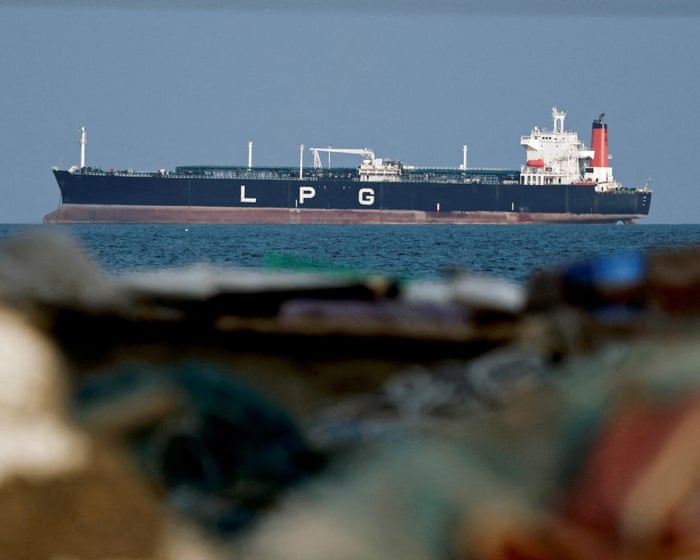
A critical shift came with Iran’s closure of the Strait of Hormuz, which carries one-fifth of the world’s oil and gas. This move has sent shockwaves through the global economy, driving up oil prices and fueling inflation. The US president now faces growing domestic and international pressure to end hostilities quickly.
Despite this, Danny Orbach, a military history professor at the Hebrew University of Jerusalem, insists that Israel and the US still dictate the war’s dynamics.
“Having the initiative means you are setting the agenda … Iran is running out of missile launchers … so the only thing open to Tehran was to escalate the conflict and hope that somehow it will stop. That is why it attacked the Gulf states and then closed the Strait of Hormuz,” he said.
Some have suggested Trump could order US Marines—already en route to the Middle East—to seize Iran’s main oil export hub, Kharg Island, to pressure Tehran. However, the Marines are at least two weeks away.
Trump could also choose to destroy Kharg Island’s oil facilities, crippling Iran’s economy for years. So far, only military targets there have been struck—a choice Trump described on Saturday as made “out of decency.”
“Iran is dependent on a US decision on whether to blow up or not their economy. If there is any stalemate, it is not an equal one,” Orbach said.
Other analysts disagree. Peter Neumann, a security studies professor at King’s College London, argues that Iran has played a weak hand effectively.
“For a number of days now, the US has been trying to find a good response to the closure of the Strait of Hormuz, which they clearly didn’t expect … I think the Iranians now have the initiative,” Neumann said.
Trump has called on other nations to send warships to help reopen the strait. None have agreed so far, and most analysts believe such an effort would be extremely difficult and risky.Securing the strait would be highly risky. Protecting hundreds of tankers would require diverting massive military resources, and even then, total security for shipping could never be assured. A single Iranian missile, mine, or explosive-laden small boat could cause devastating damage.
This indicates that the choice to reopen the strait will ultimately rest with Tehran. There is little sign that Iran’s current leadership is willing to take steps to reduce the threat to the global economy, nor that the regime change hoped for by Israel and the U.S. is close at hand.
Neumann noted: “Despite significant success in damaging Iran’s military and economic infrastructure, this hasn’t produced the intended political effect. The regime appears weak but stable.”
Meanwhile, Israeli commentators on Sunday pointed to government efforts to temper expectations raised early in the war. Yoav Limor wrote in the widely-read Israel Hayom that officials now see regime change as less likely, citing “the regime’s continued powerful control over security forces and its ruthless suppression, which has deeply terrified the Iranian public.”
Yet within this escalating regional crisis, other, smaller conflicts may unfold by their own logic.
Pro-Iranian militias in Iraq still seem reluctant to fully commit to Iran’s defense, while the Houthis in Yemen have not yet joined the hostilities.
In Lebanon, Hezbollah surprised Israel by launching extensive missile and drone barrages to avenge Khamenei’s death. Since then, the Iran-backed movement has continued firing salvos into northern Israel, demonstrating a strength that many analysts had underestimated.
Israel has responded with a massive air offensive, killing more than 800 people and displacing around 800,000.
David Wood, a Lebanon analyst at the International Crisis Group, noted that Hezbollah’s position differs from Iran’s. “Israel has a clear and ambitious goal of eliminating Hezbollah as a threat to its national security, though how it achieves that is unclear. Hezbollah has one clear objective: to survive,” said Wood. “Hezbollah may have surprised even the Israelis at the start of the conflict, but we shouldn’t assume it can sustain that over the long term, given Israel’s massive military superiority.”
Frequently Asked Questions
FAQs The US Israel and the Shifting Middle East Crisis
BeginnerLevel Questions
1 What does it mean that the US and Israel are losing the initiative
It means their ability to control the direction and timing of events is weakening Instead of setting the agenda they are increasingly forced to react to the actions of other groups and countries putting them on the defensive
2 Why is this crisis described as intensifying
The conflict is spreading and becoming more dangerous Its no longer just about Gaza There are now frequent clashes on Israels border with Lebanon attacks from Iran and its allies in Iraq Syria and Yemen and a real risk of a fullscale regional war
3 Who are the main players challenging US and Israeli influence right now
The main challengers are Iran and its network of allied armed groups often called the Axis of Resistance This includes Hezbollah in Lebanon Houthi rebels in Yemen and various militias in Iraq and Syria Hamas in Gaza is also part of this broader dynamic
4 What is the USs main goal in the region during this crisis
Publicly the US aims to prevent a wider war ensure Israels security secure the release of hostages and deliver humanitarian aid to Gaza It also wants to contain Irans influence and protect international shipping routes
5 What is Israels main goal
Israels stated primary goal is to dismantle Hamass military and governing capabilities in Gaza following the October 7th attacks It also aims to secure the return of all hostages and restore longterm security for its citizens
AdvancedLevel Questions
6 How are the military tactics of groups like the Houthis and Hezbollah changing the game
These groups are using asymmetric warfarecheaper drones missiles and guerrilla tacticsto challenge much more powerful militaries For example Houthi attacks on Red Sea shipping force costly international military responses and disrupt global trade giving them disproportionate influence
7 What are the strategic costs for the US of losing the initiative
The costs are high military resources are stretched thin across multiple theaters diplomatic credibility is eroded if deescalation efforts fail and global perceptions of US power are diminished It also weakens efforts to form a united international