Iran’s ruling elite have been accused of blatant hypocrisy, allegedly using state funds to support their adult children’s lives in the West while overseeing increasing economic hardship and repression at home. Opposition activists have leveled these accusations against some of the clerical regime’s most powerful figures, as a military confrontation with the U.S. seems more likely. President Donald Trump has deployed a large naval force to the Middle East and confirmed he is considering military strikes.
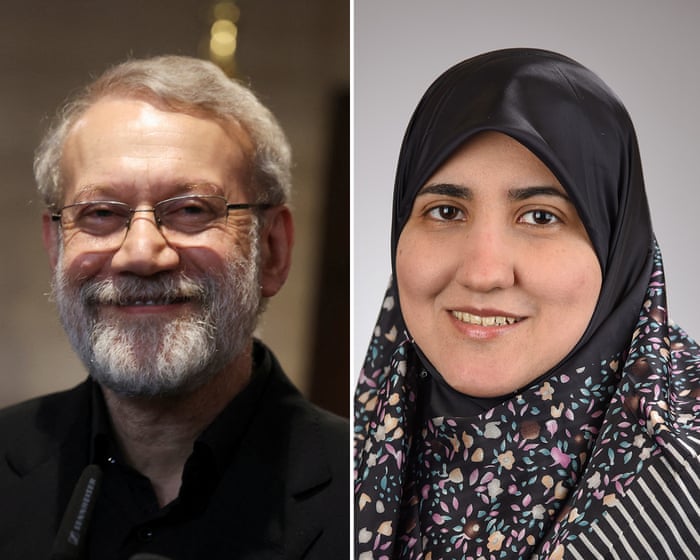
Among those criticized is Ali Larijani, Iran’s top national security adviser. Despite being a longtime vocal critic of Western values, his daughter lives in the U.S., and he has two nephews in Britain and Canada. Larijani, a former parliament speaker and senior Revolutionary Guard, is believed to have played a key role in the deadly crackdown on opposition protests that swept the country in January. Iran’s Supreme Leader, Ali Khamenei, has reportedly tasked him with coordinating preparations for a potential war with the U.S.
Resentment toward the “aghazadehs”—a term for the children of the elite—is intense. The suppression of protests resulted in a death toll that some sources estimate in the tens of thousands. “People are upset that the aghazadehs are getting dollar stipends to go to the West—to the United States, Europe, elsewhere—to study essentially on the state’s dime,” said Alex Vatanka, director of the Iran Program at the Middle East Institute in Washington.
Following the protests, Washington vowed on social media to “revoke the privilege of Iranian senior officials and their family members to be in the United States,” though it is unclear how such measures would be implemented. One Islamic Revolutionary Guard Corps (IRGC) commander who criticized the practice said that, as of 2024, an estimated 4,000 children and relatives of regime officials were living in Western countries.
Kambiz Ghafouri, an Iranian writer and human rights activist based in Helsinki, stated, “They made Iran a hell for Iranian citizens and sent their children to the West to live happily. If there was a referendum on whether people want the children of Iranian authorities sent back to Iran, I think more than 90% would say yes.”
Larijani’s daughter, Fatemeh Ardeshir Larijani, was an assistant professor at Emory University’s medical school in Atlanta until last month. The university terminated her employment after an online petition called for her deportation. Larijani’s brother, Mohammad-Javad Larijani, also an adviser to Khamenei and former head of Iran’s human rights council, has a son, Hadi, who is a professor at Glasgow Caledonian University’s technology center in the U.K., according to the opposition website Regime Out. Hadi’s brother, Sina, is a director at the Royal Bank of Canada in Vancouver.
According to Regime Out, the niece of former Iranian President Hassan Rouhani, Maryam Fereydoun—daughter of Rouhani’s brother and former aide, Hossein Fereydoun—works for Deutsche Bank in London, “overseeing financial flows from the Middle East.” The website has urged the bank to dismiss her.
Another U.S.-based child of the regime is Eissa Hashemi, an associate professor at The Chicago School in Los Angeles. He is the son of Masoumeh Ebtekar, a former MP who earned the nickname “Screaming Mary” as a spokesperson for the radical students who held 52 diplomats hostage at the U.S. embassy in Tehran for 444 days during the 1979 revolution.
Habibollah Bitaraf, a former energy minister and another leader of the embassy siege that caused the rupture between Washington and Tehran, has a daughter living in the U.S. Also based in the U.S. is Mahdi Zarif, whose father, Mohammad Javad Zarif, was Iran’s foreign minister during the negotiations that led to the 2015 nuclear deal.The 2015 nuclear deal, later abandoned by Trump, is referenced in a petition that criticizes Mahdi Zarif for “living a luxurious life in the United States.” It notes, “Until 2021, he lived in a $16 million home in Manhattan.”
Elias Ghalibaf, the eldest son of Mohammad-Baqer Ghalibaf—a former IRGC commander, presidential candidate, and former mayor of Tehran—resides in Australia and has faced a similar petition.
Vatanka pointed out that the Western lifestyles of these adult children sharply contradict the values their parents advocate. “The core issue is hypocrisy,” he said. “For 47 years, this Islamist ruling order has preached certain behaviors, yet repeatedly we see the children or grandchildren of the elite living very differently from what their politically connected families in Iran promote.”
He suggested Western countries might hesitate to deport these well-connected individuals, viewing them as potential intelligence assets. “There’s always an intelligence value for agencies like the CIA or MI6,” Vatanka explained. “Some of these connections could provide useful information. They act as messengers.”
He added, “There has been no clear policy on handling the children of the regime’s elite. Generally, the West avoids collective punishment or penalizing someone solely based on their background.”
Frequently Asked Questions
FAQs Accusations of Hypocrisy Against Irans Elite Over Children in the West
BeginnerLevel Questions
What is this controversy about
This controversy centers on accusations that many senior Iranian officials clerics and Revolutionary Guard commanderswho promote antiWestern ideology at homehave children who live study or work in the countries they publicly condemn like the US Canada and the UK
Why is this considered hypocrisy
Its seen as hypocrisy because these elites often label Western nations as morally corrupt decadent or the Great Satan while simultaneously using those same countries security education and economic systems to benefit their own families
Who are the elite in this context
The elite refers to highranking political military and religious figures within Irans power structure including members of the Islamic Revolutionary Guard Corps the judiciary parliament and the clerical establishment
Can you give a specific example
While specific names are often circulated in Persianlanguage media and social media numerous reports over the years have cited children of prominent officials attending prestigious universities in the US or Canada or managing assets and businesses from Europe
Advanced Detailed Questions
What are the main arguments used to defend this practice
Defenders might argue that 1 Education in top Western universities is a personal family choice for better opportunities 2 It exposes the next generation to global perspectives and 3 It doesnt necessarily contradict the officials political or ideological duties to Iran
How does this affect public perception and trust within Iran
For many Iranians especially youth facing economic hardship and limited opportunities it severely erodes trust It reinforces a perception of a twotiered system one set of restrictive rules for the public and privilege and access for the connected elite
Is this phenomenon unique to Iran
No its a common pattern observed in various authoritarian or highly ideological states where leaders criticize rival nations However in Irans case the stark contrast between official antiWestern rhetoric and personal practice makes it particularly contentious
What is the governments official response to these accusations
Officials typically dismiss these reports as foreign propaganda and enemy media plots to create division They sometimes issue denials or threaten legal action against those who publish the names of family members abroad