When wildlife photographer Mohammed Almuntasir uploaded an 18-second video to YouTube, he didn’t think much of the small, pale cat digging a hole in the sand in the remote dunes of southwestern Libya. But that video, posted in 2017, turned out to be the first real proof that the sand cat (Felis margarita)—the only wild cat in the world adapted to true desert conditions—lives in Libya.
“When I posted it, nobody believed it was filmed in Libya,” he said. “Everyone denied it, but I kept insisting that the cat is here, in several places. One of them was only 70 kilometers (43 miles) from Zintan, where I live.”
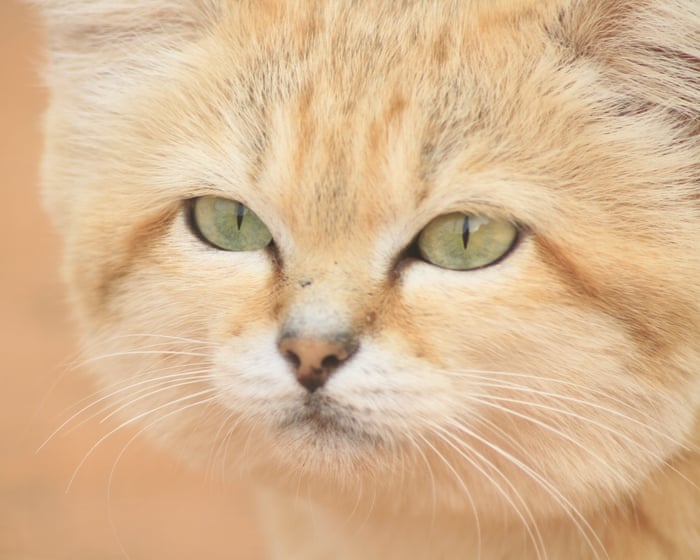
Nearly a decade later, there’s growing evidence that this wasn’t just one sand cat. Southwestern Libya might actually be an unrecognized stronghold for the species. The sand cat is no bigger than a house cat, and its sandy color makes it nearly impossible to spot in its natural habitat, earning it the nickname “ghost of the desert.”
Almuntasir didn’t actively share his video, but it gained attention on its own. Over the years, many researchers reached out to him, including Firas Hayder, a zoologist who specializes in small carnivores and works as a postdoctoral researcher at Sol Plaatje University in South Africa.
“He convinced me that we should work together on a study to document the return of this animal to Libya and add it to the list of Libyan wildlife species,” Almuntasir says.
Southwestern Libya is one of the least studied land environments in North Africa. Hayder says he reviewed every scientific source that mentioned the sand cat in Libya and found that none provided any actual evidence or coordinates.
“When I asked Mohammed where he had seen the cat, he told me he had observed it in several areas,” Hayder says. “That surprised me.”
He explains that ecological hotspots in southwestern Libya have no protected areas, no camera trap systems, no trained field teams, and no central authority to coordinate research. Smuggling networks operating across the porous borders with Algeria, Niger, and Chad make fieldwork dangerous.
“The southwestern regions of Libya are active with smuggling networks, so they are not safe,” Almuntasir says. “Once, we came under gunfire during one of our trips, and we had to leave the area quickly.”
After meeting, Hayder and Almuntasir began an eight-year collaboration, mostly done remotely.
“I taught Mohammed field research methods from South Africa—how to record GPS coordinates, how to document each sighting with photos or video,” Hayder says. “He applied all of that across the southwestern desert, collecting information from local Tuareg communities who know the land well.”
Almuntasir grew up in the Nafusa mountains, where people are very familiar with Hamada al Hamra, a vast rocky desert plateau in southwestern Libya that covers 84,000 square kilometers. He joined local hunters on their trips, carrying a camera instead of a rifle.
“They would tell me about places where they had seen the sand cat and record the coordinates. I would put them all together to plan a dedicated trip to visit each location,” he says.
Sometimes, he and his guides followed paw prints for days to find a burrow, then set up a tent and waited for the animal to come out.
Their work led to a peer-reviewed study published in the Journal of Arid Environments in February 2026.Researchers documented the sand cat at 13 sites across the Libyan Sahara, and the Saharan striped polecat at eight new locations, seven of which are outside the species’ known IUCN range. A large number of sand cat sightings—15 out of 36—were concentrated in Wadi Armet, a remote valley about 1,000 kilometers southwest of Tripoli.
View image in fullscreen
Wadi Armet is a vast valley stretching from Libya into Algeria, known for its unique rock formations, vegetation, and water sources. It is home to several species, including gazelles and Barbary sheep.
“This valley is incredibly vast,” says Almuntasir. “More than half of it remains unexplored because the terrain is so rugged. Animals migrate there in summer for the water. Many come from the Tassili n’Ajjer reserve on the other side of the Algerian border.”
The findings suggest that these species are more widespread and in better condition in Libya than previously thought, and that the country’s southwest may be a strong refuge for desert-adapted animals. The sand cat is one of several mammals considered threatened in Libya, including the cheetah, dama gazelle, and sand gerbil.
“There has always been a big question mark over Libya because of the lack of studies and surveys,” says Ibrahim Elkahwage, head of the Libyan Wildlife Trust and the Libyan IUCN committee. “This research is an important contribution that could help reveal the enormous biodiversity hidden in the Libyan Sahara.”
But the researchers also found cases of sand cats being sold as pets in local markets and, in some instances, accidentally killed by hunters.
View image in fullscreen
The sand cat is nocturnal and hard to spot during the day, especially given its small size and fur that blends in with the surrounding terrain.
Because sand cats mainly eat rodents like jerboas, as well as venomous snakes and scorpions, they play a key role in preventing damage to the limited vegetation that supports desert ecosystems.
“All Libyans should be involved in conservation efforts,” says Hayder. “They need to feel a sense of responsibility—that these species represent their environment and their country.”
This story was produced in collaboration with Egab.
Frequently Asked Questions
Here is a list of FAQs about the YouTube video that accidentally proved the existence of Libyas sand cat written in a natural conversational tone
BeginnerLevel Questions
1 What exactly is a sand cat
A sand cat is a small wild cat that lives in deserts It looks a bit like a house cat but has a flat wide head and furry paws to walk on hot sand
2 Why did no one believe the sand cat existed in Libya
For decades there were only a few old reports and blurry photos Scientists assumed the species had gone extinct in Libya due to habitat loss and hunting so they stopped looking for it
3 How did a YouTube video accidentally prove it exists
A Libyan man was filming a simple video of his truck in the desert In the background a small animal walked past When people watched the video closely they realized it was a sand cata living wild one
4 Was the video meant to find the cat
No not at all The man was just making a casual video about his vehicle The cat just happened to wander into the frame which is why its called an accidental discovery
5 Is the sand cat dangerous to humans
No Sand cats are shy nocturnal animals that avoid people They are about the size of a domestic cat and would rather run away than fight
Intermediate Questions
6 How did scientists confirm the animal in the video was really a sand cat
Experts looked at the cats unique features in the video its broad head large ears set low on the sides and its distinctive dark stripes on the legs and tail These traits match only the sand cat
7 Why is this discovery important for conservation
It proves that a species thought to be locally extinct is still alive This means conservationists can now work to protect the sand cats habitat in Libya and monitor its population
8 What specific problems did the sand cat face that made people think it was gone
Mainly habitat destruction from oil drilling road building and hunting by humans Also because they are so secretive no one had seen one for many years
9 Could there be other extinct animals hiding in plain sight on YouTube
Absolutely This case shows that ordinary videos security cameras or even tourist photos