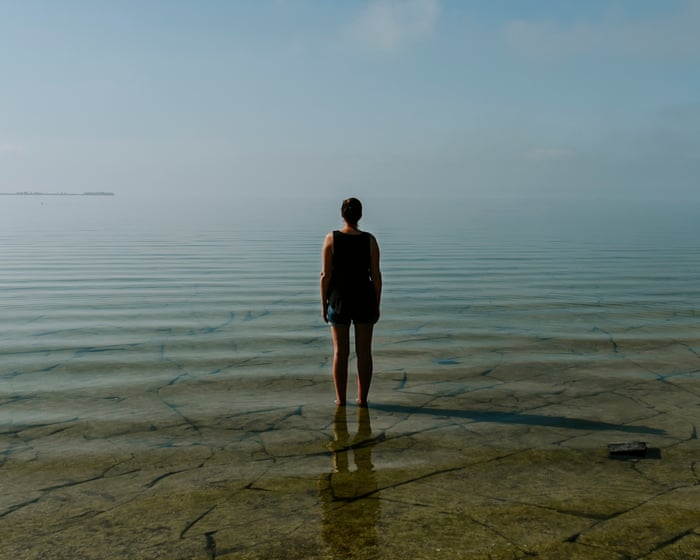
Several years ago, Dave Phillips stood on the edge of a cliff in Cornwall, watching the waves crash into the vast, roaring ocean below. He felt like he had run out of options. The former British army corporal had lost several loved ones in a short period of time, and the untreated post-traumatic stress disorder (PTSD) from his military service had become overwhelming.
“I’m from a generation where we didn’t talk about things,” says Phillips, now 67. “I tried to handle it on my own, and I ended up on a cliff edge thinking, ‘Yeah, this is the way out.’”
What stopped him from taking that step was his late partner’s voice in his head, saying, “don’t be an idiot.” In that moment, he knew he needed help. Little did he imagine how important the ocean would become in his healing.
He walked away that day and got professional help for PTSD, anxiety, and depression. He was introduced to Turn to Starboard, a British charity that helps veterans cope with trauma through sailing. Attending their sessions changed everything for him. “The sea takes me away from all the stresses and strains of life. It has a calming power,” he says.
Today, Phillips is part of a crew sailing around the UK on two tall ships, facing the elements, raising money for the charity, and carrying the Invictus Games flag across the country. He says he feels excited about life again.
“The sea reminds you that you’re alive,” says Sally Terry, the chief executive of Turn to Starboard. “I’ve seen it awaken something in people.”
The ocean has long been part of healing practices around the world, from Victorian-era doctors prescribing “sea cures” to the modern trend of cold-water swimming. But it was marine biologist Wallace J Nichols and his 2014 book Blue Mind, which explores the neurological and psychological benefits of being in, on, or near water, that really brought the ocean’s therapeutic power into focus. This attraction to water, which Nichols described, is known as the theory of blue space, or blue mind, and it has been used more and more in therapy in recent years.
For example, when Sophie Pyne, co-founder of the surf therapy programme Waves of Recovery, attended her first conference of similar organisations in 2022, she counted nearly 50 other programmes. “Now there are over 100, all over the world,” she says. “It’s growing every year.”
The California non-profit helps people deal with mental health issues and addiction, using waves and surfing retreats as a form of therapy. Before starting Waves of Recovery, Pyne struggled with burnout and addiction. When she first got on a surfboard, she rediscovered something she hadn’t felt in a long time: “Being alive, being free.”
Blue-space healing usually supports broader recovery processes, with Waves of Recovery working alongside local treatment centres. “Nature and the ocean become a co-healer in the experience, and I think it really breaks the stigma around seeking help,” says Pyne. “We’re all in wetsuits, we don’t have our makeup on. Clients get to see me more as a human walking alongside them on this journey, rather than someone telling them what to do.”
Many organisations credit Nichols’ work with helping to revive the movement’s popularity. His science-backed findings show that being around different blue spaces—like oceans, rivers, and lakes—can be medicine for the brain, lowering stress hormone levels and boosting happiness.
“I think that added credibility,” says Terry of Turn to Starboard, “and organisationsOrganizations began to take a greater interest in it. The rise of blue-space wellness may also be speeding up in response to modern life. Catherine Kelly, a geographer, has been writing about the topic for decades and advises government projects related to blue spaces. Speaking from her home in Brighton, she had just taken her son to stand by the sea to mentally prepare for his first A-level exam.
“Research from ecotherapy shows us that nature, but especially water, gives us a sense of calm that we don’t get in other places,” she says. “A lot of our daily lives involve very focused attention… often on screens, unfortunately, and that makes our brains quite tired. Yet when we go to the water, our shoulders drop, our eyes and face soften. We start breathing more slowly. We’re concentrating, but we’re not really concentrating… we’re in a state of drift.”
The benefits of blue spaces aren’t just felt above the water, either. Therapeutic practices are now emerging in scuba diving and freediving, where participants can also experience the added sensation of weightlessness in the water.
“I tell them the goal is just to learn to freedive, and if you do that, you will do the work that helps your nervous system regulate and helps some of your brain systems re-regulate,” says Dr. James Jung, a psychiatrist based in California who runs Inner Depths, a freediving center near the kelp forests off the California coast. He discovered the ocean’s transformative effects while working through his own mental health challenges as a former US military combat veteran.
“Recovery from trauma is really about getting someone to lean into a process rather than a destination,” he says.
Yet despite the growth in ocean-supported therapy and wellbeing, research into blue spaces may still be in its early stages.
“The research is only starting to get funding now because everyone was focused on green space for years,” Kelly says. “If you’re a policymaker trying to fund social prescribing, for example, it’s much safer to send people for a therapeutic intervention in a woodland, a garden, a park, or a national park than it is to send them into the water.”
Meanwhile, Dave Phillips says that while he can’t predict what the future holds, he feels “it’s rosy.”
“I feel I’m different, in a good way, because I’ve gone back to me. I can remember when all this started, all my mental health issues, I just wanted me back. And I’m here now.”
In the UK and Ireland, Samaritans can be contacted on freephone 116 123, or email jo@samaritans.org or jo@samaritans.ie. In the US, the National Suicide Prevention Lifeline is at 988 or chat for support. You can also text HOME to 741741 to connect with a crisis text line counselor. In Australia, the crisis support service Lifeline is 13 11 14. Other international helplines can be found at befrienders.org.
Frequently Asked Questions
Here is a list of FAQs about bluespace therapy covering beginner to advanced questions
Beginner Questions
1 What exactly is bluespace therapy
Its the practice of spending time near in or on waterspecifically the seato improve your mental health Think of it as using the ocean as a natural therapy tool for healing trauma reducing anxiety or supporting recovery from addiction
2 How is this different from just going to the beach for fun
Its more intentional While a casual beach day is relaxing bluespace therapy involves focused activities designed to regulate your nervous system and process emotions
3 Why does the sea help with anxiety and trauma
The oceans rhythmic sounds and expansive views trigger a soft fascination in your brain helping quiet the fight or flight response The negative ions in sea air also boost serotonin while cold water can release feelgood endorphins
4 Do I need to know how to swim to try this
No You can benefit just by sitting on the beach listening to the waves or walking with your feet in the shallows The goal is connection not swimming
5 Can this replace my therapist or medication
No Bluespace therapy is a complementary practiceit works alongside professional treatment not instead of it Think of it as a powerful tool in your wellness toolkit not a substitute
Advanced Questions
6 Whats the science behind coldwater immersion for addiction recovery
Cold water triggers a release of dopamine and norepinephrine which can help reset a brains reward system thats been hijacked by addiction It also induces a state of acute stress that teaches the brain to selfregulate without substances
7 How do I practice blue mindfulness without getting distracted by crowds or noise
Focus on microsensory inputs feel the temperature change on your skin notice the smell of salt listen for the specific rhythm of the waves Use earplugs or go at dawndusk when beaches are quieter
8 Can bluespace therapy trigger trauma responses
Yes for some people Start with dry blue and gradually