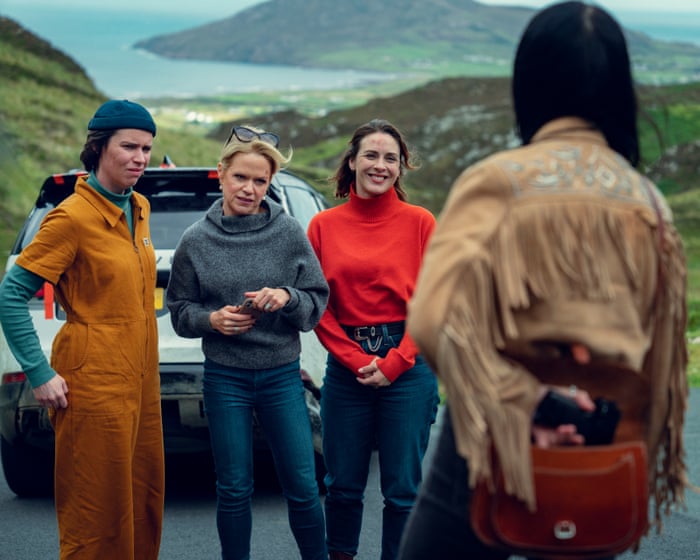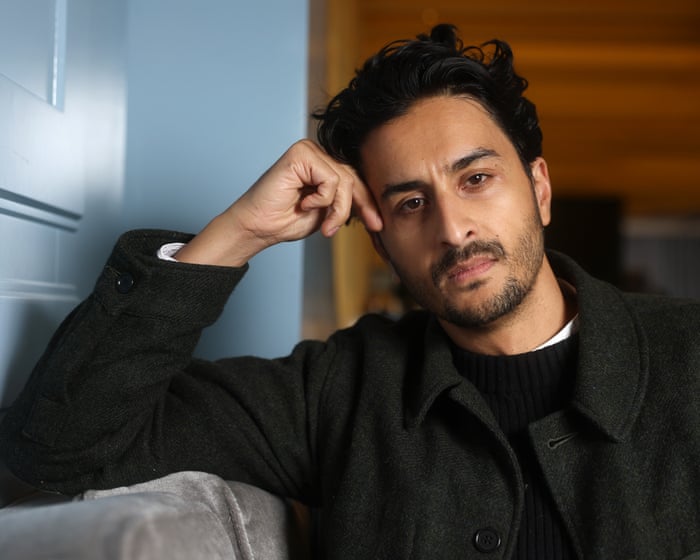
Imran Perretta always knew the title of his first feature film would be “Ish” – short for Ishmail, the name of the 12-year-old boy from Luton at the center of the story. It wasn’t until later that people pointed out the similarity to other coming-of-age films with three-letter titles: Ken Loach’s Kes and Satyajit Ray’s Apu trilogy. Now, as the reviews come in, the comparisons to Kes and Apu keep appearing. Like them, Ish is a poetic film that grabs you by the heart and pulls you into a child’s view of the world.
“The response has been lovely,” says Perretta, and a relief. “It’s nice that people have compared Ish to those films rather than Kidulthood. I did worry about that.” Why, because it features kids speaking in slang and getting into trouble? He nods. “I always say I don’t read reviews, but of course I’ve read every single one. I can’t help myself. And we’ve been really lucky; the reviews have been amazing. A couple have been so-so. Then you read them, and the subtext is: ‘I thought it was going to be like Kidulthood.'”
Perretta has just returned from a trip to Poland for the opening of a new exhibition of his work. Yesterday, he was at Tate Britain in London, tweaking the sound on his 2019 video installation The Destructors, about the lives of young Muslim men, which has just gone on display at the gallery. He’s in the process of buying his first home and has two small children. “I’m exhausted,” he says with a grin, chatting a mile a minute, showing no signs of tiredness.
He grew up in Streatham, south London, the son of a British Italian father who worked as a music journalist. His mother, who was born in Bangladesh, was a child protection social worker: “She was super political, a firebrand.” She died from cancer when he was 21. Perretta studied architecture for three years before switching to art. During Covid in 2020, when the Turner Prize was cancelled, he was one of 10 artists to receive £10,000 bursaries. But it never crossed his mind that he could direct a film, he says: “Not in a million years did I think I would ever get to do that. That’s something that happens to other people.” It was the head of BBC Film at the time, Rose Garnett, who approached him to write a film treatment after seeing The Destructors at a gallery in London.
Ish is partly autobiographical, based on the first time Perretta was stopped and searched by police at age 13. This happened in the aftermath of the 9/11 attacks, in a climate of growing Islamophobia. “My friend got away. They pulled me into a van and just started asking me loads of weird questions,” he remembers. “I was so young, I didn’t really understand what was going on. It was incredibly traumatic. That was 100% the moment in my childhood when I lost my innocence. Because I understood how I was seen outside my family home, outside school, outside the community – all these protected spaces. In that moment, I understood I was seen as a deviant or some sort of threat.”
It politicised him, says Perretta. “That kind of made me. From that point, I had something to make work about. If I look at everything I’ve done for years – making work that is viewed by the public on the walls of a gallery or whatever – it all comes from that moment of seeing oneself as other people see you.” He co-wrote Ish with the Irish playwright and scriptwriter Enda Walsh.
Like all brilliant coming-of-age films, Ish is culturally specific but also universal. It’s set in Luton, following 12-year-olds Ish (Farhan Hasnat) and his best mate Maram (Yahya Kitana) as they roam around during the holidays. It’s their last summer of boyhood: they are still young enough to build dens in the woods and pick blackberries.Mum has just died, and at home, his family is numb with grief. Maram, who is already a head taller than Ish and has the start of a moustache, is hanging out with older boys and getting into trouble.
When the stop and search happens, it’s shocking—watching a child being pulled off the street, forcefully and without a parent’s permission. When I mention this to Perretta, he brings up the recent case of Child Q and reports of interviews with children under the government’s anti-extremism Prevent strategy, conducted without a parent or teacher present. “It happens more to children from certain backgrounds than others. I wanted to explore what it means to drag kids into the adult world before they’re ready.”
All the children in Ish are played by first-time actors. The casting took six months, with about 900 local boys auditioning. Unbeknownst to the filmmakers, the two who got the roles of Ish and Maram had been friends since they were toddlers. Their bond shines through on screen; the chemistry feels completely real. “It was just about getting out of their way and letting them do what they do naturally, which is basically annoy each other,” Perretta says.
Ish was shot in Luton over five weeks in the summer of 2024. Perretta’s wife, a secondary school teacher, grew up nearby, and he’s been visiting the area for years. He says commuter towns often get a bad reputation. Luton, in particular, has frequently been in the news for negative reasons—as the hometown of Stephen Yaxley-Lennon (also known as Tommy Robinson) or labeled as a hub of Islamic extremism. “But at its heart, it was just a community going about its business,” he says.
He shot the film in bright black and white. Why, I ask? “I figured black and white didn’t make Luton look ugly. It gave it a sense of grandeur. It made the concrete feel like marble. When you shot in color, you immediately felt the impact of austerity.”
Filming days were short to comply with laws protecting child actors. “When you film with kids, there’s a time limit. They can only be on set for six hours.” The key, he says, was not to be too fixated on getting it perfect. “We just didn’t have the time.” That sounds stressful, I suggest. Perretta shrugs good-naturedly. “I’d like to think I’m pretty calm in those situations. It sounds a bit cliché, but when you’ve cared for someone who’s dying, a film set isn’t that bad. I refuse to get too worked up about that kind of thing.” He smiles. “Making a film is an extraordinary thing. On a personal level, it’s very important. But in the grand scheme of everything that can happen in life, it’s not really.”
Perretta says his mother’s illness is what set him on the path to becoming an artist. “After she died, I thought: I have to dedicate my life to doing the things I want to do.” He was 18 when she was diagnosed with cancer, and he was one of her caregivers, along with his dad and younger sister. “That was my first degree. After my mum died, I was working at an architecture firm and thought: Life’s too short to design toilets.” Was that really what he was doing—designing toilets? “Literally. I was on the team spacing out toilet cubicles. I won’t say where—it’s a well-known architect.” He lasted a week. “I thought: Nah, I’m good.”
When his mother was sick, he visited the Serpentine gallery in London to watch Blue, Derek Jarman’s final film, first released in 1993 months before his death from an AIDS-related illness. “It was so incredible seeing that film. I stayed there for hours. I’d never experienced anything like it before.”I’d never really seen contemporary art before, except on school trips to the Tate. I was completely captivated. I thought, ‘Oh God, I have to do that.’ I just need to confront the things that make me angry and scared, and create work about them. That’s how it all started.” He grins. “And here we are.” Ish is now showing in UK and Irish cinemas.
Frequently Asked Questions
Here is a list of FAQs about the article and the film it describes written in a natural conversational tone
BeginnerLevel Questions
Q What is this film about
A Its a British film based on the true story of a young Black man whose life is changed forever after he is unfairly stopped and searched by police as a child The moment makes him lose his sense of safety and innocence
Q Is the film a documentary or a drama
A Its a drama The director drew from his own personal experience of being stopped and searched to write and direct the story
Q What does losing my innocence mean in this context
A It means the moment the main character realizes the world isnt fair or safespecifically that the police who are supposed to protect him can treat him as a threat just because of his race
Q Why is this film being called the years best British debut film
A Critics are praising it for its raw honesty powerful storytelling and the directors unique personal perspective Its being hailed as a standout first film in a year full of strong British cinema
Advanced Deeper Questions
Q How does the directors reallife experience shape the films authenticity
A The director lived through the exact stopandsearch he depicts This means the film avoids clichés and feels incredibly specificshowing the confusion fear and longterm psychological damage in a way an outsider might not capture
Q What specific common problems does the film highlight about stopandsearch in the UK
A It shows how the practice is often used disproportionately against Black and ethnic minority children how it can happen without reasonable suspicion and how a single traumatic encounter can erode trust in institutions for a lifetime
Q Are there any practical tips the film offers for young people who might face a stopandsearch
A While the film is a story not a guide it subtly shows the importance of staying calm recording the interaction if possible asking for the officers name and badge number and knowing that you have the right to remain silent until a parent or solicitor is present
Q How does the film connect the personal trauma to wider social issues