In my homeland, Western Sahara, simply holding a camera can be a crime. When Sahrawi filmmakers and journalists try to document daily life under Moroccan occupation, they often end up in prison. For the Moroccan regime, a camera in the hands of a Sahrawi threatens its official story that Western Sahara is part of Morocco.
On the other hand, when famous international filmmakers want to capture the perfect shot for an epic journey and decide our land is exotic enough for their scenes, they are welcomed, escorted, and given access by the same authorities that usually deny us that right.
This is the bitter and ironic reality in Western Sahara, an occupied territory rich in both material and cultural wealth. While foreign extractors freely take our phosphate, sand, fish, and tomatoes, and profit from our wind, sunlight, and desert landscapes, we, the Indigenous Sahrawi people, are becoming a minority in our own homeland. We are systematically pushed aside, silenced, and denied access to the land we roamed as nomads for centuries.
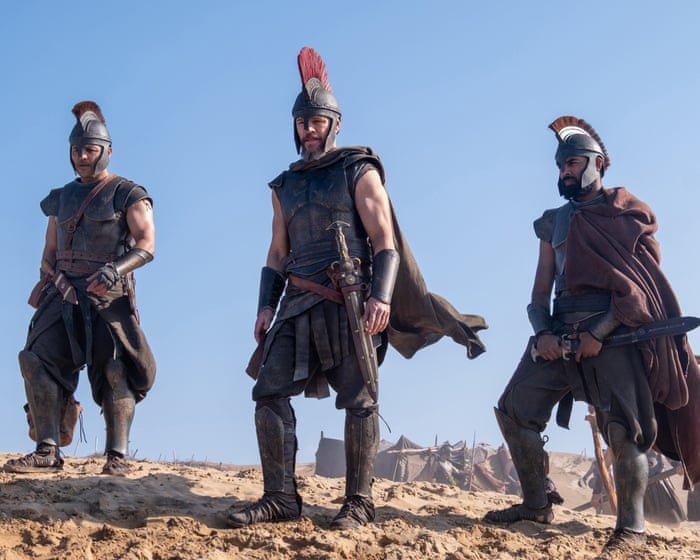
The latest chapter in this colonial story features a Christopher Nolan blockbuster using parts of our occupied territory as a film set. Sahrawis are shocked that scenes from The Odyssey—an adaptation of Homer’s poem about displacement, family separation, betrayal, and the long, painful struggle to return home—were filmed on our land. The irony would be funny if it weren’t so tragic: we, the Sahrawi people, whose land was used to film parts of The Odyssey, have been living our own brutal odyssey for over 50 years.
Our homeland was violently invaded from the north and south in 1975, when Spanish colonial authorities handed it over to Morocco and Mauritania. Today, half of our people live in refugee camps in the Algerian desert, while the other half lives under a suffocating military police state, separated by a 2,700km militarized wall built by Morocco and fortified with millions of landmines.
These realities and stories won’t make it to the big screen. In a world drawn to fiction by the magic of cinema, it seems easier to dig up a 3,000-year-old story of suffering, separation, and betrayal than to see that these same themes are lived every day by the Sahrawi people.
Nolan’s choice to film in an occupied territory highlights the extractive practices embedded in the Western film industry. Western cinema has often been complicit in mining stories and cultural heritage from the Global South on a scale as large as the material resources taken by the Western colonial industrial complex. International film crews fly in, shoot our faces, clothing, dunes, and culture, then fly away. For them, we seem to be just decorative elements for their sets. Back in New York, London, or Paris, they gain prestige, box-office success, and awards.
For Nolan’s shoot in Dakhla, he appears to have neither asked for our consent nor considered the ethics of helping to support and legitimize Morocco’s occupation, making the space even more unsafe for Sahrawis living under it. He is actively taking part in a state-sponsored PR campaign designed to legitimize an illegal occupation.
In a non-self-governing territory—which Western Sahara is, according to the UN—using the material or cultural resources of the land without the clear consent of its Indigenous people is not just unethical; under international law, it is illegal. Our land, our culture, and our heritage belong to us.
Morocco uses cinema to whitewash its occupation of our land. By inviting foreign film crews to shoot in Western Sahara while denying Sahrawis the right to film and express themselves, Morocco manufactures aThis is a romantic, tourist-friendly image created by a regime that uses every political, economic, and cultural tool to maintain the occupation and deny the existence and resistance of the Sahrawi people. These efforts to erase us are similar to other processes of displacement and replacement. When Morocco’s atrocities forced many Sahrawi families to flee Western Sahara during the war, the regime flooded the territory with hundreds of thousands of Moroccan settlers, filling the streets with flags, images, and imported cultural symbols. This is a deliberate campaign to weaken our language, overwrite our stories, and systematically replace us and our culture. In this context, filmmakers are not neutral—their tools and positions can support this politics of erasure.
Christopher Nolan criticized for filming in occupied Western Sahara city
Read more
Audiences coming to see The Odyssey deserve better. They have a right to know the ethics behind the making of this film. The cinematic shots sold to them as the places and moments where historical epics took place were captured at the cost of the Sahrawi people’s suffering.
We, the Sahrawi, do not want our homeland to be a sanitized backdrop for Western epics. We want to tell our own stories, make our own films, and decide for ourselves. Our cultural self-expression is central to our right to self-determination. Until international filmmakers refuse to cooperate with the oppressive occupying power in our homeland, and until we have the right to hold our cameras without fear of imprisonment, every frame shot in our land by an outsider can feel like a betrayal of the art of storytelling.
Mohamed Sleiman Labat is a Sahrawi multidisciplinary artist based in the Sahrawi refugee camps in southwest Algeria. His art draws on the past and present life of the Sahrawi people through various practices, including films, writing, and community-based art. He is the director of Motif Art Studio in Samara refugee camp, a small space for art production and experimentation.
Frequently Asked Questions
Here is a list of FAQs about the controversy surrounding Christopher Nolans Odyssey being filmed on occupied land
BeginnerLevel Questions
1 What is the controversy about Christopher Nolans Odyssey
Its about the film being shot in locations that are considered occupied territory under international law Many people feel this is a political statement that normalizes the occupation
2 Where is the film being shot that is considered occupied land
The film is reportedly shooting in parts of Greece and Turkey but the specific controversy often refers to filming in areas like the region of Cyprus or the West Bank The exact location depends on the report
3 Why do people feel this is a betrayal
Fans and activists feel betrayed because Nolan is seen as a thoughtful political filmmaker They believe filming on occupied land gives legitimacy to an illegal situation contradicting the values of justice and human rights they associate with his work
4 Is it illegal to film on occupied land
Its not a criminal act for an individual filmmaker but it violates the spirit of international law which says an occupying power cannot exploit the resources of occupied territory Filming can be seen as economic exploitation
5 Is Christopher Nolan being criticized by the film industry
Yes but mostly by activist groups and cultural boycott movements The major studios and mainstream press have been quieter as its a politically sensitive topic
AdvancedLevel Questions
6 What specific international laws does filming on occupied land violate
It primarily violates the Hague Regulations and the Fourth Geneva Convention which prohibit an occupying power from transferring parts of its own population into occupied territory or exploiting its resources Filming a major studio production can be seen as a form of economic exploitation
7 How is this different from other Hollywood films shot in disputed areas
The difference is the status of the territory Tunisia is a sovereign country In this case the land is under belligerent occupation where the occupying government has no legal right to grant permits Shooting there implies recognition of that governments authority