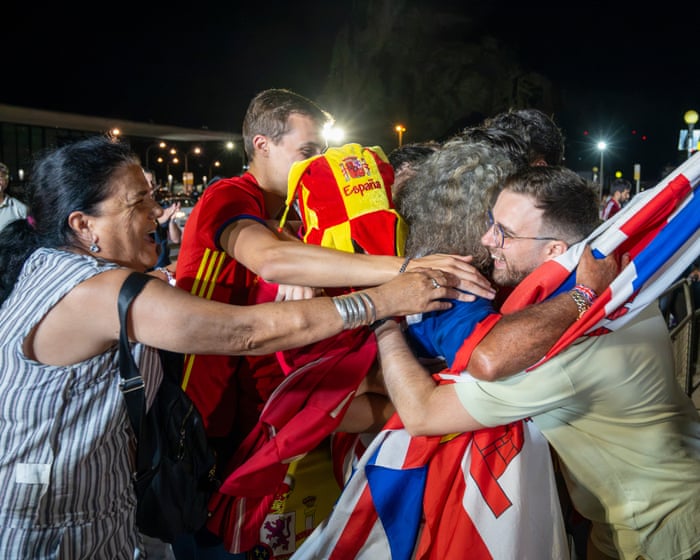
Spain and Gibraltar are celebrating the end of the last border fence in Western Europe, following a post-Brexit deal that eliminates border checks for residents, tourists, and the thousands of Spanish workers who cross into the British overseas territory every day.
The agreement, signed in Brussels on Tuesday and effective from midnight, marks the end of over four years of negotiations between the UK, Spain, Gibraltar, and the EU after Britain left the bloc.
The deal removes border and customs controls to create a seamless frontier, and gives Spain responsibility for Schengen checks at Gibraltar’s airport and port. It has also led to the removal of the border fence that has physically separated Spain from Gibraltar since 1908.
Gibraltar, ceded to the British crown under the Treaty of Utrecht in 1713, is home to only about 40,000 people and relies heavily on the 15,000 Spanish workers who cross into the territory each day. The Rock, as it’s nicknamed, is also vital to the economy of the nearby Campo de Gibraltar region in Andalucía.
Under the old system, long queues formed at the border during rush hour, especially when tensions were high between Madrid and London.
Spain’s prime minister, Pedro Sánchez, visited the Spanish border town of La Línea de la Concepción on Wednesday to watch the removal of the last section of the fence. He said history was being made as an “open wound” was finally closed.
“The Gibraltar fence – the last wall in continental Europe – has fallen so we can move toward a new era of coexistence and shared prosperity,” he said. “This deal puts the wellbeing of the 300,000 people in the Campo de Gibraltar at its heart, and opens a new chapter in relations between Spain and the UK.”
Gibraltar’s chief minister, Fabian Picardo, also said the treaty, which does not affect the territory’s British sovereignty, marked the start of a new era.
“The frontier that has so often divided and limited our region will now become a place of cooperation and shared opportunity,” he said. “The daily lives of thousands of people will be made easier, our economy will have more certainty, and Gibraltar’s future will rest on solid legal foundations.”
Picardo added: “We have reached this moment without giving up who we are, without compromising our British sovereignty, and without weakening the constitutional protections that define Gibraltar.”
The UK minister for Europe, Stephen Doughty, called the signing of the treaty “a very special moment,” while the European commissioner Maroš Šefčovič toasted “shared prosperity and no more barriers for the 15,000 people crossing between Spain and Gibraltar every day.”
Under the deal, Gibraltar will effectively become part of the EU’s Schengen free-movement area. Britons flying into the territory will have to go through the bloc’s new entry/exit system (EES), which uses fingerprint and face scans and has caused long queues at some airports.
“I am concerned [similar queues] could happen,” Picardo told the Financial Times this week.
Spain’s prime minister, Pedro Sánchez, is set to travel to the border town of La Línea de la Concepción.On Wednesday, people gathered to watch the removal of the last remaining section of the border fence.
Spain has long wanted to reclaim its lost territory. After the Brexit referendum in June 2016, Spain’s conservative government at the time suggested that joint sovereignty could be a possibility.
View image in fullscreen
Workers using a crane remove the iron gates at the border in La Línea de la Concepción on Wednesday. Photograph: Roman Rios/EPA
“It’s a complete shift in perspective that opens up new opportunities for Gibraltar that we haven’t seen in a very long time,” said Spain’s then acting foreign minister, José Manuel García-Margallo, on Onda Cero radio shortly after the referendum. “I hope the idea of co-sovereignty – to be clear, the Spanish flag flying over the Rock – is much closer than before.”
Gibraltar and London rejected this suggestion, and a lengthy negotiation process began. More than 96.6% of Gibraltar’s residents voted to remain in the EU.
Gibraltar’s ties with Spain were completely severed in 1969, when Spanish dictator Francisco Franco ordered the land border closed after Gibraltar approved a new constitution. Families were separated, and thousands of Spaniards lost their jobs overnight. The border didn’t reopen until 1982.
Frequently Asked Questions
Here is a list of FAQs about the historic deal between Spain and Gibraltar that led to the removal of the border fence
BeginnerLevel Questions
1 What exactly happened with the border fence
The physical border fence between Spain and Gibraltar has been removed This means there is no longer a gate or barrier that you have to stop at for passport checks when crossing the land border
2 Why is this called a historic deal
Its historic because the fence has been a symbol of tension between Spain and the UK for over 300 years This is the first time both sides have agreed to remove physical border controls and create a shared zone of prosperity
3 Do I still need a passport to cross into Gibraltar
Yes you will still need a passport for identification but there will be no physical checks at the fence Instead checks will happen at the airport or port similar to traveling between EU countries
4 Who signed this deal
The deal was signed by representatives of Spain the United Kingdom and the Government of Gibraltar with the European Union acting as a mediator
5 What does this mean for people who live near the border
It means much faster and easier daily travel Workers shoppers and families who cross regularly will no longer face long queues at the fence
AdvancedLevel Questions
6 How will immigration and customs be handled without the fence
Instead of checks at the land border Spain and Gibraltar will use a smart border system This likely involves biometric checks preregistration for frequent travelers and joint police patrols in the airport and port areas
7 Does this deal change who owns Gibraltar
No The UK maintains sovereignty over Gibraltar The deal is about removing physical barriers and improving movement not about changing political ownership
8 Will Gibraltar have to follow EU rules now
Yes in part Gibraltar will join the EUs Schengen area for borderfree travel This means Gibraltar must align with some EU rules on customs goods and movement of people while still being a British Overseas Territory
9 What happens to the airport
Gibraltars airport is a major sticking point Under the deal Spain agrees to end its historical objections to the airports use In return Gibraltar will allow joint use of the airport for civilian and EU flights