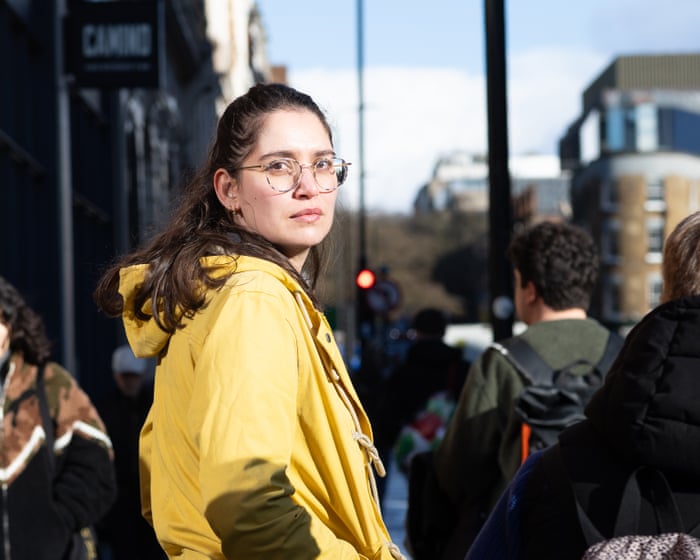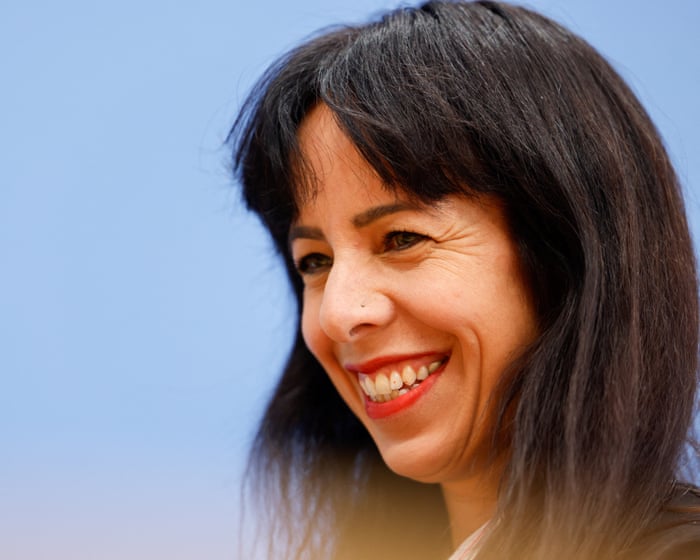
Elif Eralp launched her election campaign last autumn with a blunt statement: “People like me are not supposed to become mayor in this country.” So it is a significant moment in German politics that the 45-year-old lawyer, daughter of political migrants from Turkey, is on the verge of becoming Berlin’s next mayor and the capital’s first leader of Turkish origin.
After last weekend’s city-state election, in which her far-left party, Die Linke, came first with more than a quarter of the votes, Eralp has become a household name.
The mood at Die Linke’s election celebrations on Sunday night was electric. Eralp, whose candidacy helped lift the party from obscurity to the brink of leading a coalition government in Berlin for the first time, was celebrated as a star.
Some commentators suggested Germany was “having a [Zohran] Mamdani moment,” referring to the democratic socialist mayor of New York. (One of his advisers was brought to Berlin to help Eralp weeks before the vote. Her campaign was modelled on that of veteran US senator Bernie Sanders.)
“In our city, love and justice won over hate … this signal goes out into the world,” Eralp said at her victory party. The word “hate” was a pointed reference to the far-right Alternative für Deutschland, which was celebrating its first-place finish in another regional election. Even in liberal Berlin, the populist party made considerable gains.
It was Die Linke, however, that came out on top. With about 26% of the vote, the party not only outperformed the centre-left Social Democrats, whose presence has dominated Berlin politics for decades, and the Greens. It was also well ahead of the Christian Democratic Union (CDU), the conservative party of German chancellor Friedrich Merz, which had previously held the mayoral position.
Much is now at stake for Eralp, who has promised to be “a mayor for all Berliners.”
Eralp, who was chosen especially by young voters (47% of whom voted for her) and who mobilised thousands of otherwise non-voters thanks in part to intensive door-to-door campaigning and social media, generated the most interest with her ambitious promise to take on corporate giants over unaffordable housing in the German capital. Once described as “poor but sexy” by a former mayor for its low cost of living, Berlin’s rents have soared in recent years.
In her nomination speech, the lawyer said: “I’m running so that our city becomes affordable again, so that real estate speculators don’t decide what happens to our city, but rather we do together.” She called sky-high rents a defining social issue, saying: “This city belongs to all of us, not to the speculators.”
Merz has led the charge against Eralp’s plans to expropriate more than 200,000 Berlin flats from their corporate landlords, saying her policy – decried by some as “socialism on speed” – would have “calamitous effects” on the economy. The chancellor has said he will push for laws to prevent her plans. Eralp has pledged to plough on.
It is not certain that Die Linke will take control of Berlin’s towering Rotes Rathaus, or red city hall, named after its red brick and not its association with leftwing politics. Eralp’s victory has been overshadowed by accusations that Die Linke has failed to tackle antisemitism within its own ranks, as well as charges that the party has tolerated – and at worst courted – the support of criminal gangs.
The Social Democrats and the Greens, potential coalition partners, have said they need urgent clarification on these alleged affiliations before they agree to be associated with Die Linke. Die Linke’s leadership has repeatedly denied the accusations and promised to crack down on any antisemitism in its ranks. On Tuesday, it announced that one of its Berlin MPs, who is alleged to have ties to both criminal gangs and a terrorist-related, pro-Hamas organisation, would “suspend his parliamentary duties until further notice”. On Monday, Eralp tried to reassure critics. “Any form of glorifying or downplaying violence or terror is completely unacceptable,” she said. “I stand by that, and for me the promise of protection applies unequivocally to Jewish people, just as it does to Muslims, Christians and all people in our city.” View image in fullscreenEralp’s campaign was modelled on that of veteran US senator Bernie Sanders. Photograph: Anadolu/GettyEralp has been keen to stress how ordinary her life is. She lives with her husband and two children in a rented flat in her own constituency of Kreuzberg, in south-central Berlin, one of the city’s most diverse areas and home to one of Germany’s liveliest Turkish communities. Her children attend a state school in her kiez, or neighbourhood, and she has kept her family away from the cameras “for their own safety”, she says. Much of her campaigning in the district was carried out in Turkish.The Guardian view on Friedrich Merz: Germany’s chancellor must change course to halt the rise of the AfD | EditorialRead moreUnlike most Turkish migrants, Eralp’s parents did not come to Germany as Gastarbeiter, or guest workers, from Eastern Anatolia. They were trade unionists and socialists from Istanbul who were imprisoned after a military coup for their political beliefs. Her mother, Hülya, a well-known feminist in Turkey, was only allowed out of jail because she was heavily pregnant with Eralp. She and Eralp’s father, Selçuk, a doctor, fled to Germany, where their daughter was born in Munich in 1981.View image in fullscreenEralp poses for a selfie with a supporter. Photograph: Sean Gallup/GettyThe family went through a complicated asylum process, which Eralp has said helped shape her view of the world. “I’ve experienced a lot of what it means when authorities make decisions you don’t understand. I’ve also felt racism and discrimination first-hand, so my life story has a lot to do with where I’ve ended up now,” she has said. She recalls how her parents often housed asylum seekers in their home over many years, and the 15 years of struggle her mother, a trainer for nurses, faced before her qualifications were recognised in Germany.At the age of 10, Eralp founded a conservation club with friends in her parents’ garage, and later she joined the anti-nuclear movement. After studying law at the University of Hamburg, she moved to Berlin for two years of obligatory practical legal training, ending up working in the parliamentary group of Die Linke and later switching to the Berlin state parliament.She said she was inspired to join Die Linke in 2017 in direct response to the entry of AfD, an anti-immigration party, into the Bundestag for the first time.In 2019, with fellow members and supporters of Die Linke who had refugee and migrant backgrounds, she co-founded Links*kanax, an alliance that aimed to increase the visibility of the migrant-progressive voice within the party and beyond.When she was 12, Eralp says, she wanted to become a human rights lawyer “to fight against all these injustices I’d seen”. Now, she says, “I’m doing what I set out to do, not in a courtroom, but in the political sphere”.
Frequently Asked Questions
FAQs About Elif Eralp
Who is Elif Eralp
A Berlin politician with Turkish roots often described as the German Zohran Mamdani because of her progressive grassroots style and focus on everyday people
Why is she called the German Zohran Mamdani
Like Mamdani in New York she runs a peoplepowered campaign uses social media well and talks about rent inequality and belonging instead of insider politics
What does a mayor for all Berliners mean
It means she promises to serve everyone in the city not just one district party or community regardless of background income or where they live
Which party does she belong to
She is associated with the German left
Is she actually running for mayor of Berlin
Berlins mayor is elected indirectly by the state parliament She is positioning herself as a leading progressive voice for the citys top job
What are her main policies
Rent caps and more social housing better public transport stronger tenant protections and inclusive policies for immigrants and minorities
What is a rent cap
A legal limit on how much landlords can charge Berlin tried one in 2020 but Germanys constitutional court struck it down
Why does housing matter so much in Berlin
Rents have risen sharply for years and many longtime residents can no longer afford their neighborhoods
What is a peoplepowered campaign
One funded by small donations and volunteers instead of big corporate donors or party machines
What is grassroots politics
Politics built from local organizing doorknocking community meetings and neighbortoneighbor work rather than topdown decisions
What does progressive mean here
Favoring social equality public services and minority rights and pushing for change rather than keeping things as they are
Why do people compare her to Mamdani
Both are young visible minorities use digital outreach and frame politics around class and community rather than culture wars
What is her background
She has Turkish roots and grew up connected to Berlins immigrant communities which shapes her focus on inclusion
Does she support immigrants
Yes she backs easier paths to citizenship better integration services and protections against discrimination