Reporting from fall film festivals used to be simpler—what’s good, what’s bad, what’s selling, what has Oscar potential—but every year, the season brings bigger, more existential questions. The 2025 run, from Venice to Telluride to Toronto, was notably underwhelming. It took place months after Sinners went from box-office hit to serious contender, and around the same time One Battle After Another skipped festivals and went on to win best picture. The pipeline that once produced winners like Birdman, Spotlight, 12 Years a Slave, and The King’s Speech no longer mattered as much, with Covid-affected Nomadland being the last fall festival film to win the top prize. Even without awards in mind, there was a general lack of buzz—the excitement of discovering something new was harder to find as more low-quality films filled the gaps. If the trades are right, much of this is because studios are avoiding the risk of bad buzz and potential embarrassment for A-listers; for every The Shape of Water or Poor Things, there’s a White Noise or Joker: Folie à Deux. So while this season may feature new films starring Tom Cruise, Timothée Chalamet, Anne Hathaway, Christian Bale, Amy Adams, Daisy Edgar-Jones, Ben Affleck, and Mikey Madison, none of them are risking a festival premiere.
La Bola Negra wins Toronto film festival people’s choice award. Read more.
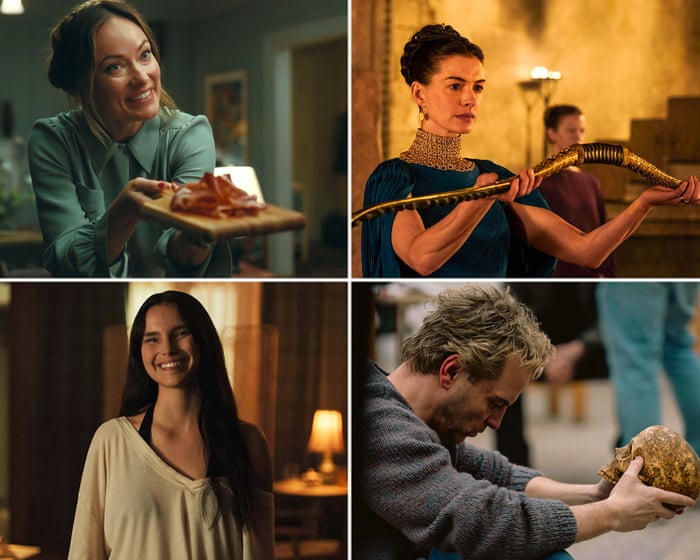
As Oscar nominations were announced in January, the next group of contenders began to emerge in Park City, where Utah hosted its final Sundance film festival. The biggest story was Olivia Wilde’s return and reinvention. She was the best part of Gregg Araki’s comedy I Want Your Sex and finally established herself as a serious director with the chamber comedy The Invite, a remake of the Spanish film The People Upstairs. It was the buzziest title of the festival, and after a rapturous premiere, a heated auction led to A24 buying the rights. A summer release earned solid box office and sustained word of mouth. It didn’t seem like an obvious Academy pick at first, even if it might have been years ago—a talky, human comedy about sex and relationships with little recent precedent—but it slowly began to look like a safer bet. Wilde could become the first woman ever nominated for both acting and directing, and for now, it seems like A24’s strongest contender.
There was also support for John Turturro’s performance in the simple, old-fashioned crime drama The Only Living Pickpocket in New York, a film bought by Sony Pictures Classics with an Oscar campaign clearly in mind. Turturro has never been nominated for an Oscar, and with a rare performance where he appears in every scene, he could slip into the best actor five.
The festival’s top prize isn’t usually a predictor of Oscar success—recent winners include Clemency, Atropia, Nanny, and In the Summers—but films like Coda, Minari, and Whiplash used an early win there to launch fruitful Oscar campaigns. This year’s winner was Josephine, an acclaimed drama starring Channing Tatum that seemed like one of the bigger breakouts. But its uncomfortable subject matter—an eight-year-old girl spirals after witnessing a graphic sexual assault—made it a difficult watch for some (there were walkouts) and an even harder sell for buyers, ultimately going to a small, untested new company called Sumerian Pictures. Tatum gives arguably his greatest performance yet (I’d hand him the best supporting actor Oscar now if I could), and the film is thoughtfully made by writer-director Beth de Araújo, but it faces a steeper climb because of its backers and content, and it might unfairly have to settle for some critics circle prizes.
Josephine review—Channing Tatum is a knockout in shattering drama of lost innocence. Read more.
The Berlin film festival hasn’t beNeon has tended to produce many Academy-friendly movies over the years (Ethan Hawke in Blue Moon, Charlotte Rampling in 45 Years, four wins for The Grand Budapest Hotel), but with more doors open for international films at the Oscars, it has become more present in the race. This year most eyes were on Sandra Hüller and her gender-switching turn in the black-and-white drama Rose, which could find her on the outskirts of the best actress race. It helps that she is also in three other acclaimed films of the year, one of which premiered soon after the festival finished.
No one was quite sure what to expect of March’s sci-fi adventure Project Hail Mary, with star Ryan Gosling proving to be an unreliable box-office draw and directors Phil Lord and Chris Miller having not made a live-action film since 2014’s 22 Jump Street. But the film was a considerable win, both critically and commercially, and many believe it could follow in the footsteps of The Martian, also from author Andy Weir, a film that nabbed seven Oscar nominations. Amazon doesn’t have the best track record with the Academy, but since the Academy seems to be once again favoring blockbuster fare (if F1 could get in …), this could easily become one of the final 10.
Next came Cannes and a notable lack of many American movies, with most studios and stars choosing not to make the journey over. James Gray’s Paper Tiger, starring Adam Driver and Scarlett Johansson, was well received, but like his other similarly well-received films, such as Armageddon Time and The Lost City of Z, it might not be to the Academy’s tastes (he has yet to score a single nomination). The biggest American breakout was Jordan Firstman’s Club Kid, a fairly conventional comedy about a gay man dealing with a son he didn’t know about, which scored strong reviews and interest from buyers, leading to an A24 pickup. It has continued to play well at fall festivals but could be another beloved smaller indie from the company that appeals more to critic circles than the Academy (see also: Sorry Baby, Uncut Gems, The Souvenir and I Saw the TV Glow). The buzziest breakouts came from outside the US – from Spain to Japan to Romania.
Fjord review – Cristian Mungiu at sea with strange child abuse drama starring Renate Reinsve and Sebastian Stan
Read more
The Palme d’Or winner was Cristian Mungiu’s Fjord, a divisive culture wars drama starring Oscar nominees Sebastian Stan and Renate Reinsve. It was picked up by Neon, a company that knows a thing or two about turning this into Oscar success (they have previously secured noms and wins for previous Palme d’Or picks Anora, It Was Just an Accident, Parasite, Anatomy of a Fall and Triangle of Sadness). But Fjord has its fair share of hurdles (it went down poorly at Toronto, some have accused it of being too rightwing, and Mungiu previously saw his last Palme d’Or honoree – 4 Months, 3 Weeks and 2 Days – snubbed by the Academy). A far safer bet would be the ambitious Spanish epic La Bola Negra, which tells the story of interconnected gay men across three different timelines. It had a 20-minute standing ovation and was snapped up for the US by Netflix, who are giving it an unusually generous theatrical window later this year. It also features a cameo from Penélope Cruz, who is having quite the year with this and an Oscar-tipped supporting turn in The Invite. Elsewhere, there were thumbs up (and some wavering) for Ryusuke Hamaguchi’s care home drama All of a Sudden, which might not have the support that pushed his breakout Drive My Car to Oscar glory, but its star Virginie Efira could find her way into the best actress category. She’ll face competition from another performance by Hüller, who turned up again in her second black-and-white drama of the year, this time in Paweł Pawlikowski’s Fatherland, a 1940s-set father-daughter tale.
Back in the US, an unlikely contender took shape at the start of the summer season. At last year’s Toronto film festival, micro-budget horror Obsession turMidnight Madness was bought by Focus Features for $15m, 20 times what it cost to make. It became a smash hit in May, breaking multiple box-office records and energising Gen Z audiences. While none of this immediately suggests Oscars, the ongoing praise for breakout star Inde Navarrette made many ask: why not? The Academy’s slow embrace of horror—with The Substance and Weapons recently breaking through—shows the genre has finally scared voters into submission. With Focus behind it, and their experience with FYC campaigns, it seems Navarrette is at least in the race, with the film possibly joining her.
A more traditional challenger came soon after: Christopher Nolan’s epic The Odyssey, which also became a box-office titan and, like previous best picture winner Oppenheimer, appealed to critics as much as audiences. It’s by far the strongest all-around option at this stage, with likely acting nominations for Hathaway and Matt Damon, plus a range of craft nods. Even though Nolan won director and picture so recently, it’s hard to see who can stop him from doing it again right now.
Then came the fall festivals, with Venice emerging a little light on the bigger titles many had expected. It opened with Danny Boyle’s tabloid tale Ink, which received decent notices but not quite decent enough to be considered a major player. Netflix is unlikely to prioritise it over La Bola Negra and a more substantial Venice breakout, Lee Chang-dong’s Possible Love. Lee’s last film, Burning, might not have made the cut (though it was the first Korean film to reach the final nine-film shortlist), but rapturous reviews for his latest, along with timely themes of class and power and the might of Netflix behind it, could turn it into one of the year’s best international feature nominees.
The major English-language success story came from Martin McDonagh, who has previously used the festival as a springboard for Oscar nominations or wins for films like Three Billboards Outside Ebbing, Missouri and The Banshees of Inisherin. His latest, Wild Horse Nine, might not have quite the same universal acclaim, but it’s hard not to see it picking up multiple nominations. Its most likely win would be for John Malkovich, who has two nods under his belt but has yet to take an Oscar home. There was also the world premiere of Primetime, the thriller that sees Robert Pattinson play To Catch a Predator host Chris Hansen, but it felt more curio than contender. The only thing anyone could really agree on was the surprisingly effective supporting performance from Skyler Gisondo, who could factor into the race.
The Golden Lion, again not always a predictor of Oscar success (winners have included Father Mother Sister Brother, Roma, The Room Next Door and Nomadland), went to Woman Unknown, a well-regarded Danish thriller that will likely be an international feature competitor but might not break into other major categories.
Next was Telluride, with a more stacked lineup than Venice, led by two films that might well feature the season’s two lead acting winners. First was Elsinore, a drama starring Andrew Scott as Chariots of Fire actor Ian Charleson as he plays Hamlet while dealing with the devastation of the Aids crisis. While some were sniffier about what was perceived as “Oscarbait” storytelling, virtually all agreed that Scott had acted his way to the front of the pack for best actor. Notably, the film went down well enough at Toronto to win the people’s choice award for international film, suggesting it may also receive some other high-profile nods. Meanwhile, the best actress race found itself suddenly ledJulianne Moore is generating buzz for her all-in performance in Jesse Eisenberg’s offbeat theatre comedy The Debut. It’s unusual for such a wildly comedic role, lacking much recognizable humanity, to win (Emma Stone in Poor Things might be a recent example, but that character had some pathos). However, Moore is beloved by the Academy (one win and four other nominations), and while A Real Pain wasn’t embraced by the Academy as much as some expected (a win for Kieran Culkin and just one other nod), the film’s focus on acting will appeal to many voters.
The long weekend also saw the premiere of Tender Loving Care, possibly Mike Leigh’s final film. It’s another humane, textured, and universally adored comedy drama about recognizably real people. While critics will likely shower it with praise, the Academy hasn’t gravitated toward his films for a while. Hard Truths was snubbed, Another Year received just one screenplay nod (and nothing for Lesley Manville, which was criminal), Peterloo got no nominations, and his only winning film is Topsy-Turvy, which won for below-the-line craft. What might give this one a slight boost with voters is both Leigh’s statement that it could be his swan song and the presence of Kate O’Flynn, still riding high after her Emmy triumph for Apple’s hit horror comedy Widow’s Bay. She may well find herself in the supporting actress category. Elsewhere, Carrie Coon impressed in the cult drama The Liberation, but the film received mixed reviews. There was also a last-minute surprise screening of You Can See Everything, Nathan Fielder’s unconventional, nearly three-hour Elizabeth Holmes documentary, which some claim could be an unlikely best picture nominee, though that would be a first for the category. A documentary nod seems more likely, although that branch has mostly favored international films lately.
Toronto came next with a lineup stacked with films but of noticeably lower wattage than in the past. On the ground, it was mostly repeats of films that had premiered elsewhere that drew the most attention, with The Debut, Elsinore, and La Bola Negra in particular getting a substantial boost—the first foreign language winner of the people’s choice award since 2011. Among the festival’s world premieres, the biggest hit seemed to be Peter Farrelly’s making-of drama I Play Rocky, which received a standing ovation and was runner-up for people’s choice. Farrelly previously saw his crowd-pleasing comedy Green Book go from Toronto hit to best picture winner, and while his Stallone biopic might not feel quite as primed with fewer social issues in its corner, its ability to energize audiences could land it a nomination at the least. There were several failed best actress bids: Cynthia Erivo with a mostly loathed adaptation of the award-winning play Prima Facie, Sarah Paulson with the buzz-free dame v dame drama Closing Night, and Naomi Watts with the misfiring Nazi thriller The Housewife—none of which have found a US buyer yet. Far more convincing was British Slow Horses star Rosalind Eleazar, who rose above Chris Rock’s otherwise patchy Hollywood saga Misty Green with a turn that could see her sneak in, especially given how weak that category is this year.
This week sees the kick-off of the New York Film Festival with more world premieres than usual. Andrew Garfield will be hoping his Sam Altman impression in the OpenAI saga Artificial is good enough to reintroduce director Luca Guadagnino into the Academy’s good books. Tom McCarthy will aim to repeat his Spotlight glory with the talky, 80s-set climate change drama A Statement, and Tony Gilroy’s music drama Behemoth! will try to launch Pedro Pascal as a late best actor challenger. Outside of festivals, two-time best director winner Alejandro González Iñárritu is dragging Tom Cruise out of his comfort zone in the darkly comedic satire Digger (which some suggest will be a bigger boost for supporting actor John Goodman than for its lead) comes the week before Aaron Sorkin tries to repeat The Social Network’s success with his follow-up, The Social Reckoning, led by best actress winner Mikey Madison. Soon we’ll also see the return of one-time Oscar regular David O. Russell with the sports biopic Madden, starring Oscar winners Nicolas Cage and Christian Bale—his first film since 2022’s disastrous Amsterdam. Robert Eggers, following Nosferatu, which surprised with four nominations, will return with another gothic horror called Werwulf. And the Dune franchise, which has won eight Oscars so far, returns with its third and “final” chapter. Could we be looking at a best picture-winning Return of the King?
Seven fairly safe nominee bets:
Christopher Nolan – best director, The Odyssey
Julianne Moore – best actress, The Debut
Andrew Scott – best actor, Elsinore
Inde Navarrette – best actress, Obsession
John Malkovich – best actor, Wild Horse Nine
Rashida Jones and Will McCormack – best adapted screenplay, The Invite
John Goodman – best supporting actor, Digger
Frequently Asked Questions
Heres a FAQ on the 202425 Oscars race built around the three threads you mentioned Greek epics bloody fixations and uncomfortable invitations
The Basics
Q What are the big themes in this years Oscars race
A Three stand out Greek epics gore and body horror breaking into the awards conversation and a wave of films about awkward tense social situationsdinner parties reunions invitations you cant refuse
Q Which movies are actually leading the race
A As of now the frontrunners include The Odyssey Sinners One Battle After Another Frankenstein Hamnet Sentimental Value and Marty Supreme Best Picture feels like a threeway fight between The Odyssey Sinners and One Battle After Another with Hamnet as a possible spoiler
Q Whos leading the acting races
A Best Actor looks like a duel between Timothée Chalamet and Michael B Jordan with Leonardo DiCaprio close behind Best Actress is wide openJessie Buckley Rose Byrne and Emma Stone are all in the mix
Greek Epics
Q Why is a Greek epic suddenly an Oscars frontrunner
A Christopher Nolan is directing The Odyssey his followup to Oppenheimer Nolan plus a massive literary epic plus a huge cast equals automatic awards attention Its the kind of ambitious technically demanding film the Academy tends to reward
Q Has a Greek epic ever won Best Picture before
A Not directly Gladiator won Best Picture and drew on Roman epic tradition Troy Alexander and 300 were all nominated or won belowtheline awards but never took the top prize So The Odyssey would be a first in the modern era
Q What should I watch to prepare
A Start with