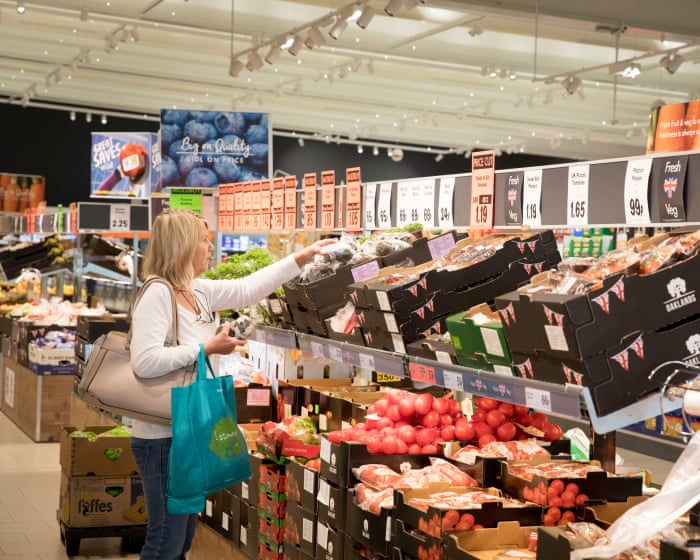
Lidl’s sales in Great Britain rose 10% to over £13bn this year, as shoppers looked for cheaper fresh meat, fruit, and vegetables and bought more from its Deluxe range. Pre-tax profit at the German-owned supermarket’s British arm grew 30% to £245.5m in the year ending in February, up from £156.8m the year before. Shoppers have turned to discounters like Lidl as food inflation has risen, with in-store prices increasing to an annual rate of 1.5% in August, up from 0.9% in July. Inflation for fresh produce remained high at 3%. Lidl said it spent £315m on price cuts and promotions such as its “pick of the week” product, while more shoppers chose its upmarket Deluxe food range. “Deluxe sales are up 12% as more households dine in rather than eat out,” said Ryan McDonnell, chief executive of Lidl GB. “Customers are looking to trade up and treat themselves at home.” This year Lidl overtook Morrisons to become the fifth-largest grocer in Great Britain, with its market share reaching 8.6% in the 12 weeks to 17 May, according to figures from market analysts Worldpanel by Numerator. That compares with an 8.3% share for Morrisons, which increased its sales by just 1.3% compared with a year earlier. Aldi and Lidl have grown quickly, partly because of slower performance at Asda and Morrisons after both were acquired in debt-fuelled private equity deals. However, Aldi’s growth has slowed recently as Tesco and Sainsbury’s have offered more savings through their loyalty schemes and ranges that match the German discounter on price. Lidl said its loyalty programme Lidl Plus performed particularly well, with a 23% rise in participants this year. Analyst Clive Black, vice-chair at broker Shore Capital, said that was in contrast to Aldi, “where management has a clear strategy to deride such programmes.” Aldi is the only big supermarket chain in the UK that does not run a loyalty scheme. This month the boss of Aldi UK, Giles Hurley, criticised some loyalty discounts that he said tricked customers by starting with “unrealistically high prices” that then dropped. He told BBC News that discounts were helpful “when they’re real and when they show realistic reductions,” but criticised what he described as unrealistic reductions which “dupe customers.” The UK’s competition watchdog investigated loyalty pricing schemes at supermarkets in 2024 and found that shoppers “almost always make a genuine saving.”
Frequently Asked Questions
Here is a list of FAQs about Lidl GBs sales growth written in a natural conversational tone
The Basics
What exactly happened with Lidls sales
Lidl GB saw its sales go up by more than 10 over a specific period This is a significant jump meaning they sold a lot more stuff than they did the year before
Why did Lidls sales jump by 10
Two main reasons price cuts and their Deluxe range
1 Price Cuts Lidl lowered prices on everyday items which attracted more shoppers looking to save money
2 Deluxe Range Their premium Deluxe line became really popular People wanted nicer food for holidays and weekends without paying supermarkethigh prices
What is the Deluxe range
It is Lidls premium ownbrand line It includes things like specialty cheeses smoked salmon fancy pizzas and wines It is designed to compete with more expensive brands but costs less
Is Lidl a discounter supermarket
Yes Lidl is known as a discounter along with Aldi This means they focus on keeping prices low by having a smaller selection of products mostly their own brands and running stores efficiently
The Strategy Benefits
How did cutting prices help them make more money
It sounds backwards but lowering prices usually brings in more customers If 100 people shop at your store and you make 1 profit on each you make 100 If you lower prices and now 200 people shop there even if you only make 50p profit on each you make 100 Lidl bet that the extra volume of shoppers would make up for the lower profit per itemand it worked
Why are shoppers so interested in the Deluxe range
People are feeling the pinch of the cost of living crisis They still want to treat themselves to nice food but they dont want to pay luxury supermarket prices The Deluxe range offers a premium experience at a discount price
What does this mean for shoppers like me
It generally means good news It shows that Lidl is competitive which forces other supermarkets like