I arrived in Verona without a clear idea of what aperitivo meant. In Italy, this ritual—generally a drink and a small bite before a meal—takes a different form in every city. Milan has turned it into a polished after-work institution. In Venice, it’s more mobile: an ombra (a small glass of wine) with a cicchetto (a bite-sized snack), then on to the next bacaro (a traditional wine bar). Verona follows its own logic. Veronese wine writer Angelo Peretti has described the osteria—the traditional tavern at the heart of the city’s drinking culture—as a Verona institution: a place where social life takes shape over a gòto (the local word for a glass of wine), usually with something small to eat at the counter, often standing.
Then, at about 9:30 one morning, while drinking coffee across from the Teatro Filarmonico, I noticed that aperitivo had already begun without me. A woman ordered a bianchetto, a small glass of white wine. A couple, already beaten by the heat, asked for two spritzes. Two friends shared a bottle of sparkling wine. Nobody had announced that it was “aperitivo time.” More striking still, nobody seemed to find any of this unusual.
That was when my search really began. I decided not to look for one type of bar, or even one type of drink. What mattered was whether I would actually stop there for an aperitivo—alone, with friends, or simply while waiting for dinner.
Caffè Monte Baldo
View image in fullscreen Photograph: Gabriele Pasca
At Monte Baldo, which opened in 1909, the counter was still being set up, with a man I took to be the owner assembling the day’s tartine (small open sandwiches with various toppings). A very young waitress offered to help me choose a wine. There were more than 30 wines by the glass, mostly priced between €5.50 and €11. I chose an alta langa, a traditional-method sparkling wine from Piedmont, partly because the bottle was still unopened. They opened it without hesitation. With lunch ahead, I ordered two tartine: baccalà mantecato (Veneto’s creamy stockfish spread whipped with olive oil) and boiled egg with anchovy. Both were excellent: fresh bread, generous toppings, clearly just made. The tartine cost €4.60; the wine €7. As I was leaving, a man walked in carrying a motorcycle helmet. Before he had time to order came the question: “Your usual?” However many tourists pass through Verona, somebody still has a usual. 8.5/10
Antica Bottega del Vino
View image in fullscreen Photograph: Gabriele Pasca
This is one of Verona’s great wine institutions. I arrived before 7pm, as the tartine counter was being filled. The mood was formal: staff in crisp uniforms and a queue of slightly bewildered tourists. With one person serving, it moved slowly as he explained the wines, €3 tartine, and where to eat them—at the bar, at small indoor tables, or outside. I chose an €8 glass of franciacorta, Lombardy’s traditional-method sparkling wine, with two tartine: pancetta coppata (cured pork neck wrapped in pancetta) and gorgonzola cream. Both were generously topped, though the bread, while perfectly decent, wasn’t anything to write home about. Total: €14. As I drank, nearby tables were laid for dinner and reserved signs appeared. I asked whether I should move. “Absolutely not.” Those few aperitivo tables, I was told, stay for drinkers unless the place is exceptionally busy. 6.5/10
Tor-Tor
View image in fullscreen Photograph: Gabriele Pasca
A sommelier I trust at one of Verona’s grander restaurants sent me to Tor-Tor, perhaps revealing more interest in wine than in the finer points of aperitivo. Still, it seemed worth a punt. Tucked down a side street behind the Arena, every outdoor table was taken; inside, a regular occupied the counter, deep in wine talk with the owners. The blackboard and a small wooden menu board revealed a seriousI chose a €7 orange wine—white grapes fermented with their skins—which came with popcorn. I then added two €2 polpette (small savoury balls, one meat, one aubergine) and €1.50 olives dressed with oil and chilli. The polpette hit the spot; the wine was excellent and came highly recommended. The crowd was almost entirely local, and the regular at the counter was still talking about wine when I left. 8/10
Skip past newsletter promotion
Free newsletter | Twice a week
Sign up to The Traveller
Get travel inspiration, featured trips and local tips for your next break, plus the latest deals from Guardian Holidays
Enter your email
Sign up
after newsletter promotion
Osteria Ai Preti
View image in fullscreen
Photograph: Gabriele Pasca
Just across the Adige river in Veronetta, on the edge of Verona’s main tourist circuit, Ai Preti feels like a neighbourhood local. It’s large, with dark wood throughout, and has the kind of retro look that comes from never having tried to look retro. Two counters divide the food between cold tartine and hot snacks. I chose one with baccalà mantecato, another with caramelised onions, and a horse meat polpetta. Tartine cost €2, the polpetta slightly less; with a €4 glass of wine, the whole aperitivo came in under €10. By 7.45pm, both displays were almost empty, though my polpetta seemed freshly cooked. The crowd looked entirely local, paying far more attention to one another than to the labels. Magazines lay around for anyone drinking alone. Here, aperitivo felt like the working day quietly unwinding. 7/10
Velvet
View image in fullscreen
Photograph: Gabriele Pasca
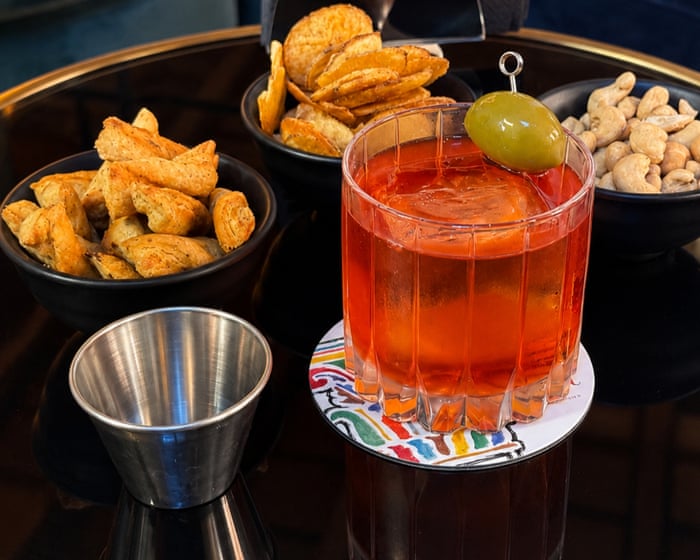
I was early for dinner. The restaurant next door was still closed and I had half an hour to kill. Filling the gap before dinner is, after all, the primary function of the aperitivo. Velvet occupies part of a 15th-century palazzo. There is a handsome counter with stools, though I chose a small table. Three nearby tables were already taken by a more dressed-up crowd than I had encountered in Veronetta, drinking and talking without much hurry. There was plenty of wine on the list, but I went for a €12 negroni. It arrived with fried plantain crisps, cashews and little savoury pastries with tomato—at no extra cost. A separate food menu offers more substantial bites, including edamame falafel and chicken wings. By the time I’d finished my drink, the restaurant next door was open. Half an hour neatly accounted for. 8/10
Osteria da Morandin
View image in fullscreen
Photograph: Gabriele Pasca
Morandin was the only place I visited twice. My first visit was almost accidental—a glass of wine turned into dinner—so I returned a week later, just before 9pm, to make sure I hadn’t simply got lucky. On paper, its long afternoon closure, from 2.30 to 7pm, had been my only doubt. It was another punishingly hot evening in Veronetta. Every outside table was taken and the fans inside did little more than move the heat around. I was wearing absurd red-and-blue striped trousers. A man I took to be one of the owners, there as a customer, noticed our near-matching trousers and came over for a high five. “They say we look like we’re in pyjamas. They don’t understand fashion.” Wines run from €2.50 to €6 and, even at that relatively late hour, the cicchetti display was the fullest I had seen: battered vegetables, frittata, prawn skewers, €1.30 meatballs with tastasal (seasoned pork mince) and €1.80 tartine. I chose a durello, the crisp local sparkling wine from the Lessini hills, a meatball and a tuna-and-egg tartina. The waiters were run off their feet; regulars greeted one another and foreign voices were scarce. Fifteen minutes later, I asked about dinner. “Full.” Ten minutes on, a table appeared. Aperitivo had not replaced dinner; it had made staying for it irresistible. 10/10
Frequently Asked Questions
FAQs My Search for the Perfect Italian Aperitivo in Verona
1 What exactly is an aperitivo
Its a predinner drink usually enjoyed in the early evening meant to stimulate your appetite In Italy it comes with small snacks like chips olives or nuts
2 Whats the difference between aperitivo and apericena
Aperitivo is a light drink with small snacks Apericena is a bigger versioncena means dinnerso the food spread is generous enough to replace a full meal
3 What time does aperitivo start in Verona
Most bars start around 600 or 630 PM and run until about 900 PM Locals usually go between 700 and 830 PM
4 What are the classic aperitivo drinks
The staples are Aperol Spritz Campari Spritz Negroni Americano and prosecco A Spritz is the most popular choice in Verona
5 What is a Spritz exactly
Its a mix of prosecco a bitter liqueur and soda water served over ice in a wine glass Its light fizzy and slightly bitter
6 Where are the best places for aperitivo in Verona
Piazza Bra Piazza delle Erbe and the streets around Via Mazzini are full of good spots For a quieter vibe try the bars in Veronetta across the river
7 Is aperitivo expensive in Verona
Not really A Spritz usually costs 47 and the snacks are included in the price Sitting at a table on a main piazza can cost more than standing at the bar
8 Do I have to tip for aperitivo
No tipping isnt expected in Italy You can round up to the nearest euro if you liked the service but its optional
9 Whats the difference between sitting down and standing at the bar
Standing at the bar is cheaper Sitting at a table often means a coperto or higher prices especially in touristy piazzas