Spain has the most extensive high-speed rail network in Europe and the second-largest in the world, after China. A source of immense national pride, the system has grown and become more affordable thanks to a boom in passengers and increased competition among train companies. Trains depart every few minutes between Madrid and Barcelona, linking the country’s two most populous cities. The 600-kilometer journey takes less than three hours, with an average fare of €65.
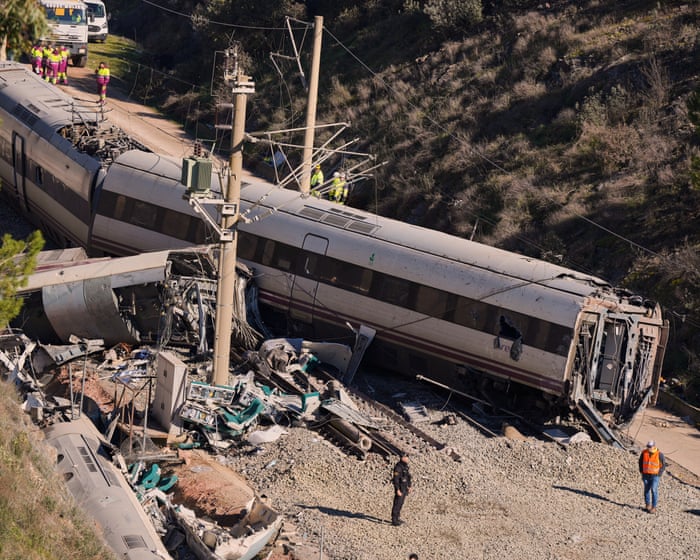
Thirty-four years after the first high-speed line opened between Madrid and Seville, the network now connects more than 50 cities. It has long been a point of national pride and enjoyed rare political consensus—at least until this month’s tragedies. In the first accident, one train derailed and collided with another near the town of Adamuz in Andalucía, killing 45 people and injuring dozens more. A second accident in Catalonia, caused by a wall collapse during bad weather, killed the driver of a commuter train in Barcelona. The local network, which has suffered years of delays and malfunctions, was halted completely for days as a result.
While the network’s overall safety record remains strong, these incidents have sparked debate about underinvestment in infrastructure maintenance and have become another flashpoint in the country’s polarized politics.
Spaniards love trains. Rail travel now accounts for over 56% of all transport, surpassing road and air combined. In 2024, long-distance trains carried 85 million passengers—a 15% increase from the previous year. The recent accidents feel especially personal because trains are such an integral part of daily life and continue to provide reliable service for many, even as local networks frustrate passengers and depopulated areas have gradually lost their connections.
The investigation into the Andalucía derailment is ongoing, with attention focused on the accident site—specifically, a broken weld connecting a rail from 1989 to one from 2023. There is now political disagreement over how thoroughly the infrastructure on the Madrid-Seville line, one of the oldest in the high-speed network, had been upgraded.
Transport Minister Óscar Puente, a divisive figure known for criticizing journalists and rivals on social media, acknowledged errors in some details of his initial statements about the crash.
The center-right People’s Party (PP) is using the dispute to launch a broader attack on the government. Party leader Alberto Núñez Feijóo even made a pun comparing the state of the railways to the state of the nation.
The PP-led regional government in Valencia was widely criticized for its handling of floods in 2024, and its president was forced to resign a year later. Now, many in the PP are pushing to blame the Socialist-led national government for the train disaster. Only a few conservative officials, such as the president of Andalucía, have avoided exploiting the tragedy for political gain.
Despite the blame game, the high-speed network is the result of long-term commitment from politicians across the spectrum. However, prioritizing investment in new lines over maintaining existing infrastructure has been a persistent pattern. Regardless of party, politicians prefer inaugurating new lines or renovated stations. There are few photo opportunities or political rewards for the dull but vital work of upgrading tracks in the countryside.
The current center-left government has invested more in rails and maintenance than the previous conservative administration, which governed in the aftermath of the financial crisis. Still, with growing traffic, new lines, and more passengers, Spain spends less per kilometer on maintenance than Germany or Switzerland—even if such comparisons are imperfect, given differences inDifferences in the age of networks and the costs of public works and materials mean that moving forward requires a serious and careful approach from both the government and the opposition—not another partisan race to the bottom driven by political gain.
And yes, there is still much to love about trains in Spain. They are cheaper, faster, and more comfortable than most in Europe.
María Ramírez is a journalist and deputy managing editor of elDiario.es, a news outlet in Spain.
Frequently Asked Questions
FAQs About Spains HighSpeed Rail Safety
Q Are Spains highspeed trains safe
A Yes overall they have a strong safety record The system is modern and wellmaintained with rigorous protocols However like any complex transportation system absolute 100 guaranteed safety cannot be promised by pride or reputation aloneit requires constant vigilance and investment
Q What makes the AVE network so highly regarded
A Its one of the most extensive highspeed networks in the world known for its punctuality comfort and efficiency in connecting major cities This operational success is a major source of national pride
Q If theyre so good why cant pride guarantee safety
A Safety depends on continuous factors like infrastructure maintenance staff training technology updates and adequate funding Pride in past achievements is important but it must be matched by ongoing tangible action and resources to manage risks
Q What are the main safety measures in place for AVE trains
A Key measures include advanced signaling systems that prevent collisions regular and strict maintenance schedules highly trained drivers and controllers and continuous track monitoring
Q Have there been any major accidents on the AVE network
A There has been one fatal accident in its history the 2013 Santiago de Compostela derailment This tragedy underscored that even advanced systems are vulnerable to human error or procedural failures highlighting the need for constant safety reinforcement
Q How does Spains highspeed rail safety compare to other countries
A It is generally considered to be among the safest in Europe and the world comparable to systems in France Germany and Japan Its safety statistics are excellent but the industry standard is to always seek improvement
Q What are potential risks or common problems that could affect safety
A Risks include human error extreme weather events affecting tracks potential technical failures in trains or signals and the longterm challenge of securing sufficient investment for aging parts of the network
Q As a passenger how can I stay safe on an AVE train
A Follow all onboard instructions pay attention to safety briefings stow luggage properly and be mindful when moving through carriages while the train is in motion Your awareness contributes to overall