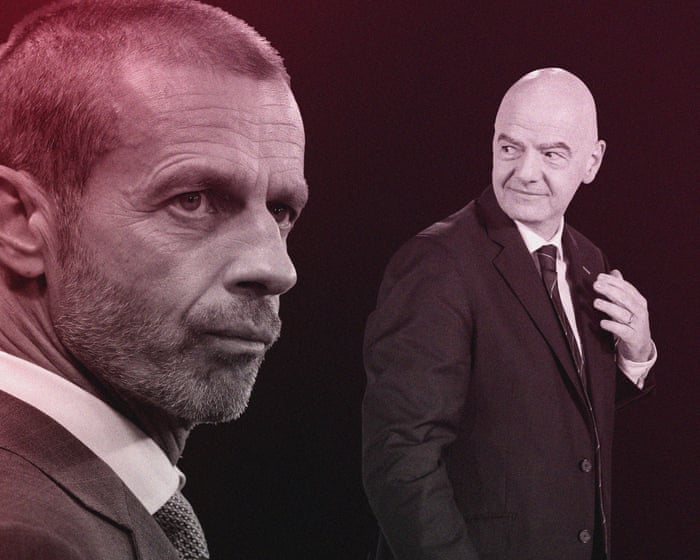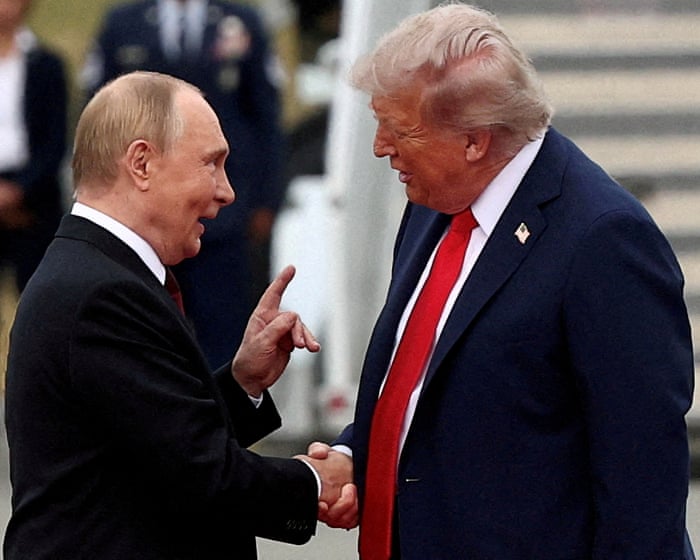
Some argue that Vladimir Putin’s war on Ukraine is driven not by fear or imperial ambition, but by a sense of disrespect from other nations. Russia once held sway as one of the world’s two superpowers but has since lost that standing. Aware that it no longer commands the respect of others—Barack Obama famously dismissed Russia as merely a “regional power”—the war in Ukraine is seen as an attempt to reclaim that respect.
What may be surprising is that Donald Trump’s turn against Europe stems from similar motives. Putin knows his aggressive revanchism won’t earn Russia affection from the countries whose respect he seeks. But if he can’t be loved, he at least hopes to be feared. When you’re part of a social order that views you as inferior, you have every reason to become a spoiler.
Likewise, Trump aims to disrupt a social order that looks down on him and his worldview. While he and his officials receive respect from dictators and kings—though perhaps not from those whose respect they most desire, like Putin and Xi Jinping—they know many democratic leaders regard them with contempt. Now it is America that seeks to play the spoiler, shattering the existing hierarchy of respect to create a world where Trump receives unquestioning obedience. Europe, with its emphasis on the rule of law and multilateralism, stands as the strongest remaining example of the very system of prestige and values the Trump administration wants to dismantle.
The irony is that it was the United States that built the world Trump is now trying to demolish. After World War II, Washington embraced a new global ambition. Republicans and Democrats shared a belief that a world shaped by American values would benefit America. They proclaimed democracy and the rule of law as the ideals by which nations should be judged.
Despite obvious hypocrisy—the U.S. often acted in illiberal, undemocratic ways and preferred to judge rather than be judged—this became the cornerstone of American “soft power,” its ability to influence the world indirectly through culture and values. Other countries looked up to the U.S. as a model to emulate.
Modern Europe stands as the greatest creation of that old order. After World War II, the U.S. helped rebuild Western Europe’s economies, fostering the success of liberal parties while quietly undermining those deemed too far to the left or right. The European Union has its roots in arrangements created to coordinate U.S. aid through the Marshall Plan. As it grew, the EU built a new regime for Europe based on cooperation between nations, the rule of law, and liberal democracy. After Soviet domination of Eastern Europe collapsed, the EU expanded to include countries to its south and east, on the condition that they embraced democratic principles. In many ways, the EU came to embody the values of the U.S.-created liberal order more faithfully than America itself.
Now the Trump administration seeks to break up that old order, replacing it with one founded on power and national self-interest. Its new national security strategy claims it wants to “maintain the United States’ unrivaled ‘soft power,'” but argues the path to doing so lies in recognizing “America’s inherent greatness and decency.” Trump boasts in the foreword that, at last, “America is strong and respected again.”
The problem is that this clearly isn’t true. Countries that still hold to liberal values do not respect Trump’s America. They treat it like an angry, incoherent drunk armed with a bazooka—you say whatever you hope might calm them down, but you certainly don’t respect them. America’s soft power and indirect influence over other democracies are withering away.
This explains why Trump’s national security strategy spends so much energy and venom denouncing Europe. Even as the U.S. ostentatiously renounces the ambition to change the world, it claims it wants to…The “Maga America” movement seeks to intervene in Europe, but this time by supporting far-right parties rather than promoting cooperation as the United States did after World War II. The Trump administration aims to channel discontent in newer EU member states into a force that undermines the bloc’s liberal democratic values, envisioning a Europe of sovereign, strongly nationalist, and culturally “white” nations.
In such a scenario, Europe would no longer stand as a barrier to Maga ideology. However, the administration lacks both the capacity and the global ambition to achieve this transformation. Like Russia, it desires respect but possesses limited power, often acting more as a spoiler than a shaper. It seeks to influence Europe while simultaneously disengaging, retreating from its traditional role as NATO’s guarantor.
The Trump strategy criticizes the extensive military, diplomatic, intelligence, and foreign aid apparatus that has long supported U.S. global ambitions and works to dismantle it. Yet without that infrastructure, it cannot realistically remake Europe in its image.
While the administration can employ scattered interventions to punish the European Union and boost far-right parties—such as denying visas to fact-checkers and social media moderators accused of censoring right-wing views, or threatening the EU over regulations on platforms like X—these tactics risk backfiring. The case of Brazil, where similar efforts to penalize officials and aid Jair Bolsonaro largely failed, shows that such actions may harm ideological allies as much as help them.
Ultimately, the Trump administration wants the respect and soft power that come with global influence, which explains its focus on Europe. But it also aims to retrench, reducing global commitments and remaking the United States into a regional power like Russia, one that invests its strength in bullying neighboring countries. It cannot have both.
Frequently Asked Questions
Of course Here is a list of FAQs about the shared desire for status and recognition between Trump and Putin and how it relates to undermining Europe
BeginnerLevel Questions
1 What do people mean when they say Trump and Putin both crave status and recognition
It means both leaders are deeply motivated by being seen as powerful respected and dominant figures on the world stage They value personal prestige and having others acknowledge their strength often above traditional diplomatic or alliancebased goals
2 How does wanting status lead to undermining Europe
A strong united Europe acts as a counterbalance to their personal power By weakening these institutionsthrough questioning alliances supporting divisive politics or military threatsthey can position themselves as the central indispensable powers that others must deal with directly
3 Can you give a simple example of this
Yes President Trump frequently called NATO obsolete and questioned the US commitment to defend allies This weakened the alliances unity which benefits Putin by dividing the West and benefits Trump by forcing European nations to seek his personal favor
4 Isnt this just normal political rivalry
It goes beyond traditional rivalry The focus is less on national interest in a conventional sense and more on a personalistic form of power politics that deliberately weakens multilateral systems to enhance their own singular standing
AdvancedLevel Questions
5 How do their methods for seeking status differ
Putin seeks status as a restorer of Russian greatness using covert aggression misinformation and energy leverage to force Europe to recognize Russia as a great power it must accommodate
Trump seeks status as a disruptive dealmaker using public criticism transactional diplomacy and undermining institutional trust to force allies to grant him personal concessions and recognition
6 What is the role of managed instability in this strategy
Both have used or encouraged instability in Europe to prevent a cohesive European front In the chaos they can present themselves as either the source of the problem or the only one capable of solving it thereby increasing their perceived importance
7 How does this shared craving impact transatlantic security structures
It directly attacks the foundation of these structures