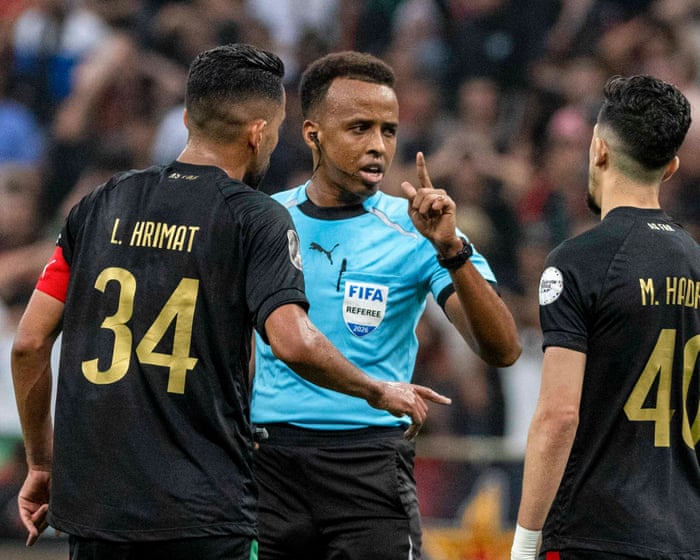
Омар Абдулкадир Артан трябваше да влезе в историята тази седмица като първият сомалийски рефер, който ще ръководи мач на Световно първенство. Вместо това, той гледа отвън извън САЩ, на когото е отказано влизане без обяснение от администрацията на Тръмп. Добре дошли на най-всеобхватното Световно първенство някога.
ФИФА, ръководният орган на футбола, очаква да спечели 8,9 милиарда долара (6,7 милиарда паунда) от този турнир – двойно повече от това, което Олимпийските игри през 2024 г. направиха. Повече отбори: 48, спрямо 32. Повече мачове: 104 за 39 дни. Повече пазари, точно както те обичат. Това е добър бизнес.
Но едно нещо също е ясно: не всеки е поканен на партито. В дните преди церемонията по откриването в четвъртък, новините бяха за изключване, разединение и сегрегация.
Вероятно е най-добре да започнем с Артан, сомалийски рефер, обявен за най-добър мъжки рефер в Африка миналата година и акредитиран от ФИФА от 2018 г. Артан остана любезен въпреки ситуацията. "Аз съм много, много разочарован," каза той пред Ню Йорк Таймс. "Аз съм просто рефер, който се опитва да живее мечтата си – най-голямата мечта в живота ми, да дойда на Световното първенство." Той го заслужаваше. Хасан Шейх Мохамуд, президентът на Сомалия, го нарече "символ на вдъхновение за новото поколение сомалийци." Това, очевидно, не е достатъчно за администрацията на Тръмп.
Андрю Джулиани, който ръководи работната група на Белия дом за Световното първенство, каза: "Въпреки че не мога да навляза в подробностите за това, мога да ви кажа, че това беше правилното решение от митниците и граничната патрулна служба и подкрепям това решение." След 24 часа на възмущение, някой информира CNN с непотвърденото твърдение, че реферът може да има предполагаеми връзки с "заподозрени членове на терористични организации."
ФИФА принуди Южна Африка, Германия и други скорошни домакини на Световно първенство да обещаят, че визите и минималната имиграционна намеса ще бъдат гарантирани за всички акредитирани служители, играчи и персонал по време на турнира. Защо САЩ са освободени от това? Отговорът на организацията беше слаб. "ФИФА не участва в имиграционните процеси на страната домакин, включително визовите решения," каза тя, "и е информирана от властите, че статутът на г-н Артан няма да бъде променен в момента. Правителството на домакина в крайна сметка решава кой получава виза и кой се допуска в тяхната страна."
И така, със съучастието на ФИФА, тези, които биха се насладили на така наречената глобална игра, са напълно подчинени на капризите на Тръмп. Иранската футболна федерация заяви във вторник, че разпределението на фенски билети за страната е отменено, в допълнение към преместването на тренировъчната база на националния отбор от Аризона в Мексико Сити миналия месец и отказите за визи за няколко помощни служители. Миналата седмица Международната асоциация на спортната преса критикува "отдавнашен и неприемлив проблем за нас, журналистите: отказът на входни визи на редовно акредитирани колеги" в писмо, адресирано до медийния офис на ФИФА от президента на асоциацията, Джани Мерло.
"Има много случаи," продължи писмото. "Ирански колеги, африкански колеги, някои от които са получили еднократни входни визи, така че ако техният отбор отиде да играе в Канада или Мексико и те го последват, вече не могат да се върнат в Щатите. Случаите са безбройни и, повтарям, неприемливи. Политиците винаги казват, че спортът обединява и изгражда мостове между младите хора в страни в конфликт, но в този случай вървим в обратната посока."
Това е сериозна грешка, която връща прогреса назад. Рекордни 10 африкански държави са представени на това Световно първенство, далеч от евроцентричните турнири между 1938 и 1966 г., които не приветстваха нито една африканска нация. ФИФА може да посочи стъпки, предприети за възстановяване на баланса: Южна Африка, домакин на състезанието през 2010 г., и мароканският Саид Белкола и южноафриканският Ахмат Сали, станали първите африканци, ръководили финал на Световно първенство през 1998 г. Организацията също ще отбележи, че тя е нетен финансиращ африканските нации, инвестирали над 1,2 милиарда долара в инфраструктура, стадиони и академии за развитие на младежта от 2016 г. насам. Но разширяването на турнира също е огромен бизнес ход, насочен към отключване на милиарди нови приходи, като същевременно се осигури политическата подкрепа на 54-те гласуващи африкански нации, които съставляват 25% от членството на ФИФА. В момента, въз основа на това, което се случва в Северна Америка, те изглеждат като второстепенна мисъл.
И така, какво прави ФИФА по отношение на Световно първенство, където влиянието на Доналд Тръмп – някой, когото нейните лидери открито се опитаха да спечелят – започва да оформя самата структура на тяхното флагманско събитие? Какво казва или прави президентът на ФИФА, Джани Инфантино, в моменти като този, дори докато е зает да раздава бляскави подаръци на Тръмп или да се бори с правни заплахи от своя предшественик?
Той прави това, което прави сега: основно свива рамене, брои парите, измерва растежа на престижа и се преструва, че всичко е наред, докато къщата гори. Той настоява за африканско разширение, като същевременно доброволно жертва определени нации в името на Световно първенство в САЩ. ФИФА, която той ръководи, избира съучастие пред смелост.
Ръководният орган трябва да намери своя глас и би било разумно да се вслуша в сомалийските служители след несправедливото изключване на Артан от тази висша сцена. "Предотвратяването на [Артан] подкопава ангажимента на футбола към справедливост, заслуги и духа на честната игра," казаха те.
И те са прави: ФИФА трябва да почете този ангажимент. Но в момента честта е в недостиг.
Морган Офори е репортер, блогър и подредактор за The Long Wave на Гардиън.
Често задавани въпроси
Ето списък с често задавани въпроси, генерирани въз основа на предоставената тема
1 Какво означава "най-всеобхватното Световно първенство някога"
То се отнася до Световното първенство по футбол през 2026 г., което ще бъде домакинствано от САЩ, Канада и Мексико. ФИФА го рекламира като най-всеобхватния турнир в историята поради разширения си формат с 48 отбора и обещания за достъпност за всички фенове.
2 Кой е Омар Артан
Омар Артан е професионален футболен рефер от Сомалия. Той е рефер, включен в списъците на ФИФА, и се очакваше да бъде част от екипа за ръководене на големи международни мачове.
3 Защо на Омар Артан беше забранено да влезе в САЩ
На него му беше забранено да влезе в Съединените щати поради ограниченията за пътуване на администрацията на Тръмп, които бяха насочени към няколко предимно мюсюлмански държави, включително Сомалия. На него му беше отказана виза за посещение на предварителен семинар за рефери на Световното първенство в САЩ.
4 Как забраната на Омар Артан противоречи на идеята за всеобхватно Световно първенство
То подчертава голямо противоречие. ФИФА популяризира Световното първенство като приветстващо всички националности и произход, но една от страните домакини попречи на рефер от мюсюлманска държава дори да влезе в страната, за да се подготви за събитието.
5 Омар Артан ли е единственият човек, засегнат от това
Не. Той е един от многото хора от държави, включени в списъка за забрана за пътуване на САЩ, на които са отказани визи или влизане, включително спортисти, треньори и служители. Неговият случай е просто виден пример в света на спорта.
6 ФИФА или Американската футболна федерация коментираха ли това
По време на забраната имаше ограничени публични коментари. Критиците твърдят, че ФИФА е трябвало публично да оспори политиката на правителството на САЩ, за да защити твърдението си за всеобхватност, но организацията остана до голяма степен мълчалива по конкретния случай.
7 Може ли Омар Артан да ръководи мачове на Световното първенство през 2026 г. сега
Към момента не е сигурно. Политиките за забрана за пътуване може да се променят в зависимост от администрацията на САЩ. Ако забраната остане в сила за сомалийски граждани, той вероятно няма да може да ръководи мачове в САЩ, дори ако ФИФА го избере.
8 Какво казва тази история за спортното изпиране или политическото влияние във футбола
То предполага, че докато мегасъбития като Световното първенство се използват за проектиране на образ на глобално единство, реалните политически политики могат директно