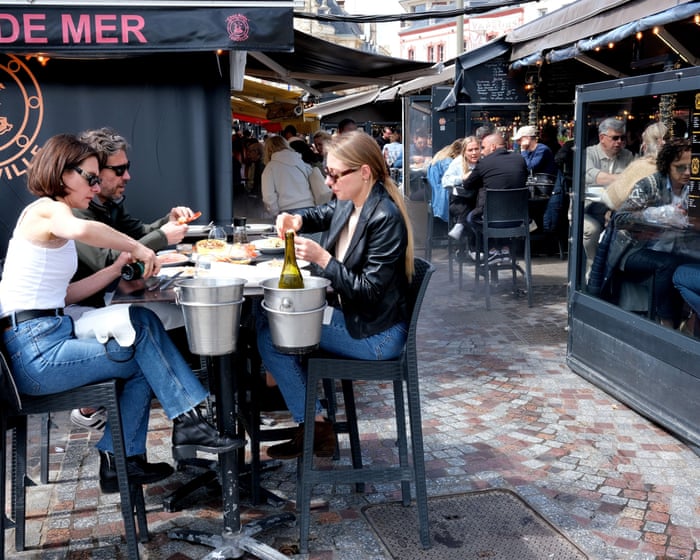
Spare a thought for the poor French restaurateur. Once the iconic symbol of a pleasure-loving nation that cherished nothing more than a long, wine-soaked meal with friends or colleagues, the French restaurant is now in deep crisis. Traditional establishments are closing faster than you can call for the waiter, as eating habits shift and the cost of living squeezes budgets.
“It’s a catastrophe for our profession,” said Franck Chaumès, president of the restaurant branch of the Union of Hospitality Trades and Industries (UMIH) in a recent television interview. “About 25 restaurants are going out of business every day.” The UMIH has demanded—so far in vain—that the government limit the opening of new restaurants based on local population size and license only professionals qualified in cooking and accounting.
The only businesses seemingly immune to the decline of France’s hospitality sector are those offering haute cuisine at staggering prices to the super-rich and fast-food chains like the ubiquitous McDonald’s, which continues to thrive.
The days when business, politics, and diplomacy were conducted over lengthy, wine-fueled lunches are largely over. When I began reporting in Paris in 1978, there was no point calling a ministry or corporate press office between 1 p.m. and 3 p.m., even in a crisis. Everyone was at the table. Today, only parliamentarians keep that indulgent tradition alive.
Changing lifestyles, rising wholesale food prices, and unfavorable tax rules are pushing more and more restaurant owners to the brink, as ordinary French people struggle to make ends meet. Younger generations eat less, drink less alcohol, and spend less time at the dining table. Add to that the rise of home-delivery services like Deliveroo and Uber Eats—often transporting food from “dark kitchens” without dining rooms—and it’s easy to see why old-fashioned restaurants are fighting to survive.
“I used to serve 75 customers every lunchtime, with at least two daily homemade dishes featuring meat or fish and fresh vegetables,” says Alex Diril, who once ran a bar-restaurant in Paris’s fifth arrondissement, popular with office workers, craftsmen, and nearby university students. “Things changed after the pandemic. Regulars who used to eat out daily now came maybe once or twice at the start of the week. I’d offer a fresh, healthy daily special, but most people wanted burgers and fries. As food costs rose, we couldn’t raise prices because of competition from fast-food joints and sandwich shops.”
Despite the hard work of serving freshly cooked meals, the restaurant was losing money. Diril cut his losses and stopped serving food at the end of 2024. His bar-tobacco shop is just one of thousands of victims in a crisis that is reshaping France.
The Covid pandemic was a turning point in many ways. When restrictions eased, fewer than two-thirds of middle-class workers returned to the office full-time. Many still work from home at least part of the week, and when they do go in, they often bring a lunchbox or grab a quick sandwich.
Tax and employment rules have worsened restaurateurs’ troubles. VAT is 5.5% on takeaway meals but 10% on dine-in service. Moreover, since Covid, the meal vouchers many French workers receive as part of their pay can now be spent on supermarket food, not just in restaurants—a major blow to lunchtime trade.
The growth of online shopping, along with driving and parking restrictions in city centers, has also hit restaurants hard.
Statistically, the French have long spent more time eating and drinking than people in similar countries: an average of two hours and 13 minutes per day in a 2015 study, compared to one hour and 18 minutes in the UK and barely an hour in the US. But habits have shifted since then, influenced by both American fast-food culture and a trend toward healthier living.Eating habits are changing. Young people are just as likely to spend their lunch break at the gym as at a restaurant.
In France, the 35-hour work week, introduced in 1998, pushed many small restaurants with kitchen staff to shorten their hours. Try getting a meal in a provincial restaurant after 1:30 p.m., and you’ll likely be met with a Gallic shrug and a curt “la cuisine est fermée” (the kitchen’s closed)—if not a surly “non, mais vous avez vu l’heure?” (haven’t you seen the time?). Finding serving staff has also grown harder. Since the pandemic, fewer French people are willing to work the evenings and weekends that restaurants rely on.
Ironically, while the British government subsidized its citizens to “eat out to help out”—risking the spread of infection—the French government poured money into keeping restaurants closed during COVID lockdowns. While other businesses got interest-free loans to ease cash flow, restaurants received outright grants. “I’d never seen so much money. We couldn’t believe our eyes,” says Martine David, who ran a family restaurant in Saint-Rémy-de-Provence in southern France. When lockdown lifted, there was a six-month boom as people celebrated their freedom and splurged their pent-up savings on dining out. But business never fully returned to normal after the pandemic.
Today, restaurateurs face a choice: cut costs by reheating mass-produced, pre-cooked frozen meals from wholesalers, or try to attract health-conscious customers with a short menu of locally sourced, made-to-order dishes—which comes with higher labor costs. Sadly, the former approach is faring better than the latter.
Bon appétit!
Paul Taylor is a senior visiting fellow at the European Policy Centre.
Frequently Asked Questions
Of course Here is a list of FAQs about the article From bon appétit to Uber Eats why Frances cherished restaurants are facing a crisis by Paul Taylor designed to cover a range of perspectives
Beginner General Questions
1 What is the main crisis facing French restaurants
French restaurants are struggling with a perfect storm of problems skyrocketing costs for energy and ingredients a severe shortage of skilled staff and intense competition from food delivery apps like Uber Eats
2 Why is this a big deal for France specifically
Frances restaurant culture is a core part of its national identity and social fabric The traditional independent bistro is seen as a cherished institution Its decline represents a threat to a unique way of life not just an economic sector
3 How are apps like Uber Eats part of the problem
They create several pressures they take a large commission from each order squeezing restaurant profits They also encourage a shift toward fast deliveryfriendly food over the traditional sitdown dining experience and they compete for both customers and kitchen staff
4 Whats causing the staff shortage
Many skilled chefs and waiters left the industry during the COVID19 lockdowns and never returned finding the hours long the pay low and the conditions tough Younger people are also less attracted to these demanding careers
5 Are all restaurants affected equally
No Highend gastronomic restaurants and fastfood chains are more resilient The crisis hits hardest the midrange traditional bistros and independent restaurants which are the heart of French neighborhood life
Advanced Detailed Questions
6 Beyond delivery apps what deeper economic pressures are at play
Restaurants face soaring costs for electricity gas and basic ingredients At the same time consumers have less disposable income due to inflation making them less likely to dine out and more likely to choose cheaper delivery options
7 How is the crisis changing the physical landscape of French cities
Theres a risk of bistro deserts in some neighborhoods replaced by fastfood outlets kebab shops or bank branches This leads to a loss of social third places where community interaction happens
8 What is the government doing or what are proposed solutions
The government has offered some