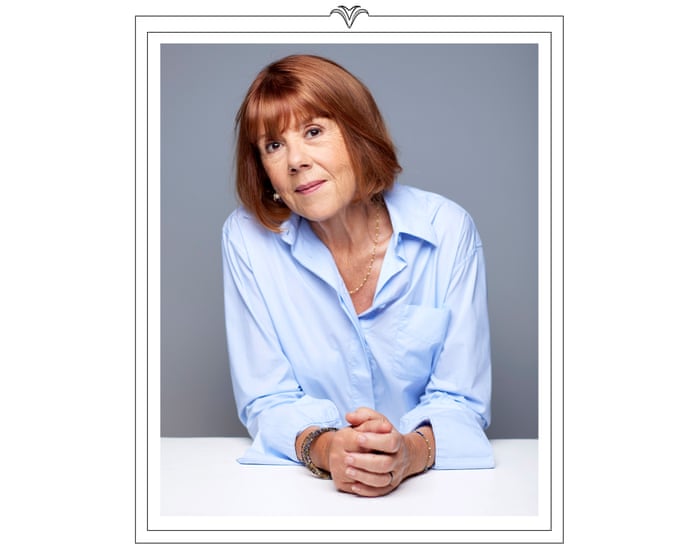
At Gisèle Pelicot’s new home on Île de Ré off France’s Atlantic coast, she enjoys brisk walks along the beach in all weather, playing classical music loudly, eating good chocolate, and—as a gift to each new morning—always setting the table for breakfast the night before. “It’s my way of putting myself in a good mood when I wake up: the cups are already out, I just need to put the kettle on,” she says.
But one of her most treasured possessions is a box of letters she keeps on her desk. The envelopes from around the world—some sent on a prayer, addressed only with her name and the village in Provence where she once lived—piled up at the courthouse in Avignon in southern France in late 2024, when she became famous worldwide as a symbol of courage for waiving her right to anonymity in the trial of her ex-husband and dozens of men he had invited to rape her while she was drugged unconscious.
For almost a decade, Dominique Pelicot, to whom she was married for 50 years, had crushed sleeping pills and anti-anxiety medication into her mashed potatoes, coffee, or ice cream. In an online chatroom called “Without her knowledge,” he invited dozens of men to rape her in her own bed at the yellow house with blue shutters in Mazan in southeastern France, where the couple had retired. “I’m looking for a pervert accomplice to abuse my wife who’s been put to sleep,” was one of his messages. The trial, which Gisèle insisted must be held in public, shocked the world, raised awareness of drug-facilitated abuse—termed “chemical submission” in France—and brought an outpouring of recognition from women, from Spain to the U.S., teenagers to 80-year-olds, all of whom wrote to her with their own stories.
“I have all the letters in a beautiful box,” says Pelicot, 73, at the office of her literary agent in Paris’s Left Bank.
She arrives with her new partner, Jean-Loup, a retired Air France steward. They are smiling and clearly happy. She never expected to fall in love again, she says. But in the four years between the “devastation” of being informed by police in 2020 that her ex-husband—who had been caught upskirting in a local supermarket on September 12 that year—had also raped her while she was sedated, and the trial in 2024, she sought refuge in solitude on the west coast of France. Gisèle arrived with just two suitcases and the family bulldog, Lancôme, in a state of shock and desolation. Slowly, while out walking, she made new friends. One of them introduced her to Jean-Loup.
“Neither of us had ever thought we’d fall in love again because Jean-Loup lived for 30 years with his wife, who then sadly passed away from a neurological illness,” she says. “He was her carer until the end. He’s a very beautiful person. We met and fell in love. We couldn’t have foreseen that. And we’re really happy today. It has changed our lives. So you see, hope is allowed. Even for women who are not necessarily victims of violence, but who can find themselves widowed or alone, divorced. You can love again, you can have several lives in one. That’s my case, and I think it’s the case for many women, too.”
Each night of the trial, she would sit down with Jean-Loup in the house they had rented near Avignon, and they would read the letters that were sent to her. “It was a ritual … we’d use a paper knife to open them graciously, out of respect for the writers. And each time, on reading them, tears would flow, because there was a lot of suffering. I think there are some that I still haven’t opened, because there was so much suffering and so many tears in them. But of course I will read them all, and I’ll keep them forever. And maybe, when I depart this earthly world, I’ll pass them on, I’ll entrust them to my grandchildren. And maybe one day they will also be read in schools.”I hope that by then, we will have all put an end to chemical submission and all sexual violence. But I think there is still a long way to go.
Gisèle, a former logistics manager at the state electricity company and a grandmother of seven, is now beginning an international book tour after the publication of her memoir, A Hymn to Life. She describes it as a book about hope. Writing it was an exercise in introspection, allowing her to examine her difficult, grief-filled childhood, her “love at first sight” for Dominique (whom she now refers to only as Mr. Pelicot)—a long-haired 19-year-old in a striped Breton top, driving a 2CV—and their subsequent life together. The book explores the “joie de vivre” she says she inherited from the women in her family, who overcame tragedy and gave her the determination to face the trial.
Born in 1952 in a garrison town in West Germany where her soldier father was posted, Gisèle recalls a moment when she was four and her mother slipped on ice. At the doctor’s office, she noticed a scar under her mother’s hair—a radiotherapy burn, she realized many years later. No one had told her about her mother’s brain tumor; it was never discussed. Her mother simply kept smiling, never showing her pain outwardly, a trait Gisèle says she also learned at a very young age.
When Gisèle was nine, her mother died at home in the French countryside in Indre, in the Centre-Val de Loire region. She remembers trying to wake her. “For me, she was sleeping. But when I saw my father close her eyes and start crying, he was truly devastated by grief.” She and her brother were not taken to the funeral but visited the grave a few days later when it was snowing. “I thought, ‘She can’t be okay here; she must be cold,'” she says.
Her father remarried a stepmother whom Gisèle describes as verbally abusive and rejecting. But at age 19, during a visit to her mother’s village, Gisèle met and fell in love with a local electrician: Dominique. He was shy and sweet, another wounded soul, she felt. His family was troubled, harboring secrets, sexual abuse, and violence. She didn’t know the full extent of it then, but she believed they would save each other, make a fresh start, be happy, and build a family.
Gisèle had long struggled with sleep after the deaths of her mother, father, and brother, all of whom died young. “I couldn’t sleep in the dark; I needed the light on,” she says. “I felt it was because I associated sleep with death.”
Today, after being drugged so many times—in a way that court medical experts said could have easily killed her—she says she sleeps well and is at peace with death. “I know it’s inevitable. All of us will face it one day.”
For almost ten years, starting around 2011, Gisèle experienced what she thought were serious neurological issues, including memory lapses she feared were a brain tumor like her mother’s or the onset of Alzheimer’s, as well as gynecological problems. She suffered blackouts and memory lapses, forgetting what she had done the day before or that she had been to the hairdresser, even if she could see in the mirror that her hair had been cut and colored. She became afraid to drive or worried she might miss her stop on the train.
She did not know she was being drugged and raped. “I didn’t even know that could exist,” she says. Crucially, neither did the many neurologists and gynecologists she consulted, always accompanied by her supportive husband. One doctor dismissed her symptoms as anxiety.
But on a regular basis, her husband was putting medication in her food and drink that sedated her so heavily…It was as if she was on an operating table. “It was really a kind of general anaesthetic,” she says. “And all done with drugs you could have in a medicine cabinet at home.”
“I feel the cold, so I always wear pyjamas in bed,” she explains. “And he managed to undress me, re-dress me as he wanted, and put my pyjamas back on afterwards. Because when I woke up the next morning, I was in my pyjamas. I didn’t wake up wearing something else, thinking: ‘Hang on, I wasn’t like this last night.’ It was all calculated.”
His concoction of prescription drugs, refined with online advice from a man who had worked as a nurse, included muscle relaxants. These allowed her limp body to be abused and for Dominique to dress her in underwear he had chosen.
At the time, Gisèle and Dominique Pelicot were living the retirement they had always dreamed of: a house in Provence with a pool, board games on the patio, and visits from their children and grandchildren. Dominique, she says, “was loved by everyone—his children, his friends, his family. There was nothing to trouble the perfect picture. That’s what is so terrifying.”
Looking back now, she says there were some strange moments. She remembers him pouring a cocktail he had made for her down the sink when she said it tasted odd. Or another time, “when I found bleach inexplicably on new trousers and, I don’t know why, but I said to him: ‘You’re not drugging me by any chance, are you?’ And he started crying, and I was so destabilised by that. I thought: ‘What have I just said to him?’ And it was me who apologised. Like many victims, you know, I said to myself it was impossible that he could be doing any harm to me. I took it on myself.”
She does not regret insisting that the trial of her husband and 50 other men be held in public, when normally in France a rape trial can take place behind closed doors. Today she feels it was her life’s “mission” to expose not just the crimes, but the justice system’s treatment of rape survivors. That every man on trial was found guilty of rape, attempted rape, or sexual assault was a “victory,” she says.
The most painful moment for her was having to view the “unbearable” videos that Dominique had carefully saved in a file called “Abuse.” “When you see that body, that rag doll, inanimate, treated as it is being treated…” she begins. “I put myself at a distance from that sedated woman, who isn’t really me. That woman who is in that bed with all those men, it’s not at all me. I think that helped me. Not because I was in denial, but it was to protect myself.”
In the courtroom, she had to face the accused, many sitting very close to her. They ranged from their 20s to their 60s at the time of the abuse and included a soldier, a journalist, lorry drivers, and a nurse. Some were seen high-fiving each other outside court, laughing and joking.
Dominique told the court “I am a rapist,” but the majority of the other men denied the charges, saying her husband had said it was OK, or that they thought it was a game.
“They were so casual, it was as if they were there for snatching a handbag,” she says. “I think they hadn’t understood the scale of their crimes. That’s when you realised this was all about the triviality of rape. They looked me up and down as if to say: ‘Why is she troubling us with all this?’”“It was the trial of cowardice and denial,” she says. “My decision to make it public lifted the veil on the evils in society, because our society fosters denial. And we’re still seeing it today through what’s emerging in the Jeffrey Epstein case … Everybody shut their eyes.”
For her, this culture of denial means “handing all the strength and power to these types of men.”
She was also struck by the testimony of some men’s wives, girlfriends, or female friends who attended court to say their loved ones couldn’t possibly have raped anyone. And by the three former police officers who appeared as character witnesses for one of the guilty men, who had once worked as a karate coach for the police. “They said he had a deep respect for women. I said he had a funny way of respecting women. It says a lot about our macho and patriarchal society, that image of these former police officers, public figures, coming as character witnesses.”
The support of women who began gathering every day at the courthouse mattered greatly to her. “It carried me,” she says. “I felt less alone. Without them, maybe I wouldn’t have had the strength.”
The shame survivors feel, she says, must change sides, because it is “a double sentence, a suffering we inflict on ourselves.” But there is also “an extreme loneliness” in being a survivor. When we meet, she is wearing a scarf sent to her during the trial by an Australian organization working to raise awareness of sexual assaults on older women. “It’s a nod to them, to show I’m still connected to them,” she says.
One of the hardest aspects of the case has been the impact on her children and grandchildren. At the trial, Dominique was also found guilty of secretly taking indecent images of their adult daughter, Caroline, and the wives of his two sons.
Caroline, 46, who was also photographed while asleep, has now filed a legal complaint accusing her father of drugging and raping or sexually abusing her when she was in her 30s, which he has denied. The relationship between Caroline and Gisèle was strained for a time, but Gisèle says it has grown closer again. “Caroline feels certain her father sedated her and raped her,” she says. “Unfortunately, that can’t be ruled out. She’s in great suffering and I understand and hear her.”
For Caroline, not having clear proof is a “never-ending hell,” Gisèle says. “It’s wrong to think this type of tragedy brings a family together. It blew everything apart. And each of us is trying to rebuild today in their own way.”
Gisèle says she will visit Dominique in prison, probably later this year, to talk to him face to face one last time. “I need answers,” she says. “Why did you betray us like this? Why did you do so much harm to us? Why? I don’t have answers. I’ve tried to understand. I’ve thought about whether it was connected to rapes that he may have suffered himself when he was young, that he was a ticking timebomb in some way, because he never got psychiatric help. But he nonetheless chose the depths of the human soul. He made that choice.”
Questions also still remain about Dominique’s activities in the 1990s. He has admitted to the attempted rape of a young estate agent outside Paris in 1999, but has denied theThe police are still investigating the 1991 rape and murder of another estate agent in Paris. Gisèle, who has assisted with police investigations, says she has no knowledge of it. She recalls him coming home in tears twice during the 1990s but doesn’t remember the exact dates. “I never saw any blood stains on Mr. Pelicot. I never saw that he’d been scratched,” she says. She hopes the families of those women can find closure.
In her own case, the chilling fact remains that the police were unable to identify all the men filmed raping her. “There are around 20, maybe more, walking free,” she says. “And I do wonder whether one day they will be caught doing it again. It’s terrifying to think they could keep on doing this, as copycats of Dominique Pelicot. Because today you can see there are still similar cases happening, and it’s universal, not just in France.”
French society has been changed by the trial. It has opened up crucial public discussion on drug-assisted rape, and politicians pushed to have a clear reference to consent added to the rape law.
“Although it’s good to change laws, I think above all you have to change mentalities,” Gisèle says. Sexual offences by drugging are about the attacker “feeling all-powerful… There has to be a collective awakening. I think this case has started that, but there is still much further to go. It’s about education—respect and kindness towards others. It’s that simple.”
She says that both men and women regularly approach her in the street to offer thanks and support. “Men, too, were totally sickened to see the behaviour of the accused.”
In the future, she would like to speak to law students in universities, who may go on to become defence lawyers, about how to treat rape victims. She describes her own trial as “like being in a pit with the lions,” where some defence lawyers “sought to humiliate me, say I was complicit, I was consenting, or I was suspect.” She was asked about her sex life, whether she drank, if she was an exhibitionist, and if she locked the door when she went to the toilet.
The trial also showed that there is no such thing as a minor sexual offence. Ten years before Dominique’s arrest in 2020, he had been caught taking photographs up women’s skirts in the Paris area but got away with a €100 fine, and Gisèle was never told. There was a feeling then, she says, that upskirting “wasn’t so bad.” Stopping him then could have saved her a decade of abuse.
Dominique was arrested in 2020 thanks to a young security guard at a supermarket in Carpentras who caught him upskirting again. She has since met him. “We fell into a hug and I thanked him because if he hadn’t seen what Mr. Pelicot was doing in that supermarket—and if the local police officer, Laurent Perret, hadn’t persevered in searching his phone and computer—I think Mr. Pelicot would have been missed, he would have continued. And I’m not sure I would be sitting here in front of you today.”
Today, she says she is doing well. Since Dominique’s arrest, her memory problems have stopped, she has regained weight, and her hair loss has ceased. The rapes infected her with several sexually transmitted diseases, which doctors have treated and are monitoring. “I think I’m doing well. I’m a survivor; I miraculously survived,” she says.
One day when leaving court, she saw a young woman of 25 weeping uncontrollably, having potentially watched the video evidence. Gisèle asked her lawyers if she…I went to comfort her. “I wiped away her tears with my hands and told her I was okay, and that I needed her to be okay too,” she says. “If she cried, I would have broken down as well, and I needed to stay strong.”
She says, “As a child, I understood I had to grow up faster than other children. I had to protect my father and my brother because they were devastated by grief over my mother’s death. It’s not that I didn’t carry that grief too, but I kept it to myself. I built myself up like a little tin soldier of joy, moving forward step by step each day. And I think that’s what shaped my personality.” Maybe, she adds, “that’s also why I could accept what happened to me. Because in a way, I was prepared for sadness and tragedy. But now I hope that’s over—I’ve had my share of it. Now I can allow myself to be happy for the years I have left to live.”
A Hymn to Life: Shame Has to Change Sides by Gisèle Pelicot, translated by Natasha Lehrer and Ruth Diver, is published by Bodley Head (£22). To support the Guardian, buy a copy at guardianbookshop.com. Delivery charges may apply.
Frequently Asked Questions
Of course Here is a list of FAQs about Gisle Pelicot her story and the themes of rape courage and her exhusband based on her public testimony
About Gisle Pelicot and Her Story
Q1 Who is Gisle Pelicot
A Gisle Pelicot is a French woman who became a public figure after bravely testifying that she was repeatedly raped by her thenhusband a wellrespected doctor Her case highlighted the hidden nature of abuse within seemingly perfect relationships
Q2 What is the famous quote Everyone loved him Thats what is so terrifying about
A This quote from Pelicot explains the profound isolation and disbelief victims face when their abuser is charming and admired publicly It underscores how an abusers positive social reputation can be a weapon making the victims testimony seem impossible to believe
Q3 What happened to her exhusband
A Her exhusband Dr Édouard Durand was convicted of rape by a French court The trial and his conviction were a landmark moment proving that social status does not provide immunity from justice
Understanding the Dynamics of Abuse Rape
Q4 How can someone be raped by their own spouse
A Rape is defined by a lack of consent not the relationship between people In any relationship including marriage sex without explicit freely given consent is rape Marital rape is a serious crime
Q5 Why didnt she leave or report him sooner
A This is common in abusive relationships Factors include fear psychological manipulation economic dependence social pressure to maintain the perfect family image and the terror of not being believedexactly as her quote describes
Q6 What does her story teach us about the perfect facade
A It shows that abuse can happen in any social circle Abusers often cultivate a kind trustworthy public persona to conceal their private actions and to discredit their victim if they speak out
About Courage and Speaking Out
Q7 What was so courageous about her coming forward