“Vive la République, et vive la France.” Emmanuel Macron ended his speech on May 21, marking the 25th anniversary of the Taubira law—which recognized slavery as a crime against humanity—with the usual patriotic slogan. As applause filled the reception room of the Elysée Palace, a building financed by an 18th-century slave-owning magnate, Leïla Brédent, a Black soprano from Guadeloupe, began a powerful rendition of La Marseillaise.
Watching from my office in Bristol, following videos shared by friends at the ceremony, I felt deeply uneasy. The speeches were moving, and the symbolism was strong. Yet a question kept nagging at me: how are descendants of enslaved Africans in France’s overseas territories supposed to feel about these patriotic words when we still live with the consequences of the system France claims to remember and condemn?
Part of the answer isn’t in history books—it’s in our very blood.
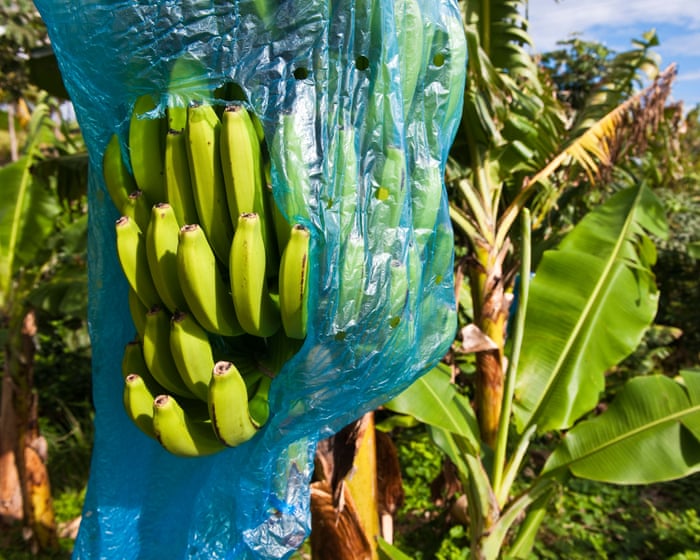
According to French health authorities, over 90% of the populations of Martinique and Guadeloupe are believed to carry traces of chlordecone, a toxic pesticide widely used on banana plantations. This chemical has contaminated rivers, coastal waters, and farmland across both islands, and it’s expected to stay in the environment for centuries. The French Caribbean also has some of the highest rates of prostate cancer in the world, and researchers are still exploring links between chlordecone exposure and various serious health issues.
This wasn’t an accident—it was a political choice.
As early as 1972, France’s now-defunct Commission of Toxic Products recommended banning chlordecone due to safety concerns. But banana plantation owners in Martinique and Guadeloupe repeatedly got exemptions, allowing its use until 1993—three years after it was banned in mainland France. Economic interests won out over public health. Once again, overseas territories were expected to bear the cost.
For many in Guadeloupe and Martinique, the chlordecone scandal isn’t just an environmental disaster. It’s proof that the power structures built during slavery never really disappeared. The same concentration of economic influence that once defended the plantation system continued to shape political decisions centuries after abolition.
It was against this backdrop that Macron announced a parliamentary vote to repeal the notorious Code Noir, the 1685 decree that codified the enslavement of Africans in French colonies. As a Guadeloupean involved in reparatory justice work, I followed that vote closely.
The Code Noir legally turned human beings into property and gave enslavers extraordinary powers. Even though France’s legal traditions had long declared freedom a natural right, colonial interests repeatedly secured exceptions whenever economic profit was at stake. This contradiction survived abolition by 180 years; the law itself stayed on the books until the repeal vote on May 28 in the national assembly.
Repealing it matters. But we shouldn’t mistake removing a legal relic for dismantling its legacy.
The inequalities created by slavery still shape economic life in the French Caribbean. Wealth and commercial power remain concentrated in the hands of a few families, whose fortunes often trace back to the colonial era. Consumers in the overseas territories regularly pay much more for basic goods than those in mainland France, despite lower average incomes.
The structures of dependency that slavery helped create haven’t disappeared—they’ve just evolved.
Yes, France is among the first nations to recognize slavery as a crime against humanity and is finally repealing the Code Noir.Symbolic gestures, no matter how meaningful, cannot replace real justice.
French MPs voted during a debate on the proposed abolition of the Code Noir, Paris, 28 May 2026. Photograph: Ludovic Marin/AFP/Getty Images
Macron’s speech stopped short of an apology. Yet acknowledging the past and apologizing are among the most important first steps in any process of repair. Around the world, institutions are increasingly recognizing this. In Britain, universities, churches, and financial institutions have issued apologies and launched reparatory justice initiatives. In the Netherlands, the prime minister and the king have formally apologized for slavery, while the government has set up dedicated programs to advance reparatory and social justice.
More recently, France itself drew attention when Pierre Guillon de Prince, whose family wealth came from enslaving Africans in Haiti, publicly apologized for that legacy. Along with Martinican activist Dieudonné Boutrin, he helped create the International Federation of Descendants of the History of Slavery, which focuses on dialogue and repair.
So the French government doesn’t need to invent a model from scratch. There are examples to follow. The Caribbean nations’ 10-point plan for reparatory justice offers a practical framework, combining historical acknowledgment with measures that address public health, education, economic development, and psychological healing.
But the first step is to listen. The real-life experiences of people in Guadeloupe, Martinique, and other former colonies must shape the discussion and set priorities for action. It’s not up to Paris to decide what repair should look like on behalf of its former colonies.
Repair requires those who benefited from historical injustices to listen without getting defensive and to recognize that the effects of slavery aren’t just in the past. They remain visible in polluted land, unequal economies, and ongoing health gaps.
The Code Noir may no longer be on the books, but its effects are still embedded in the soil, the economy, and the lives of those who continue to live with its consequences.
Commemoration without repair risks becoming just a performance. Apologies without action ring hollow. If France is serious about facing its colonial past, it must move beyond remembrance and adopt reparative policies that tackle environmental contamination, public health inequalities, economic concentration, and the lasting disparities faced by people in its former colonies.
Remembering history is all well and good. But France’s real task is to repair the damage that history has caused and to ensure it never happens again.
Marie-Annick Gournet is an associate professor and associate pro vice-chancellor for reparative and civic futures at the University of Bristol.
Do you have an opinion on the issues raised in this article? If you would like to submit a response of up to 300 words by email to be considered for publication in our letters section, please click here.
Frequently Asked Questions
Here is a list of FAQs based on the quote by MarieAnnick Gournet covering the topic of Frances acknowledgment of its role in the slave trade and its legacy in the Caribbean
BeginnerLevel Questions
1 What does France is beginning to acknowledge its role in the slave trade actually mean
It means that for a long time France didnt officially talk about or take responsibility for its part in capturing and selling African people as slaves Now the government and some institutions are starting to admit this happened and that it was wrong
2 Why is this acknowledgment important for the Caribbean
Because France controlled many Caribbean islands where slavery was the foundation of the economy Acknowledging the slave trade is the first step in recognizing the deep lasting pain and inequality this created in those islands
3 What is the legacy of slavery in the Caribbean today
It refers to the longterm effects which include
Racial inequality People of African descent often face more poverty and fewer opportunities
Economic problems The wealth created by slavery was taken out of the islands leaving them poor
Cultural trauma A history of violence and dehumanization that still affects families and communities
4 Has France actually apologized for slavery
Not with a single formal national apology They have passed laws recognizing slavery as a crime against humanity and built memorials but many people feel a full apology is still missing
AdvancedLevel Questions
5 What specific steps has France taken to acknowledge its role so far
Key steps include
The Taubira Law Officially recognized the transatlantic slave trade and slavery as a crime against humanity
The creation of the Fondation pour la Mémoire de lEsclavage in 2019 to fund education and research
Building the Memorial to the Abolition of Slavery in Nantes a major slave port
6 What does addressing its legacy in the Caribbean mean in practical terms
It means moving beyond words to action such as
Reparations Financial compensation to Caribbean nations or communities for the wealth stolen through slavery