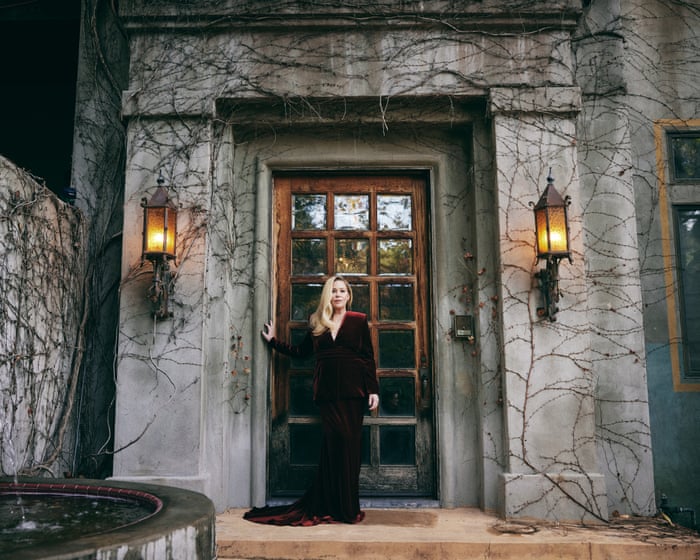
In 2021, I was diagnosed with multiple sclerosis. MS attacks your nervous system and slows down your functions—your respiratory system, your organs, everything. The disease eats away at all the things we take for granted. Some of us with MS experience a lot of pain; some don’t. I have a lot of it. When I wake up, I often can’t move my arm far enough to grab the cup of water by my bed or my phone from its charger. I get infusions every six months to slow the disease’s progress, but those infusions kill all my B cells, making me prone to infection. My stomach frequently slows to a halt, leaving me to rush to the emergency room in agony. Most days, simply walking across the room feels like scaling a mountain.
One of the worst side effects of the illness is the exhaustion. It feels as though I’ve been on a three-day sleepless bender—and that’s how I feel after a good night’s sleep. That’s why I spend so much time on and in bed, snuggled up against my heating pad. After that diagnosis and the symptoms I face, I no longer care what I say or how I come across or how it makes anyone feel. I don’t have patience for bullshit anymore, for things that are meaningless or merely “extra.” And it’s not just because I’m no longer working. Sure, there’s no one breathing down my neck to represent their business or movie or TV show, things I’ve had to represent, usually willingly and passionately, for almost 50 years. It goes deeper. I’ve become an honesty missile. When your physical situation deteriorates, and your life shrinks to the size of a king-sized bed, suddenly all the things you thought were important shift, too. The truth clarifies, like a camera lens slowly focusing.
I used to be invincible. I loved running. I loved Peloton, I played tennis, and I really loved to dance. I want to pick up the guitar over by the wall, but my hands cramp. I used to love saying to Sadie, my amazing daughter, “Yes, of course I’ll take you wherever you want to go in the car.” Now, I often can’t drive her anywhere.
But I like to watch TV—the worse the better, usually reality shows like Real Housewives—because with TV I get to escape. I don’t have to think. I don’t want narratives, art, or investing in some antihero across seven brilliant seasons. I want rich women screaming at each other. I keep the TV on 24 hours a day because without it, the quiet is so loud in my head, I can’t bear it.
Would I have wanted it this way, to have everything stripped away? Did I envision finally arriving at a place of raw honesty about my life, and that would be a good thing? Fuck, no. I want to work and dance and take Sadie everywhere, but being forced into this home-based life has stripped away my last vestiges of reserve. It has given me time and space to look back on my life and take stock of it for the first time. Alongside the need to confront the truth and enormity of all that I have lived through, a beautiful thing emerged: I have started to make a little sense of it, to understand what happened, see patterns, discover meaning, find the love and acceptance and healing in it, and start to forgive myself, to give my young self, especially, some slack for all the bad decisions and self-destructive behaviors.
In my closet, there is a locked box of all my journals from the age of 13 to the time I stopped wanting to write. I had told my best friend and godmother of my child, Rachel, that when I die, she may open the box. I never thought it would be opened before I was gone.
Lucky you—the box is open. I’ve kept meticulous records, all too aware that those pages were the only place I could share the unfiltered truth. I recently showed my daughter the diaries.I showed my mom a diary entry I wrote when I was 13, and she said, “You were really messed up.” And she was right. My mom was in an abusive relationship when I was little. I gave my first blowjob at 13. I was madly in love with Johnny Depp at 15. I struggled with disordered eating and self-loathing from my teens onward. It’s all in there, all the way up to me having cancer.
Just because life has sometimes been tough—and maybe at certain points it even felt impossible—that doesn’t mean we have to wallow in the darkness or be held back by our past. I’m here to tell you that, despite how dark it gets, there’s a lot to gain from digging into your past for meaning.
Let’s go back to the moment I found out about the MS. Just after we’d started shooting the third season of Dead to Me, my doctor asked to talk to me on Zoom. I’d been having some numbness in my extremities for a while, and I’d taken a bunch of tests to try to figure out why. That day, the director asked me to stay at work to shoot one more scene, but I said no—something I almost never did. I knew this call was going to be important. Maybe I already sensed how important it was, since it was so rare for me to push back when someone wanted me to keep working.
It was a Monday at 7 p.m. My neurologist’s face appeared on the screen. He looked sad.
“I’m sorry,” he said.
Something clicked off in my head. All my emotions short-circuited. I went numb, completely numb.
“I want to show you pictures of your brain.”
To this day, his words echo in my head and my heart, my soul, stomach, solar plexus—everywhere.
“Here are the lesions,” he said. “There are about 30.”
By the end of making Dead to Me, I needed three people to help me down the stairs of my trailer to get to my wheelchair just to reach the set. I was completely stripped of my independence and autonomy.
But I was determined. “No, I’m finishing this.” I pushed through the pain, and when I was done, I collapsed. It was 2022, and I’ve been collapsing ever since.
On our last night of filming, Linda [Cardellini] and I shared an incredibly emotional scene. [Showrunner] Liz Feldman kept stopping us and saying, “Can you guys stop crying so much? It’s not helping the scene.”
We were sitting in bed together.
Linda says, “I’ve had the best time, Jen.”
I misunderstood her and thought she was talking about Mexico, where we were. “Me too.”
But she corrected me. “I mean, I’ve had the best time… with you.”
“Me too.”
I don’t think either of us was acting then.
On every take, when she spoke, my whole stomach lurched because I knew it was our last moment together, and we’d been through so much.
I think this was the first time in my life that people saw I was good at what I do. And it was all being taken away.
I don’t like not finishing things. That’s another reason this illness has been so brutal. When I got sick, I realized quickly that my career was over, and so prematurely. It’s not just that having an illness makes work impossible; it’s everything that goes into making movies and TV shows. I can’t get up at 5:30 a.m., can’t sit in a car for long periods on the way to set, can’t bear people touching my face. I just can’t do it anymore.
The last time I truly felt a part of Hollywood was at the 75th Emmy Awards, when I was nominated for Best Supporting Actress in a Comedy Series for my role in Dead to Me. I took my daughter, Sadie, as my date. I don’t think I would have made it through without her by my side—mostly because she made me stay so she could see all her favorite people on stage.
I was terrified that night. It wasn’t my first time in public with my disease, but it was my first time in a…I was in a room full of my peers, terrified, as the first presenter of the entire show. My dress felt heavy, so I held on to my friend Anthony Anderson’s arm to steady myself. When I walked out, everyone in the room stood up.
It was something I’d always dreamed of—walking onto a stage to a standing ovation. But in that moment, I couldn’t help thinking: they’re standing because I’m sick, not because they appreciate my work. That’s why I joked that how easily they stood was “disabled-shaming.” I wanted them to know it was okay, that they didn’t need to feel sorry for me. Even surrounded by my peers applauding, I struggled to accept their support. I started to cry. No one had ever given me a standing ovation for my acting before, and here they all were.
But then, they stood up for the next person, and the next, and the next—up and down, over and over. Sadie and I couldn’t hold it together; we were doubled over laughing. “I thought it was just for me!” I said as we all stood up yet again. “Come on, guys—I thought I had a moment, you assholes!” Eventually, after what felt like the millionth standing ovation, we just stayed in our seats, too tired to get up again, cracking up at how ridiculous it all was.
I didn’t win the Emmy that night, but it was still special. Despite my self-deprecating nature, I know deep down it was all love and appreciation. In a room filled with some of the most talented people I’ve met in my five-decade career, I felt their warmth, even if I have to fight my inner critic to fully embrace it. It’s a moment I’ll always be grateful for—one that replays in my mind again and again.
For so much of my life, I’ve felt like the good underlies the bad. But something strange has happened to me, something I’m not used to. I won’t lie anymore, play the good girl, or call any of this a blessing. Yet, as I look back on the past 50 years, a sense of self-understanding slowly emerges. I want to talk to that little girl who always thought she had to be perfect.
All of this has left me unable to be polite anymore—it’s boring and exhausting. Being kind, loving, and nurturing is beautiful, but politeness often feels like lying. Respect is important, but there’s something about the sweet politeness expected of women that reeks of hiding our true feelings.
I’ve done the Superwoman act before, after my double mastectomy. I felt pressured to call it a blessing, when in reality, my body looked like Lorraine Massey—the once beautiful, then grotesque ghost in room 237 of The Shining’s Overlook Hotel. I was determined never to do that again. This time, I wanted to be honest. I hoped I’d never face such a choice, but here we are. (Truthfully, I’m sadder now about the mastectomies when I look at my body than I was right after.) With cancer, it was removed from my body, and I could move on. But MS is my constant companion. In fact, it will likely be what takes me in the end. It terrifies me. I don’t want to dance with this pain anymore, and I don’t want to be in this situation. Everything about it sucks.
Sometimes, when someone is in agony, it’s best to leave them be. My best friend recently went through a horrible tragedy, and at a fundraising party, she turned to me and said, “If one more person looks at me and a—”She asks, “How are you?” – ugh! I knew how she felt. On Dead to Me, we kept the diagnosis to a small group at first, but eventually everyone knew something was wrong because I was showing up to set in a wheelchair. Finally, I brought the crew together.
“Do me a favor, guys. Don’t ask me how I am in the morning because the answer’s going to be the same every day: not good. I need you to understand that what you’ve been seeing is actually multiple sclerosis,” I said. “And I need you to do me a favor. Please don’t ask me how I am in the morning. You can say, ‘Hey, bitch!'” A few chuckles rang through the crowd, and I flipped them off as a thank you. “Anything but, ‘How are you?’ Don’t ask me. Because the answer’s going to be the same every day: not good. That’s how I am.”
Over the months, I’ve become much better at answering the “How are you?” question. It’s much easier to answer when you don’t worry about what the other person wants to hear. The true answer is, I’m pissed off. Everything is an effort. Humor disarms the look of concern and pain my friends can’t hide when they see me. I don’t mind the jokes. Comedy has always been my armor; how else am I going to stop the tears? I don’t want to sit here and cry all the time. I have too much to do with what I have left. I am a mother, after all.
Years ago, I was trying on some pants at Fred Segal, and they were size two, which is very small. I remember this because usually I was a size zero, and the costume people on Married… With Children would often have to take my clothes in. I was bone, bone, bone. When I looked in a mirror, I saw something no one else saw. I worked so hard on my body, but I was never satisfied. Then I shot Just Visiting in London in 2000.
When I got back from London, I got a lot of help for my dysmorphia, even though it would linger. One night, my friends were at my house and we ordered from Pace, the famous Italian restaurant in the Canyon. They serve a delicious salad called the insalata vegetale. Filled with zucchini, squash, green beans, tomato, garbanzo beans and olives, it also boasts tons of provolone and fresh mozzarella, as well as being dressed in a red wine vinaigrette. The cheese and the oils were not going in my body, no way, so I asked for no cheese and no dressing. One of my friends, overhearing my order, said, “No cheese? But that’s the fun part!”
Something changed that night. I got it with cheese, and since then I’ve never gotten it without. I eat the whole damn delicious thing. My relationship with food is so much better than it ever was, but it took a long time to improve.
When the MS hit, the stability I’d fought so hard for went haywire. I had to take 15 hours of steroid infusions, and immediately everything just went like a fucking blob. It’s all documented on the last season of Dead to Me and at my Hollywood Walk of Fame star ceremony. By November 2022, when I was to receive my star, I didn’t even look like “Christina Applegate” anymore. All the medications and ravages of the disease had loaned me entirely the wrong kind of facelift.
The day I got my star was about the first time anyone had seen me since my diagnosis, and I felt humiliated. I thought I’d even have to go off the rack for the ceremony – and no one goes off the rack in this town – until Christian Siriano came to my rescue and made me something beautiful to wear.
The star they gave me is barely a stone’s throw from Grauman’s Chinese Theatre, right outside the Marshalls on Hollywood and North Orange. That location meant so much to me, to be so central and in the thick of it. I hated how I looked that day, how much this illness had taken from me, but this was my Oscar, after all. It was time to step out.For over a year, people only saw this strange version of me, shaped by steroid infusions. As joyful as it was to finally receive my star on the Walk of Fame, it was also humiliating, horrible, and devastating to be seen that way. It wasn’t just about being bigger—that was one thing—but about the girl who had always been in control suddenly losing it.
The thought of the photos out there of me makes me sick. I look sad and embarrassed. All I can think is: everyone is staring. People used to stare at my chest, but now I knew they were staring not just because I was disabled; they were staring because I was fat—forever an unacceptable fate for a woman in Hollywood. I could imagine everyone saying, “Oh wow, Christina Applegate, of all people, is fat. Not to mention she’s got a cane. Not to mention she’s got a disease.” When I walked out on stage for Jimmy Kimmel’s show three years after my diagnosis, I was touched when he said, “For people, it’s a little shocking. You come out with a cane, and people love you and are concerned about you.” As I told him, this was my now, my normal.
Sometimes the weight bothered me more than the disease. I didn’t look in a mirror for a year. Then, due to stomach issues, I was put on a clear-liquid diet, and suddenly everything just dropped off. Within seven months, it was all gone, and I had lost 50 pounds or more. These days, my legs are thinner than they’ve ever been.
The illness has given me serious stomach problems. As I write this, there are tamales downstairs—the best tamales you could ever have. I want to eat five of them right now, I’m so hungry—but I know if I do, I’ll probably end up in the ER again, as I have so many times recently. So once again, the good is followed by the bad: I’ve managed to create a much healthier relationship with food, only to get out of the shower and see legs that look scary. I have no muscles—just sticks. It’s dangerous to walk around with no muscle; it means my bones aren’t protected if I fall, and that scares me. But there’s still that little voice in my head saying, “You’re really skinny. You have the legs you always wanted. Good for you.” This is the sickness talking. But she’s not going to win.
For the longest time, my daughter Sadie didn’t want to talk about my illness. Even now, if it comes up, she says, “It’s fine.” It’s not fine. It has devastated her life. When she was younger, we had a little bedtime routine: she’d eat, then we’d dance, then bath time, and then I’d read to her. We danced every single night. We called it Dance Party. We’d dance to “I Know What Boys Like” by the Waitresses or “Back in the USSR” by that guy I kissed that one time.
I’ve had fun in life, but I’m not sure it was ever happiness, never a lasting breeze. You can have fun, and then everyone leaves, and you’re left with yourself and your thoughts and your feelings of loneliness and failure in the world, and that overriding fear: “Does anyone really love me? Or will I ever love someone? Will I ever love myself? And why doesn’t anyone really know me?” All those questions you have when it’s quiet. That’s why I always have the TV on: to drown out the noise inside my head. And that’s why I’m writing to you now, to tell you who I am, so that at least someone knows before it’s too late.
Frequently Asked Questions
Of course Here is a list of FAQs about Christina Applegate and living with multiple sclerosis reflecting her candid perspective
About Christina Applegates Diagnosis Perspective
Q When was Christina Applegate diagnosed with MS
A She was diagnosed with relapsingremitting MS in 2021 shortly after finishing filming the final season of Dead to Me
Q What did she mean by saying I wont pretend any of this is a blessing
A She means she is being brutally honest about the difficulties of MS She refuses to frame her diagnosis as a positive or spiritually enlightening experience acknowledging it as a hard lifealtering challenge
Q Has she retired from acting because of MS
A While she has stated that Dead to Me was likely her last acting job due to the physical demands she hasnt officially retired She focuses on advocacy her podcast and projects that accommodate her health
Q What is her podcast about
A She cohosts a podcast called MeSsy with actor JamieLynn Sigler It openly discusses the messy reallife struggles of living with chronic illness and mental health
Understanding Multiple Sclerosis
Q What is multiple sclerosis in simple terms
A MS is a chronic disease where the immune system mistakenly attacks the protective covering around nerves in the brain and spinal cord This disrupts communication between the brain and the body
Q What are the most common symptoms of MS
A Symptoms vary widely but often include fatigue numbness or tingling walking difficulties muscle weakness vision problems dizziness and cognitive issues like brain fog
Q Is MS fatal
A MS itself is not typically fatal Most people with MS have a normal or nearnormal life expectancy The challenge is managing symptoms and quality of life
Q Whats the difference between relapsingremitting and progressive MS
A Relapsingremitting MS involves clear attacks followed by periods of recovery Progressive MS involves a steady worsening of symptoms over time without distinct relapses
Living with MS Daily Realities Management
Q What are some of the biggest daily challenges people with MS face like Christina has mentioned
A Profound