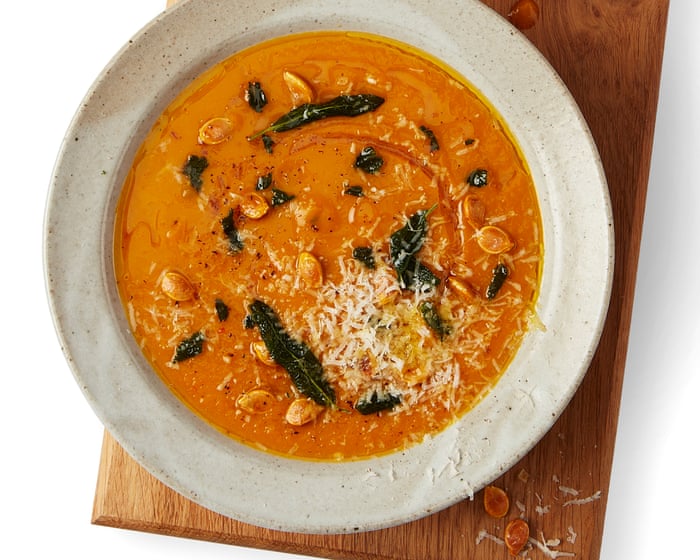
Pumpkin soup sounds wonderful in theory—sweet, smooth, and subtly autumnal—but it often disappoints in practice. Thanks to squash’s high water content, it tends to be thin in both flavor and texture, making even the most careful cook wish they’d thrown those Halloween scraps on the compost heap when they had the chance. This, I hope, is obviously not that kind of pumpkin soup.
Prep 20 min
Cook 1 hr
Serves 4-6
About 1½ kg pumpkin or winter squash (such as crown prince, sugar pumpkin, or kabocha), washed
Oil
Salt
2 liters light chicken stock or vegetable stock
1 large red or yellow onion, peeled and chopped
1 celery stick, cut into small dice
2 small carrots, peeled and cut into small dice
1 small red chilli, chopped, or a sprinkle of chilli flakes (optional)
Sugar (optional)
2 tbsp butter (optional)
4 sage leaves, roughly torn, or the leaves from 2 thyme sprigs (optional)
1 handful grated parmesan, or gruyere or similar (optional)
Nutmeg (optional)
1 A note on the pumpkin
The most important step here is your choice of pumpkin. Look for something that feels heavy for its size. I like the dense, fudgy crown prince or a nutty kabocha, but if all else fails, a butternut squash will work nicely. Asian, African, and Caribbean grocers often stock a wider variety than supermarkets, as will your local greengrocer or farmers’ market.
2 Skin the pumpkin
Pumpkins can be as much as 90% water, so it’s worth roasting the flesh to concentrate its flavor. Heat the oven to 200C (180C fan)/390F/gas 6. Wash the pumpkin, then cut off some skin from one end so it sits firmly on a board. Use a Y-shaped peeler or sharp knife to remove the rest of the skin and put the trimmings in a medium saucepan.
3 Deseed and chop the pumpkin
Cut the pumpkin into quarters, then remove the seeds (and the flesh around them). Add all but a spoonful of the seeds to the pan with the skin, and set the rest aside for now. Cut the flesh into large, evenly sized cubes and put these on a baking tray (use a second tray if there are too many to fit comfortably in one layer).
4 Roast the pumpkin
Drizzle the cubes with a little oil (olive is nice, but anything not too strongly flavored will do) and toss with a little salt. Bake for about 40 minutes, until soft and beginning to brown. If the cubes are coloring unevenly, turn the tray around halfway and remove any that look like they might burn before the rest are done.
5 Roast the pumpkin seeds
Wash the reserved spoonful of pumpkin seeds, if necessary, to remove any flesh clinging to them, then blot dry with a clean tea towel or kitchen paper. Put the seeds on a fresh tray and toss with a little oil and salt, then put them in the oven for the last 10 minutes of the pumpkin cooking time. Set aside to crisp up.
6 Boil the pumpkin offcuts
While the pumpkin is cooking, put the stock in the peelings pan—a good fresh chicken stock is my favorite, because it’s richer and more neutral than vegetable stock, but most varieties will do, as will plain water. Bring to a boil, then turn down the heat and simmer gently for 30 minutes.
7 Start the soup base
Put two tablespoons of oil in a large saucepan on a medium-low heat, then add the onion, celery, carrots, and a good pinch of salt, and fry, stirring regularly until soft but not brown. Stir in the chilli, if using, and fry for another minute or so (if the soup base is ready before the pumpkin is roasted, take the pan off the heat).
8 Add the roast pumpkin
Stir the roast pumpkin cubes into the soup base, then strain in the pumpkin-skin stock (discard the trimmings). Bring to a simmer and cook for about 10 minutes, or until the pumpkin is very soft. Puree with a stick blender or in a jug blender (if using the latter, let the soup mix cool slightly first), then taste and adjust the seasoning, adding a little sugar or diluting the soup with water, as necessary.
9 Finishing touches
If serving with browned butter (a drizzle of cold pPumpkin oil is a good vegan alternative. Heat the butter until golden, stir in the sage, and pour immediately into a heatproof bowl or jug. Serve the soup topped with cheese, if using, a grating of nutmeg, a drizzle of the brown butter and sage or oil, and a few roasted seeds.
Frequently Asked Questions
Here is a list of FAQs based on Felicity Cloakes Masterclass on how to make pumpkin soup
What is the best type of pumpkin to use for soup
Use a variety that is good for eating not carving Varieties like Crown Prince butternut squash or kabocha are ideal because they are dense sweet and less watery than standard carving pumpkins
Do I have to roast the pumpkin first
No but you should Roasting the pumpkin in the oven before boiling it brings out its natural sweetness and adds a deeper caramelized flavor that you cannot get from boiling raw chunks
How do I prepare a whole pumpkin for cooking
Cut the pumpkin in half scoop out the seeds and stringy bits and cut it into wedges You do not need to peel it before roasting the skin usually peels off easily once the flesh is cooked and soft
What is the easiest way to cut a tough pumpkin
Use a sharp heavy chefs knife Cut a small slice off the bottom to create a flat base so it doesnt roll then cut it in half If it is too hard microwave the whole pumpkin for 23 minutes to soften the skin slightly
Can I use canned pumpkin puree instead of fresh pumpkin
Yes but make sure you buy 100 pure pumpkin puree not pumpkin pie filling Canned puree is convenient but often lacks the roasted flavor so you may need to add extra spices or sauté it with onions to build flavor
What are the essential ingredients for pumpkin soup
You need pumpkin an onion garlic stock and fat Cream or coconut milk is optional for texture and spices like nutmeg sage or ginger are common additions
How do I make pumpkin soup without cream
You can achieve a creamy texture by using coconut milk blended cashews or simply blending the soup very well until the pumpkin fibers break down A starchy potato added during boiling also helps thicken it without dairy
Why is my pumpkin soup bland
Pumpkin is naturally mild Blandness usually means you need more salt acid or aromatic spices Roasting the pumpkin and caramelizing the onions also helps build a deeper flavor base